

ASGCT 2026: Victoria Gray Roadshow Returns to Boston

BOSTON – The annual American Society of Cell and Gene Therapy (ASGCT) conference got underway in Boston this week with a guest appearance by one of gene therapy’s greatest ambassadors and patient advocates.

Victoria Gray, the sickle cell warrior who was successfully treated in the exa-cel clinical trial sponsored by Vertex Pharmaceuticals/CRISPR Therapeutics seven years ago, spoke in an evening workshop organized by the Emily Whitehead Foundation and ScaleReady.

Boston is becoming a regular stomping ground for Victoria. Last November, she spoke at the Genetic Agency Technology Conference, hosted by Dyno Therapeutics. Last month, she finally received an invitation to visit the headquarters of Vertex and speak in a town hall meeting.

In an extemporaneous 20-minute speech, Victoria talked about her lifelong journey with sickle cell disease (SCD). She recalled her first major pain crisis, when she was a young girl—a lightning-type pain that began in one arm before traveling across her chest and down the other arm. “In minutes, my entire body was engulfed in pain,” she said. “The pain felt like getting struck by lightning and hit by a truck. It took me to the floor.” Her grandmother provided hot towels and Tylenol, but nothing worked—not even prayer. After a week in hospital, Victoria returned home but still felt fatigued.

Stricken by regular pain crises, a hallmark of SCD, Victoria encountered numerous disappointments growing up. Her hematologist said she could not join the cheer team. In eighth grade, she was told she could not join the basketball team, because the exertion would provoke a pain crisis. “As a kid, I was like a Timex: I could take a licking and keep on ticking,” she joked.

In high school, she signed up to join the United States Navy. “I wanted to serve my country,” Victoria recalled. As she was preparing for basic training, she learned that her disease prevented her from enrolling. “So that was another dream lost.” Next, she turned her attention to nursing. Victoria graduated high school in 2003, but it took another seven years before she could qualify for a nursing program. “Professors didn’t understand because I looked whole and complete. They didn’t think I was sick.”

In 2010, just before Halloween, Victoria had the worst pain crisis of her life, stripping her ability to walk or use her arms to feed herself. “I couldn’t do anything, facing some of the worst pain of my life. I was getting strong pain medicines like Dilaudid, ketamine, but still couldn’t move. Pain had taken over my thoughts.” Unable to sleep or even take a nap, Victoria was desperate to go home to her family.

Later, she asked the doctors if they had heard about a haplo-bone marrow transplant (BMT). “I can’t continue living like this,” she said. The doctors looked at each other and said no. After weeks of prayer, Victoria received a call from her hematologist. “Victoria, I have good news, but I only want to tell you in person.” For the first time in her adult life, Victoria was excited about a doctor’s appointment.

She traveled to Nashville with her brother, who would be her BMT donor, and her husband. She met Haydar Frangoul, MD, whom Victoria calls, “the nicest doctor that I’ve met in my adult life.” Frangoul told her: “Victoria, I wish I had met you ten years ago!’

Although Victoria’s brother was a suitable BMT match, Victoria was scared of the possibility of graft vs. host disease (GVHD). “My purple pill basket was filled to the brim with medicine every day. If I would acquire [GVHD], that basket would have to triple in size.”


“I’m a human!”

On her next visit to Nashville, she had to extend her stay because of another pain crisis. But that stay changed her life. Frangoul sat next to her bedside. “Victoria, have you ever heard of CRISPR?” he asked. Victoria shook her head.

Frangoul used a typo-in-a-textbook analogy and reassured Victoria that there was no chance of GVHD, because she would be receiving her own modified stem cells. “You’ll be the first person to do this, Victoria,” he said. “First human?” she asked. “Yes,” Frangoul said, “but it’s been tested in primates.”

“But I’m a human!” she said.

After being reassured that she could still try a bone marrow transplant if the procedure did not work, Victoria agreed to move forward. The chemotherapy, was “hell on Earth,” she recalled. “I lost my hair, which I was prepared for, but the mucositis, the sores in my mouth, the inability to eat for two weeks, was gruesome.”

Victoria swallowed her tears and decided to fight. This was the first time she had been in the hospital by her choice, to live for her children. About eight months after receiving her CRISPR-edited stem cells in July 2019, she woke up one morning, not feeling anything. “Oh my God, I’m dead,” she thought. She called her kids into the room and hugged them, slowly realizing that “this is what normal feels like.” For the first time in more than 25 years, Victoria did not have any pain in her lower back and hips. She was able to breathe deeply without wincing.

A few years after her therapy, Victoria was finally able to take her first ever flight, to Washington D.C. to visit her husband, who was on deployment. “It was the first time that I was ever able to show up for the man who has shown up for me,” she said. She has since watched her daughter dance in a Christmas parade and supported her son playing high school football. “The little things have brought me great joy,” she said.

Her second flight was a business class trip to London with her husband in March 2023, where she spoke at the third International Summit on Human Genome Editing. “I got to keep my covenant that I made with God, that God, if you do this for me, I would tell the world about what you did.”

Victoria welcomed her first granddaughter on Christmas Eve, 2024. Next week, another milestone: she will be in the audience as her twins graduate high school. And next month, she will publish a children’s book called Hema’s Journey, the tale of her inspiring journey with CRISPR gene therapy. She’s currently training for a group effort to climb Mt. Kilimanjaro.

Perhaps at next year’s ASGCT conference in Philadelphia, she will be invited to present in a plenary session on the main stage. It would be hard to think of a more fitting speaker.

The post ASGCT 2026: Victoria Gray Roadshow Returns to Boston appeared first on GEN – Genetic Engineering and Biotechnology News.

Federated training of spiking neural networks on edge hardware for audio processing

Spiking Neural Networks have caught significant attention recently for their potential for energy-efficient computation on neuromorphic hardware and their event-driven processing. Spiking Neural networks employ spike-based learning paradigms, which require specialized training procedures such as Surrogate Gradient Descent. At the same time, Federated Learning allows collaborative model training on decentralized devices with preservation of data privacy protection. However, to date, few research has examined the suitability of Federated learning with ARM-based hardware. This work primarily investigates whether Federated Spiking Neural Networks training on ARM-based hardware is feasible with the Raspberry Pi 5 as a widely available and low-cost edge computing device for audio signal processing tasks. We perform a comparative analysis of federated Spiking Neural Network and federated convolutional neural networks on ARM processors and evaluate their performance on different data partitioning strategies using Dirichlet-based splits and various federated averaging algorithms. Using Federated learning, this work investigates the impact of data heterogeneity and aggregation strategies on model convergence, communication overhead, and latency in distributed training paradigms. The results provided showcases the important insights into the trade-offs of FL-SNN implementations on Von Neumann architectures and their applications in decentralized neuromorphic computing for audio processing.

Roles of NRXN1 in neuropsychiatric disorders: from genetic lesion to molecular mechanism

Numerous neuropsychiatric disorders frequently exhibit overlapping genetic risk factors, implying the molecular basis for their comorbidity. Nevertheless, the pathogenesis of these disorders remains elusive, particularly regarding how genetic variations impair the physiological function of risk genes and contribute to disease phenotypes. Neurexin 1 protein, encoded by NRXN1 gene, belongs to the neurexin family of presynaptic adhesion molecules. And neurexin 1 is involved in synaptogenesis and the maintenance of synaptic action. Genetic variations of NRXN1 have been demonstrated to be associated with a spectrum of neuropsychiatric disorders. Herein, this review focuses on the most recent and relevant literature concerning the genetic and molecular mechanisms through which NRXN1 variants contribute to the pathogenesis of neuropsychiatric disorders, particularly schizophrenia and autism spectrum disorder. Among them, we propose the isoform-dependent excitation-inhibition imbalance hypothesis of NRXN1 in autism spectrum disorder. And this hypothesis may account for both the elevated and decreased excitation-inhibition ratios observed in diverse individuals with autism spectrum disorder. Moreover, both schizophrenia and autism spectrum disorder involve deletions and alternative splicing of NRXN1, offering molecular evidence for their comorbidity. Then, we analyzed and summarized the current research status of NRXN1 in other neuropsychiatric disorders, including attention-deficit hyperactivity disorder, insomnia, epilepsy, suicide, and depression. Additionally, available limited researches on NRXN1-targeted therapeutic strategies and associated pharmacological studies are also incorporated. Finally, we discussed existing challenges in NRXN1 research within the context of neuropsychiatric disorders and proposed potential avenues to overcome these obstacles.

Assessing directional connections between symptoms, cognition, insight, and real-life functioning in schizophrenia: a partial ancestor graphs analysis

IntroductionSchizophrenia is a severe chronic mental disorder causing significant global disability. Understanding the intricate relationships between symptoms, cognitive functions, and real-life outcomes is essential for developing effective interventions. Prior research, while informative, could not often determine the direction of the association between these illness-related factors. This study aimed to investigate the possible causal connections within the interrelationships of these variables. MethodsThis cross-sectional study included 215 clinically stable patients diagnosed with schizophrenia. Comprehensive assessments covered psychopathology, neurocognition, social cognition, metacognition, clinical insight, and real-life functioning. Causal relationships were explored using Partial Ancestral Graphs, a causal discovery framework that accounts for mediators and confounders. The Greedy Fast Causal Inference algorithm was employed with 1,000 bootstrap replications to assign edge orientations.ResultsA central neurocognitive–metacognitive–functional system of directed connection emerged: visual learning was linked to attention/vigilance and working memory. Working memory showed a direct relationship with metacognition, which, in turn, was connected to real-life functioning. Two partly independent contributions to real-life functioning were also identified: conceptual disorganization and experiential negative symptoms, which were directly related to expressive deficits. Positive symptoms, depressive symptoms, and social cognition occupied peripheral positions, showing no significant connection with other variables. Unawareness and misattribution of symptoms showed an indeterminate association disconnected from the main network.DiscussionThe findings show a set of directed associations that start with neurocognitive abilities, pass through working memory and metacognition, and terminate in real-life functioning. Independently, conceptual disorganization and expressive negative symptoms also exert direct influences. These directed systems of connections provide operational guidance for clinical practice, highlighting critical targets for interventions such as cognitive remediation focused on working memory, metacognitive therapies, and strategies addressing disorganization and avolition, all aimed at improving real-life outcomes in schizophrenia.

Gene Therapy ETX101 Improves Seizures and Neurodevelopment in Dravet Syndrome in Phase I/II

Dravet syndrome has long represented one of the most challenging pediatric epilepsies encountered in neurology and genetic medicine. Caused primarily by loss‑of‑function variants in SCN1A, the disorder emerges in infancy with prolonged febrile seizures and evolves into a lifelong condition marked by treatment‑resistant epilepsy, developmental delay, and significant morbidity. As the gene and cell therapy community gathers for the American Society of Gene and Cell Therapy (ASGCT) Annual Meeting, the field’s attention is turning toward approaches capable not only of reducing seizures but also of altering the developmental trajectory that defines the disorder. This year’s Presidential Symposium features new data on ETX101, an investigational gene regulation therapy from Encoded Therapeutics, that appears to move the needle on both fronts.

Encoded Therapeutics, a clinical‑stage biotechnology company developing precision genetic medicines for severe neurological disorders, has engineered ETX101 as a one‑time AAV9‑based therapy designed to increase expression of SCN1A. Rather than replacing or editing the gene, ETX101 aims to restore physiologic sodium channel function in inhibitory interneurons. The company’s Phase I/II POLARIS program is evaluating the therapy across multiple international sites in children ranging from six months to seven years of age.

The dataset presented at the ASGCT Presidential Symposium expands the emerging clinical profile of ETX101, incorporating additional patients, early readouts from the highest dose level, and longer‑term follow‑up. Across the cohort, treatment with a single intracerebroventricular dose produced a robust and dose‑dependent antiseizure effect that persisted through 52 weeks of observation. At dose level three, children experienced a median seizure reduction of approximately 76%, a notable finding given that this developmental window is typically associated with escalating seizure burden despite standard therapies. Early data from the top dose level suggest even stronger responses in participants who did not receive sirolimus, consistent with preclinical evidence that the drug can dampen protein expression.

Beyond seizure control, the therapy appears to influence developmental domains that are rarely improved in Dravet syndrome. Children who reached one year of follow‑up demonstrated measurable gains across communication, motor function, and other adaptive behaviors, as assessed by caregiver‑reported Vineland Adaptive Behavior Scales. Particularly striking were the trajectories of children treated before age two. In this group, cognitive assessments showed early and sustained divergence from the stagnation observed in the ENVISION natural history study, with trajectories more consistent with neurotypical development over the first year after treatment.

Families and clinicians have taken note of the dual signal emerging from the POLARIS dataset. “Parents of children with Dravet syndrome live with the fear of every seizure and the heartbreak of watching development stall,” said Mary Anne Meskis, CEO of the Dravet Syndrome Foundation. “To see the early and robust seizure reductions paired with meaningful developmental gains is profoundly encouraging. Families have been waiting for therapies that don’t just manage symptoms but give their children a chance to keep learning and growing.”

Encoded’s chief medical officer, Sal Rico, MD, PhD, underscored the significance of the findings. “Watching these young children not only achieve durable seizure reduction but also show early evidence of neurodevelopmental rescue is truly remarkable,” he said. “These data reinforce our belief that ETX101 has the potential to change the course of the disease and future outlook for the Dravet community.”

ETX101 has been well tolerated across all four dose levels, with no treatment‑related serious adverse events. Transaminase elevations, a known AAV class effect, were the most common treatment‑related finding; they were asymptomatic and resolved with standard management.

As the ASGCT community continues to explore the boundaries of genetic medicine, ETX101’s early results highlight the promise of targeted gene regulation as a therapeutic modality. For a disorder like Dravet syndrome, the possibility of addressing both seizures and developmental delay marks an important moment for the field.

The post Gene Therapy ETX101 Improves Seizures and Neurodevelopment in Dravet Syndrome in Phase I/II appeared first on GEN – Genetic Engineering and Biotechnology News.

The Download: a Nobel winner on AI, and the case for fixing everything

This is today’s edition of The Download, our weekday newsletter that provides a daily dose of what’s going on in the world of technology.

Three things in AI to watch, according to a Nobel-winning economist

A few months before he won the Nobel Prize in economics in 2024, Daron Acemoglu published a paper that earned him few fans in Silicon Valley. He argued that AI would give only a small boost to US productivity and would not eliminate the need for human work.

Two years later, Acemoglu’s measured take has not caught on. The technology has advanced quite a bit since his cautious predictions, but the data is still largely on his side. 

MIT Technology Review spoke with him to understand if any of the latest developments have changed his thesis. Here are the three things Acemoglu is paying closest attention to in AI right now.

—James O’Donnell

This story is from The Algorithm, our weekly newsletter giving you the inside track on all things AI. Sign up to receive it in your inbox every Monday. 

The case for fixing everything

Stewart Brand, the counterculture icon and tech industry legend, considers maintenance a “civilizational” act. His new book argues that taking responsibility for maintaining something, whether a motorcycle, a monument, or the planet, can be radical.

Brand argues that maintainers haven’t gotten the laurels they deserve—and he’s right. Yet his vision of maintenance often feels solitary: profound, but more about personal fulfillment than tending to a shared world or making it better.

Read the full review of his handsome new book, Maintenance: Of Everything, Part One.

—Lee Vinsel

Lee Vinsel is an associate professor of science, technology, and society at Virginia Tech, a cofounder of The Maintainers, and the host of Peoples & Things, a podcast about human life with technology.

This story is from the latest edition of our print magazine, which is all about nature. Subscribe now to read the full issue and receive future print copies once they land.

The must-reads

I’ve combed the internet to find you today’s most fun/important/scary/fascinating stories about technology.

1 The first zero-day exploit built by AI has been discovered
Google spotted and stopped the attempted “mass exploitation event.” (CNBC)
+ The hackers used AI to discover an unknown bug. (NYT $)
+ AI-powered hacking has exploded into an industrial-scale threat. (Guardian)
+ New tools are simplifying online crime. (MIT Technology Review)

2 OpenAI just launched its answer to Claude Mythos
Daybreak patches vulnerabilities before attackers find them. (The Verge)
+ Sam Altman said it will “continuously secure software.” (Gizmodo)
+ It will rival Anthropic’s Claude Mythos, which arrived a month ago. (BBC)
+ OpenAI is allowing wider access to its cyber models than Anthropic. (CNBC)

3 Trump is heading to China to spread the gospel of American tech
While taking cues from Beijing’s more stringent approach. (Guardian)
+ But investors want Trump and Xi to stay out of AI’s way. (Reuters $)
+ Elon Musk and Tim Cook are joining him on the trip this week. (BBC)

4 Ilya Sutskever has testified on Sam Altman’s “pattern of lying”
OpenAI co-founder Sutskever took the stand in the Altman v. Musk trial. (BI)
+ He said he spent a year gathering proof of Altman’s dishonesty. (Reuters $)
+ But he also added to OpenAI’s defense. (Wired $)
+ While Satya Nadella called attempts to remove Altman “amateur city.” (FT $)
+ Here’s what happened last week in the trial. (MIT Technology Review)

5 A new hantavirus vaccine is in the works
Moderna and Korea University are developing an mRNA vaccine. (Wired $)
+ Here’s what you need to know about the cruise ship outbreak. (MIT Technology Review)

6 Texas has sued Netflix over alleged data harvesting and “addictive” design
AG Ken Paxton accuses Netflix of secretly collecting and selling user data. (Quartz)
+ And spying on children while deliberately fostering addiction. (Guardian)

7 A data center guzzled 30 million gallons of water—and no one noticed
The curious case serves as a warning for other data center projects. (Ars Technica)

8 Europe is reportedly selling spyware to human rights abusers
EU states allegedly sold the tech to countries violating rights. (Bloomberg $)

9 The US government’s AI vetting announcement has mysteriously vanished
It had detailed a security test agreement with Google, xAI, and Microsoft. (Gizmodo)

10 Amazon staff are using AI for pointless tasks just to inflate usage scores
In a bid to impress managers. (FT $)
+ An AI expert says we should stop using AI so much. (MIT Technology Review)


Quote of the day

“This is like the cheating husband complaining about the cheating wife.” 

—Anupam Chander, a professor of law and technology at Georgetown Law School, tells the New York Times that Elon Musk’s hypocrisy over OpenAI becoming a for-profit company will undermine his courtroom battle with Sam Altman.

One More Thing

""

STUART BRADFORD


How sounds can turn us on to the wonders of the universe

For decades, astronomy has relied on visual information to make sense of the cosmos: images, charts, and graphs. Now, some researchers are trying something different: listening to the universe.

Using sonification, the process of turning information into sound, they’re helping blind and visually impaired researchers explore the cosmos—and even uncover patterns that might otherwise go unnoticed. The approach is spreading beyond astronomy into fields like climate science, navigation, and education.

Discover how sound could make science more accessible—and even more revealing.

—Corey S. Powell

We can still have nice things

A place for comfort, fun, and distraction to brighten up your day. (Got any ideas? Drop me a line.)

+ This musical mashup beautifully blends LCD Soundsystem with Twin Peaks.
+ Match your speculative ideas to sci-fi stories with the Extrapolated Futures Archive.
+ A live-action animation Coyote vs. ACME is coming soon—and the first trailer just dropped.
+ Want to surf elsewhere in the galaxy? Here’s what it would be like to catch waves on distant planets.

Finding Answers When Your Child Is Struggling: Introducing Ask Kai 

Every day, parents reach out to the Child Mind Institute with questions that keep them up at night: Why does my daughter have such strong emotions? Why can’t my son sit still in class? Is this normal anxiety or something more?.

These questions are urgent, but finding answers isn’t easy. The wait time to see a children’s mental health professional can be months or even years. Many families don’t know where to start, what’s normal for their child’s age, or whether their concerns warrant professional help. And with nearly 1 in 5 children experiencing a mental health challenge within the U.S. alone, too many families are navigating this uncertainty on their own.

That’s why we built Ask Kai — a free, evidence-based symptom checker designed specifically for children’s mental health, available in both English and Spanish.

Meet Ask Kai

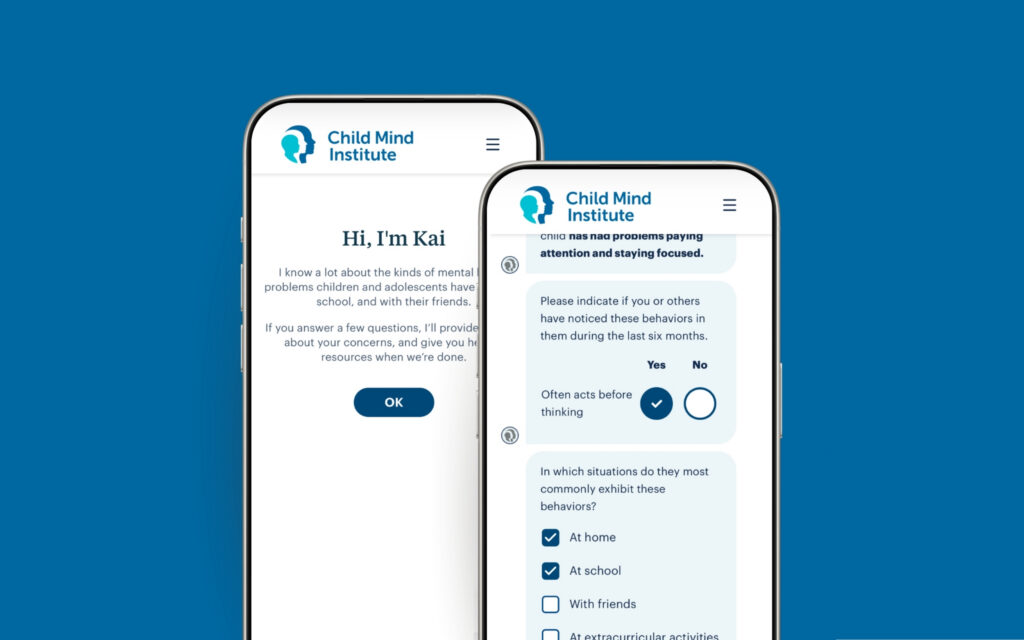
Ask Kai is a conversational symptom checker that helps parents and caregivers understand their child’s behavior and points them to appropriate resources. Through a streamlined series of questions and prompts, Ask Kai gathers information about your child’s challenges and provides personalized recommendations in minutes.

Ask Kai doesn’t diagnose your child. Instead, it helps you:

  • Understand whether your concerns align with common mental health challenges
  • Learn what to look for and what questions to ask
  • Find evidence-based resources specific to your child’s needs
  • Know how to find additional support if needed

Think of Ask Kai as a knowledgeable guide who helps you make sense of what you’re seeing and points you toward your next best step.

How Ask Kai works

If you’ve ever used a symptom checker for physical health, you know the challenge: enter “headache,” and you might walk away convinced you have everything from a sinus infection to a brain tumor. Mental health symptom checkers face even greater challenges. Because every child is different, what looks like defiance in one child could look like anxiety in another, and a behavior that’s appropriate at age five might be cause for concern at age ten. On top of that, mental health conditions often overlap.

So how did we build a tool that captures this complexity without overwhelming families? We focused on expertise and evidence:

  • Clinicians and data lead the way: Ask Kai was built using thousands of child mental health evaluations — open datasets spanning different ages, backgrounds, and conditions — and developed in close collaboration with child psychologists and psychiatrists.
  • Evidence-based question selection: Rather than asking hundreds of questions, we used machine learning to identify which combinations of questions provide the most meaningful information without burdening families.
  • Comprehensive resource library: Every recommendation Ask Kai makes is matched to our extensive collection of guides, articles, expert perspectives, and pathways to professional help.

Here’s what happens when you use Ask Kai

Step 1: Initial Screening

You’ll answer a brief set of questions about your child’s behavior, emotions, and how these challenges affect daily life. You’ll also have the chance to describe in your own words what brought you to Ask Kai. These questions cover the areas where we see the most common concerns.

Step 2: Personalized Deep Dive

Based on your responses, Ask Kai selects targeted follow-up questions that dig deeper into the areas you flagged, whether that’s attention and focus, social anxiety, learning, or other behavioral challenges.

Step 3: Matching You to Resources

Ask Kai analyzes your complete response pattern, including the severity and impact of the behaviors you described, and provides a report with recommendations relevant to your child’s age, challenges, and needs.

What Ask Kai can assess

We designed Ask Kai to explore the areas where we can provide the most help to the most families. Ask Kai offers comprehensive screening and resources for:

ADHD (Attention-Deficit/Hyperactivity Disorder)

Attention-deficit/hyperactivity disorder (ADHD) is a neurodevelopmental disorder that is characterized by difficulties with attention, organization, and impulsive behaviors. Symptoms are usually divided into inattentive behaviors or hyperactive and impulsive behaviors. Inattentive symptoms may include making careless mistakes, being easily distracted, difficulty listening to instructions, trouble with organization, and forgetfulness. Hyperactive/impulsive symptoms may include fidgeting or squirming, trouble playing quietly, extreme impatience, as well as constant talking and interrupting.

Autism Spectrum Disorder

Autism spectrum disorder (ASD) is a neurodevelopmental disorder that begins in utero, but children may not get diagnosed until they’re in preschool or even older, when symptoms become more apparent. The disorder is characterized by deficits in social communication skills as well as restrictive or repetitive behaviors. Symptoms include a wide range of impaired cognitive abilities, language skills, and behaviors. These symptoms have been thought of as a set of disorders but are now being considered one disorder that presents along a spectrum.

Depression

Depression is a mood disorder that can cause children and teenagers to feel very sad and hopeless. Kids with depression have trouble enjoying things they used to love. They may also seem listless and easily annoyed.

Generalized Anxiety Disorder

Generalized anxiety disorder is characterized by excessive, persistent, and unreasonable worries about everyday things, like doing well in school or sports. In general, kids with this disorder worry a lot about being perfect.

Oppositional Defiance Disorder

Oppositional defiance disorder is a disruptive behavior disorder characterized by ongoing persistent, age-inappropriate disobedience and resistance to authority. To be diagnosed with this disorder, children would have had to display extreme behavior issues for at least six months. Diagnosis occurs around early elementary school ages and stops around adolescence.

Social Anxiety Disorder

Social anxiety disorder is a type of anxiety characterized by such intense self-consciousness and fear of embarrassment in social situations that the individual avoids social events; also known as social phobia. While some kids with this disorder are specifically afraid of performance engagements like public speaking or sporting events, others are scared of general social situations.

Specific Phobia

Specific phobia is an anxiety disorder characterized by an excessive and irrational fear of an object, situation, or place. Common specific phobias include dogs, clowns, bugs, the dark, and loud noises.

Elimination Disorders (Enuresis & Encopresis)

For young children, bathroom troubles are often a normal part of growing up. But once kids pass potty-training age, peeing or pooping in places other than the toilet might be a sign of an underlying issue. If it involves urine, it’s called “enuresis.” If it involves feces, it’s called “encopresis.”

Nonverbal Learning Disorder (NVLD)

Nonverbal learning disorder (NVLD) is a condition characterized by difficulty processing visual-spatial information — which involves the brain’s ability to interpret and respond to visual input, including where things are in space. These skills are used to do things like putting together a puzzle or reading a diagram.

Specific Learning Disorder (Dyslexia, Dyscalculia, & Dysgraphia)

Specific  learning disorder is a condition that causes children to have difficulty with reading, writing, and/or math. If they have trouble with reading, the disorder is called dyslexia. If they have trouble with writing, it’s called dysgraphia. If they have trouble with math, it’s called dyscalculia. Symptoms are typically first noticed when the child is in preschool or early elementary school.

These ten areas represent some of the most common mental health concerns in childhood. They’re also areas where we have robust data, validated assessments, and comprehensive resources.

What if your concerns aren’t on this list?

Ask Kai can still help. When you describe your situation in your own words, Ask Kai analyzes your response to identify additional concerns and match you to appropriate resources. Your child’s challenges don’t need to fit neatly into one of these categories for Ask Kai to provide value.

However, we will only make recommendations when we’re confident in the evidence behind them. If a particular concern isn’t well represented in our data, we won’t try to provide guidance in that area. Regardless of the results, everyone receives a core set of resources that we believe are helpful for all families navigating children’s mental health.

Your privacy matters

We take data privacy seriously:

  • Your responses are confidential and secure
  • Free-text responses are analyzed using secure AI systems
  • We don’t share your individual information with third parties
  • In addition to providing you with resources, your data will only be used to improve Ask Kai

Try Ask Kai Today

If you’re wondering whether your child’s behavior is typical or cause for concern, Ask Kai can help. In just 10 to 15 minutes, you’ll get personalized insights and resources to guide your next steps.

Start Your Assessment

You don’t have to figure this out alone. We’re here to help.

If your child is in crisis, expressing thoughts of self-harm, experiencing severe symptoms, or in immediate danger, please seek emergency help right away. Call 988 (Suicide and Crisis Lifeline), text “HELLO” to 741741 (Crisis Text Line), or go to your nearest emergency room.

Frequently Asked Questions

How long does it take?

Most families complete Ask Kai in 10–15 minutes.

Who should use this tool?

Parents, caregivers, and professionals working with children ages 4–18.

Will I get a diagnosis?

No. Ask Kai provides screening information and resources, but only a qualified clinician can provide a diagnosis.

What if I need immediate help?

If your child is in crisis, please call 988, text “HELLO” to 741741, or visit your nearest emergency room.

What makes this different from other symptom checkers?

Ask Kai was built specifically for children’s mental health, uses evidence-based assessments, provides personalized follow-up questions, and was developed in close collaboration with child mental health professionals.

The post Finding Answers When Your Child Is Struggling: Introducing Ask Kai  appeared first on Child Mind Institute.