What to expect from Google this week

This story originally appeared in The Algorithm, our weekly newsletter on AI. To get stories like this in your inbox first, sign up here.

When Google opens its doors tomorrow for its annual developer conference, I/O, it will do so as a clear third place in the foundation model race. A year ago, at Google I/O 2025, the situation looked very different: The company was still riding high from the launch of Gemini 2.5 Pro that March, and distinguishing among the top-tier large language models often felt like a subjective splitting of hairs. 

But a foundation model’s reputation these days rests largely on its coding capabilities, and for months Google’s coding tools have been outgunned by Anthropic’s Claude Code and OpenAI’s Codex. Those systems are so dramatically superior to Google’s own offerings that the company has reportedly had to allow some engineers at DeepMind, its AI division, to use Claude for their work—lest they fall farther behind.

So when I arrive at the conference in Mountain View, California tomorrow, I’ll certainly be on the lookout for any efforts Google is making to claw its way back into frontrunner position. But I’m also eager to see new developments in areas where Google shapes the cutting edge, such as AI for science. The company’s moves there might receive less attention, but they will be no less consequential. 

Here are three things I’ll be paying particular attention to over the next two days.

An attempted coding comeback

Google is taking its AI coding crisis seriously. According to reporting from The Information, there’s a new AI coding team at DeepMind. And the Los Angeles Times has reported that John Jumper, who shared a 2024 Nobel Prize in chemistry with DeepMind CEO Demis Hassabis for their work on the protein structure prediction software AlphaFold, is lending his talents to the efforts. I would be surprised if we don’t see a major new coding release at I/O, perhaps in the form of an update to the company’s Antigravity agentic coding platform.

That said, we shouldn’t expect anything transformative here. Googlers have access to models and products that are substantially ahead of those released to the public, yet they were still reportedly fighting over who got access to Claude Code last month. Unless the company has made astonishing progress since then, Google probably won’t make it back to the coding frontier in the next two days.

Science and health

Coding might be Google DeepMind’s weakness, but science is its conspicuous strength. It is the only frontier AI company to have earned a Nobel Prize. And as LLMs have come to dominate the AI-for-science landscape, Google has only solidified its lead. Last year, the company released multiple scientific AI tools, including the AI co-scientist, which formulates hypotheses and research plans in response to user questions and has been described as an “oracle” by one Stanford scientist, and AlphaEvolve, a system that iteratively discovers new solutions for mathematical and computational problems. If any new scientific tools are announced at I/O, they’ll be worth noting.

I’ll also be paying close attention to any moves Google makes in health and medicine. Google is doing some of the best research out there on LLM-based health tools, but OpenAI has defined the health AI conversation since the release of ChatGPT Health in January. Google has announced that it will be making its AI-powered Health Coach publicly available tomorrow, but promotional material suggests that the tool is geared more toward providing advice on topics such as fitness and diet than to addressing users’ medical concerns. Is this another area where Google has fallen behind, or is the company exercising appropriate caution in a high-stakes domain? 

The drama

While Google fans congregate down in Mountain View, roughly 30 miles north in Oakland the Elon Musk v. Sam Altman trial will be wrapping up. The past few months have seen more than their fair share of AI CEO drama—before the trial, the animosity between Altman and Anthropic CEO Dario Amodei took center stage as Anthropic and OpenAI worked to negotiate deals with the US Department of Defense. But DeepMind’s Hassabis has, for the most part, steered clear of such drama. He effectively presents himself as a Nobel Prize-winning nerd, and if he has written screeds about any of his peers, they haven’t been leaked to the press or appeared in legal discovery.

That’s not to say that Google is controversy free. Last month, a group of 600 employees, many of whom work for DeepMind, sent a letter to CEO Sundar Pichai protesting an impending DoD deal. Google signed that deal the next day. Hassabis, Pichai, and all the other big names will surely do their best to skirt these and other touchy subjects while on stage, but controversies will worm their way in regardless. It will be interesting to see whether Google can maintain its veneer of neutrality.
Inside Anduril and Meta’s quest to make smart glasses for warfare

The defense-tech company Anduril has shared new details about the augmented-reality headset for the military it’s prototyping with Meta, including a vision for ordering drone strikes via eye-tracking and voice commands.

Quay Barnett, who leads the efforts as a vice president at Anduril following a career in the Army’s Special Operations Command, says his fundamental goal is to optimize “the human as a weapons system.” The vision is undoubtedly cyborg-inspired: Barnett wants drones and soldiers to see together, share information seamlessly, and make decisions as one. 

Anduril actually has two such projects in the works. The first is the Army’s Soldier Born Mission Command, or SBMC, for which the company won a $159 million prototyping contract last year to work with Meta on augmented-reality glasses to attach to existing military helmets. But Anduril has also embarked on a self-funded side quest, announced in October, to design its own helmet and headset combo called EagleEye. This is something the military has not asked for, but Anduril insists it will prefer it and purchase it in the end.

So far, both systems are years away. The Army isn’t expected to move its top choice for the SBMC program into production until 2028, if it picks one at all (the previous lead for the effort, Microsoft, was set to receive a $22 billion production contract that was ultimately cancelled when the glasses didn’t prove viable). But Barnett told MIT Technology Review about where both Anduril’s prototypes are headed.

Depending on the situation, the glasses for either prototype will overlay certain information onto a soldier’s field of view. This might be as simple as a compass or as complex as an entire map of the area, information about where nearby drones are flying, or AI-driven recognition of a target like a truck. 

The soldier would then speak to the interface in plain language—for example, to order an evacuation for someone who’s been injured or to plan a route taking into account which areas are off limits. A large language model—Anduril is in tests with Google’s Gemini, Meta’s Llama, and even Anthropic’s Claude, despite the company’s conflict with the Pentagon—will be used to help translate a soldier’s speech into commands the software can follow. And the engine for it all will be Anduril’s software Lattice, which incorporates data from lots of different military hardware into one picture. The Army announced in March that it would spend $20 billion to integrate Lattice with essentially its entire infrastructure.

Barnett’s team is designing the headset to carry out multi-step tasks. A soldier might send a drone to surveil an area and instruct it to come back once it’s found something that looks like an artillery unit; then the system would recommend courses of action, like sending a nearby drone to strike, that would have to be approved by the normal chain of command. Leading the system through this, if all goes to plan, might not even require speech; the soldier could instead communicate through tracked eye movements and subtle taps.

That’s the idea, anyway. It’s worked on early prototypes, Barnett says, but there aren’t yet versions ready for the Army to test at scale. The component parts began arriving in March. Because of federal military contracting rules, these parts—unlike Meta’s commercial smart glasses—required new supply chains that don’t rely on Chinese companies.

It’s a lot for soldiers already bogged down in information overload, says Jonathan Wong, a former US Marine who works as a senior policy researcher at RAND on Army efforts to buy new tech. Both smart glasses projects aim to create a clean interface that presents only the right information at the right time. But it’s a product that soldiers will reject if it costs more of their attention than it saves. “How much mental bandwidth do you have to be both aware of your surroundings and to operate this technology in a way that makes you and your whole unit better?” he says.

Wong recalls that as a platoon commander, for example, he had a radio that operated on three different channels at once. “The moment that two people were on different channels talking at the same time, I immediately couldn’t comprehend anything that either one of them was trying to tell me, and I was probably not aware of my own surroundings,” he says. “I think there are limits to what you can take in.”

Ideally, Barnett says, smart glasses can ease that information overload. Anduril’s approach is to get creative with ways the user can access necessary information quickly. Voice commands and eye tracking are a piece of that strategy. But even if it’s all technically feasible, it might take years of field testing to know if the system is actually useful for soldiers, Wong says. 

Such a system would mark a major escalation in how closely soldiers rely on imperfect AI systems. While computer vision models used to identify objects have long been employed by militaries, and chatbots have recently entered decision-making during the war in Iran, these technologies have not yet made their way to most frontline soldiers. A smart glasses system tasked with identifying threats and recommending strikes would introduce massive new risks of errors. 

Anduril is not the only one competing to develop smart goggles for combat. Rivet, which specializes in wearable sensors for the military, received a $195 million prototyping contract the same time, and in March the Israeli defense-tech company Elbit received its own $120 million contract. This all comes after Microsoft lost its role leading the Army’s smart glasses effort, following a Pentagon audit that found the Army wasn’t properly testing the glasses, a mistake that could have wasted $22 billion.

For both Anduril’s prototypes, the company is testing a new system for digital night vision, which uses electronic sensors and algorithms to boost low levels of light. It’s been a promised technology for decades but has tended to work too slowly for practical use and produce grainy images. Anduril says it has found improvements over previous prototypes through techniques rooted in both new generative AI and older machine learning. 

Much of the other hardware for both projects is being built by Meta, including the displays and the waveguides that send visuals to the user’s eye without blocking the view. That might be a surprise to anyone who knows the backstory: In 2017, Facebook (now Meta) ousted Anduril founder Palmer Luckey following an internal conflict involving his support for Donald Trump. The two are now back in the augmented-reality business together, while Mark Zuckerberg has also adopted a friendlier posture toward the second Trump administration.

For the Army initiative, this suite of smart glasses, night vision, and sensors will be attached to the helmets and other gear soldiers already wear, with a separate battery pack. The EagleEye version will instead incorporate the tech into the helmet itself. Even if the Army doesn’t prefer EagleEye in the end, Barnett says, Anduril will attempt to sell the system to foreign militaries.

Multiple challenges must still be overcome. Unlike Meta’s Ray-Ban glasses, the prototypes have to operate in an environment full of dust, explosions, and smoke. Adding the computing power and battery life they need also means more weight for soldiers already carrying upwards of 100 pounds. Then the technology has to work in environments without ubiquitous 5G cell connections; powerful computer vision and AI models will need to run locally on the device.

For the Army to want to buy it at scale, “it’s got to work, and it’s got to be pretty seamless,” Wong says. “It’s a high bar.”

Neurocognitive function among individuals with problematic social media use

BackgroundWith the development of technology and the internet, social networks gained momentum quickly and play a central role in daily activities. Despite this, there is a public health concern over excessive or problematic social media use. There is also a debate whether excessive social media use should be considered as a behavioral addiction characterized by impulsivity or an impulse control disorder characterized by compulsivity. The goal of this study is to use neurocognitive tasks to investigate impulsivity and compulsivity among excessive social media users compared with non-excessive users.MethodThe study included 79 participants (age range 18 to 37), divided into two groups: 34 participants who excessively use social media (Mean Age = 23.03, SD = 2.71) and 45 participants who do not excessively use social media (Mean Age = 25.47, SD = 4.3). Participants filled out a demographic questionnaire, questionnaires on social media use, impulsivity, compulsivity, anxiety, and depression. They performed computerized cognitive tasks: GO/NO-GO (with Facebook and traffic sign pictures), Experimental Delay Discounting (EDT), and the Wisconsin Card Sorting Test (WCST).ResultsExcessive users of social media exhibited a lower ability to delay gratification on the EDT, indicating impulsivity. They made fewer non-perseverative errors on the WCST, which indicated high flexibility and test shifting, which is a contradicting evidence for compulsivity. Furthermore, on the GO/NO-GO task, individuals who excessively use social media made more omission errors in response to the “Facebook” sign compared to traffic signs (GO condition), indicating impaired selective attention. Finally, they also showed higher subjective ratings of anxiety, depression, impulsivity, and compulsivity.DiscussionThe results of this study provide evidence for impulsivity indicated by delay discounting tendency, which supports the behavioral addiction model, impaired selection attention and lack of evidence for compulsivity in excessive social media users. Further research on neurocognitive function in excessive social media users is required in order to determine whether it should be considered a behavioral addiction or an impulse control disorder.

Cannabigerol Oil for Adolescents With ADHD (CAN-ADHD)

Conditions: Attention-Deficit/Hyperactivity Disorder (ADHD)

Interventions: Drug: Experimental: Full-spectrum CBG oil 30 mg/mL; Drug: Placebo oil (MCT oil)

Sponsors: Universidade do Sul de Santa Catarina; Associação Brasileira de Cannabis Medicinal

Recruiting

Continuous Theta-Burst Stimulation Improves Long-Term Outcomes in Alcohol Use Disorder by Modulating a Craving-Related Dynamic Network

Alcohol use disorder (AUD) is a chronic, relapsing disorder characterized by craving. While continuous theta-burst stimulation (cTBS) shows promise for AUD, its long-term effects on drinking reduction and underlying mechanisms remain unclear. We evaluated the 12-month efficacy of right dorsolateral prefrontal cortex (DLPFC) cTBS for reducing alcohol consumption and identified associated neural and molecular mechanisms.

ASGCT 2026: Beverly Davidson Offers Vehicle and Route for Huntington’s Disease Gene Therapy

BOSTON – Geneticist Beverly Davidson, PhD, received the 2026 Outstanding Achievement Award from the American Society of Gene and Cell Therapy (ASGCT). Davidson is currently the chief scientific strategy officer at the Children’s Hospital of Philadelphia (CHOP) and a former president of ASGCT.

Some of the research Davidson presented was conducted at a new biotech company she co-founded called Latus Bio, which earlier this month announced it had raised $97 million in a Series A round. The company develops novel AAVs to specifically target central nervous system (CNS) disorders, with a lead program in Huntington’s disease (HD).

After thanking her mentors—Bill Kelly, MD, Michael Welsh, MD, and Kathy High, MD—Davidson turned her attention to presenting new advances in engineered gene therapies. Throughout her career, she has focused on improving adeno-associated viruses (AAVs) for CNS gene therapies, with a particular emphasis now on HD. Key elements include selecting the right cargo and developing the appropriate delivery vehicle. Her goal is to scale lab research in neurons, mouse models, and non-human primates (NHPs) to treat patients, including adults with HD.

Major hurdles to tackling genetic diseases of the brain include scalability and a lack of potency, Davidson said. The search for alternative AAV serotypes to AAV2 that could target neuronal cells began back in 2000. IV administration does not provide sufficient targeting to the brain. Even AAVs that have been engineered to enter the brain from the blood have high peripheral exposure and a high cost of goods per patient, which significantly lowers scalability and impact. (In one study, liver biodistribution of AAV was many orders of magnitude higher than in the CNS.)

Davidson focused on HD, the late-onset, dominantly inherited genetic disease. The identification of the gene harboring the HD mutation in the early 1990s by a consortium of researchers was one of the biggest success stories in human genetics. Even more remarkable was the underlying disease mechanism—the expansion in exon 1 of the gene of a triplet repeat sequence (CAG) producing an abnormally long string of glutamine residues in the huntingtin protein.

The right target

One of the major challenges in devising a gene therapy for HD is ensuring that the therapeutic reaches the right network—the deep brain and cortical areas. Therapies have to reach the right circuit, and the right cells in those circuits, Davidson said. Over the years, her group has tailored AAVs for delivery to the brain, inserting peptides into exposed loops of the virion to allow for targeting and unbiased diversity for blood-to-brain delivery. Nowadays, she said, machine learning approaches can be applied for further capsid improvements.

Davidson’s CHOP lab developed a method for screening AAVs with enhanced potency for CNS therapies. After generating huge libraries containing tens of millions of novel capsids, the group performed serial enrichments to identify the most attractive capsids. After screening pools of injected capsids into two species of monkeys, a winning capsid emerged: AAV-DB-3.

Davidson’s group infused AAV-DB-3 into NHPs, looking for targeting to the putamen (base of the forebrain) and caudate regions. Those results were published in Nature Communications in 2025.  “AAV-DB-3 really stood out for its ability to transduce deep layer cortical neurons that are important” in HD, Davidson said. Moreover, the results were achieved with relatively low doses and only required a single infusion per hemisphere, outperforming the widely used AAV5.

Somatic instability

With a promising delivery vehicle identified, Davidson next addressed the therapeutic strategy, which takes aim at the somatic expansion of the CAG repeat. This codon grows longer over time in certain cells in the brain, sometimes expanding to hundreds of repeats.

MSH3 is a DNA repair protein that is required for CAG repeat expansions, as seen in mouse models of HD and other triplet repeat disorders, including myotonic dystrophy. Research led by Paul Ranum, PhD, who is a co-founder of Latus Bio, posted in a preprint on bioRxiv earlier this year, modeled the impact of lowering levels of MSH3 on somatic instability.

Ranum and colleagues used an artificial microRNA showed to lower MSH3 levels in NHPs by 48-94 percent. Computational modeling suggests that this would reduce somatic instability and delay onset of HD symptoms by many years. Early studies using a well-known HD mouse model, the Q111 mouse, to assess biodistribution, quantify knockdowns, and assess the impact on somatic CAG repeat expansion. AAV-DB-3 expression is highest in the striatum and cortex at 16 weeks, dropping MSH3 levels by 50%.

Davidson closed by emphasizing the need to ensure scalability for treatment beyond ultra-rare disorders. Latus hopes to file an Investigational New Drug application for its HD therapy, LTS-201, in the second half of 2026. At least two other biotech companies are also targeting MSH3 by other means.


The post ASGCT 2026: Beverly Davidson Offers Vehicle and Route for Huntington’s Disease Gene Therapy appeared first on GEN – Genetic Engineering and Biotechnology News.

ASGCT 2026: AI-Optimized Cas12l Gene Editor Offers Compact Cas9 Alternative

BOSTON — In a potentially significant advance for the genome editing field, researchers from the biotechnology company Caszyme and the Vilnius University Institute of Biotechnology in Lithuania have developed a potent and compact variant of Cas12l nuclease. Giedrius Gasiūnas, PhD, Caszyme co-founder and CEO, presented highlights of the research at ASGCT.

The work represents “a great example of the potential of continued mining for novel Cas effectors within the bacterial metagenomic diversity dark matter,” said Rodolphe Barrangou, PhD, Editor in Chief of The CRISPR Journal, which will shortly be publishing a paper on the Lithuanian team’s results.

“We need more diverse effectors to address the technical shortcomings of the CRISPR toolbox,” Barrangou continued. “This study is a great illustration of the potential of mining bacterial diversity.”

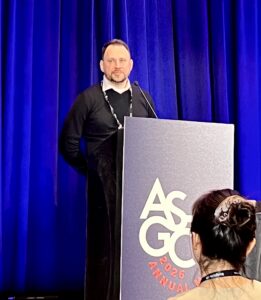
Giedrius Gasiūnas, PhD, Caszyme CEO, presents Cas12l at ASGCT 2026.

The Lithuanian team, including veteran gene editor Virginijus Siksnys, PhD—winner of the 2018 Kavli Prize with Jennifer Doudna, PhD, and Emmanuelle Charpentier, PhD, for CRISPR gene editing—used a hybrid approach to optimize Cas12l. By combining cryo-electron microscopy (cryo-EM) structure-guided design with artificial intelligence (AI) protein language models, the team was able to engineer a variant (Asp2Cas12l M82) that overcomes the known efficiency limitations of the Cas12l family.

Although Cas9 has widespread utility, including clinical applications, researchers have long considered its relatively large size and requirement for G-rich protospacer adjacent motifs (PAMs) problematic. The Cas12l family, discovered in the Armatimonadota bacterial phylum, offers a more compact size (867 amino acids) and recognition of a C-rich PAM site.

But wild-type Cas12l enzymes exhibit lower editing efficiencies and higher target-to-target variation compared to Cas9. According to Gasiūnas, the new M82 variant is “reliable, precise and adaptable,” and shows promise for a wide range of therapeutic applications.

“Through our continued work exploring novel Cas systems, Caszyme is focused on advancing technologies that move beyond promise into practical use.”

Path to potency

The engineering of the M82 variant proceeded in two steps. First, the Caszyme researchers solved the 3D structure of Asp2Cas12l complexed with an sgRNA and DNA to high resolution (2.51 Å). This revealed a unique “bracelet” architecture whereby the nuclease encircles the DNA target via interlocking helical bundles and a proline-rich string.

Next, the team introduced arginine substitutions at dozens of positions in the molecule to enhance electrostatic attraction to the negatively charged DNA backbone. This work included the production of an M67 variant, which provided a 7-fold improvement in indel editing over the wild-type nuclease.

To engineer further refinements, the Caszyme group turned to AI, specifically the ESM-2 protein large language model. This model predicted evolutionary hotspots considered likely to preserve or enhance function. Integrating these AI-derived substitutions—Q572R in the bridge helix and F607S in the RuvC domain—resulted in the final M82 Cas12l variant, illustrating the value of AI-supported engineering rather than deploying protein-directed evolution.

Rivaling Cas9

Gasiūnas presented data showing that M82 possesses good activity across recalcitrant gene targets, reducing the target-to-target variation that plagues many novel nucleases. In head-to-head comparisons in HEK293T cells, M82 demonstrated an average indel editing rate of 67.4%, nearly identical to that of Cas9 at overlapping target sites. This potency was consistently maintained across several delivery formats, including plasmid DNA, mRNA, and ribonucleoprotein complexes.

The Caszyme group also showed excellent M82 efficiency in homology-directed repair (HDR). In experiments targeting the AAVS1 locus, M82 facilitated a site-specific gene insertion frequency of 39%, outperforming Cas9 in the same context. Using single-stranded donor templates, HDR rates reached as high as 56%. Gasiūnas suggested that the staggered cut produced by Cas12l may inherently steer DNA repair toward precise correction rather than stochastic indels. With regard to safety, Caszyme found that M82 Cas12l maintained a high degree of on-target precision. Secondary editing signals were largely detected at or near the lower limits of assay sensitivity, suggesting a low risk of off-target cleavage.

The compact size of the M82 variant makes it an attractive candidate for adeno-associated virus-mediated delivery, which has strict limits on cargo size. “It is no secret that the CRISPR space has faced challenges and concerns in recent years,” Gasiūnas said. “However, we are confident in M82’s ability to create headroom for scientists to stand up and innovate within.”

Crowded field

Cas12l is not the only compact Cas nuclease gaining attention, of course. In a talk preceding Gasiūnas’ presentation, Zhaoshi Wu, PhD, co-founder and chief technology officer of Shanghai-based Castalysis Bioscience, presented an update on Cas12n, details of which were first published in Molecular Cell in 2023. The nuclease was touted as being the first independent CRISPR-Cas complete gene family uncovered by Chinese scientists within China’s territory.

Touted as a next-gen ultra-compact gene editing system, Cas12n (branded as alphaCas) consists of just 450 amino acids, and possesses structural similarity to TnpB. Cryo-EM structural analysis led the Chinese investigators to optimize the molecule for non-viral in vivo delivery. Preclinical experiments showed robust genome editing in a mouse model by targeting PCSK9 using lipid nanoparticle delivery, resulting in sharp drop in serum LDL levels.

Wu said his company is on target to begin its first clinical before the end of 2026. But he faced an uncomfortable moment during audience questions. Fyodor Urnov, PhD, challenged Wu’s claim that an inherent advantage of Cas12n was its safety profile compared to Cas9. Urnov pointed out that Intellia Therapeutics has two ongoing Phase III in vivo trials using CRISPR-Cas9 that show no immunogenicity concerns using LNP delivery.

Urnov later congratulated Wu on the rest of the company’s data and wished them success.

The post ASGCT 2026: AI-Optimized Cas12l Gene Editor Offers Compact Cas9 Alternative appeared first on GEN – Genetic Engineering and Biotechnology News.

ASGCT 2026: Rare Instance of AAV Integration into Human Genome Linked to Brain Tumor

Rebecca Ahrens-Niklas
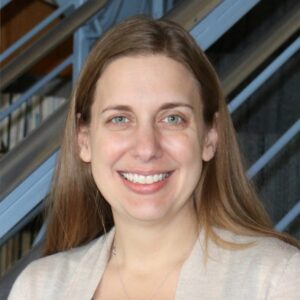
Rebecca Ahrens-Niklas, MD, PhD

BOSTON — A team at Children’s Hospital of Philadelphia (CHOP) led by Rebecca Ahrens-Niklas, MD, PhD, and Lindsey George, MD, has described a case of a brain tumor linked to a rare integration of adeno-associated virus (AAV).

George presented the work at the American Society of Gene and Cell Therapy (ASGCT) conference in a plenary talk selected as the “presidential abstract” by ASGCT president, Terry Flotte, MD. The study, “Neuroepithelial tumor with AAV integration after intracisternal magna vector delivery,” was published in the New England Journal of Medicine.

Lindsey George
Lindsey George, MD

Over the past 25 years, some 6,000 patients have been treated with some form of AAV gene therapy. In all that time, George said, there have been no established long-term safety concerns, although genome integration events have been reported in mouse and dog studies. But the case documented by George and colleagues at CHOP suggests that the gene therapy field may need to pay more attention to this potential occurrence.


The story began with a 5-year-old boy with an inherited lysosomal disorder, severe MPS1 deficiency (Hurler subtype). The patient received enzyme replacement therapy at six weeks of age, followed by a cord blood stem cell transplant at age four months.

Investigators chose to perform gene therapy when the patient was 13 months old to deliver the iduronidase (IDUA) gene. The vector chosen was an AAV9 serotype, using a cytomegalovirus enhancer and a chicken beta-actin promoter driving the gene. The virus was administered into the boy’s cisterna magna in the base of the skull.

When the boy was five years old, a routine neurological scan revealed a large intraventricular mass that had not been observed two years earlier. Analysis of the tumor revealed it was a PLAG1-driven neuroepithelial tumor—indeed, PLAG1 expression was almost 300 times higher than in other central nervous system tumors studied at CHOP. (PLAG1 is usually only expressed during embryogenesis.)

Surgery to remove the tumor was successful. Eight months after surgery, there are no signs of tumor growth. The boy is also showing advanced neurocognitive function.


Tumor typing

George described RNA sequencing of the tumor, which revealed the fusion of a fragment of the AAV9 vector cassette to exon 5 of the PLAG1 gene on chromosome 8. The resulting transcript is predicted to encode a PLAG1 derivative containing five zinc-finger DNA-binding domains and a C-terminal transcriptional activation domain, which was previously reported to function as a transcriptional activator.

Adeno-associated virus
Credit: Dr_Microbe / iStock / Getty Images Plus

Curiously, the chimeric junction also included a segment of human chromosome 10, which George suspects originated during the vector manufacturing process. The integration event was present in about 40% of the total reads, suggesting integration into one of the two PLAG1 alleles.

George concluded her talk by noting that while the clinical outcome in this patient is so far encouraging, this is evidence that AAV integration can be associated with oncogenesis. The study underscores the need to monitor the most heavily transduced tissues after AAV gene therapy.

While the gene therapy community should be cautious in extrapolating this single case report across all AAV gene therapy programs, George said the study supports the use of the lowest feasible vector dose as well as tissue-specific promoters.

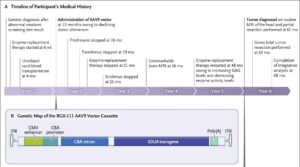
A) Timeline of the patient’s medical history; B) Diagram of AAV gene therapy cassette. [The New England Journal of Medicine ©2026]

George noted that detection of the integrated AAV vector DNA was challenging, in part because of rearrangements of vector DNA. The use of several complementary techniques—long-read DNA sequencing, targeted PCR amplification, and RNA sequencing—was required to confirm the integration.

George and coworkers closed their paper, noting that, “Our findings support the hypothesis that rare AAV integration can contribute to human oncogenesis, which emphasizes the need to optimize gene delivery methods and monitor transduced tissues after treatment.”

The post ASGCT 2026: Rare Instance of AAV Integration into Human Genome Linked to Brain Tumor appeared first on GEN – Genetic Engineering and Biotechnology News.

Validation of a criterion-based screening and triage pathway for adult ADHD: a prospective observational study of safety and operational efficiency

BackgroundThe increasing demand for adult attention-deficit hyperactivity disorder (ADHD) assessments has required the development of efficient triage pathways. This study provides a formal assessment of a criterion-based screening model designed to prioritise patient safety and operational efficiency within a National Health Service (NHS) specialist secondary care setting.MethodsA prospective observational validation design was employed, involving 49 consecutive adults referred for ADHD assessment none of whom had a previous ADHD diagnosis. The Comprehensive ADHD Screening Questionnaire (CASQ), a clinician-administered instrument based on DSM-5 criteria, was utilised by four trained Physician Assistants. To ensure an assessment of triage safety, a universal assessment model was adopted: all participants received a blinded, gold-standard diagnostic assessment (NICE-compliant) regardless of the initial triage recommendation thereby eliminating verification bias. The primary outcome measure was the Number Needed to Harm (NNH), defined as the number of people screened before a single false-negative result occurs.ResultsOf the 48 participants who completed the diagnostic process, six (12.5%) received an ADHD diagnosis. The triage pathway correctly identified all six cases, resulting in a sensitivity of 100.0% (95% CI: 61.0%–100.0%) and an infinite NNH. Specificity was 45.2% (95% CI: 31.2%–59.9%), with a positive predictive value of 20.7%. The pathway permitted 39.6% (n = 19) of referrals to be triaged to alternative pathways rather than full ADHD assessment, potentially saving significant specialist clinician time. Exploratory analyses indicated that score magnitude did not reliably distinguish between true and false positives within the group triaged as appropriate for further assessment.ConclusionsThese preliminary findings suggest that criterion-based screening conducted by appropriately trained non-specialist clinicians can achieve high levels of safety whilst improving service efficiency. The findings support the feasibility of task-shifting models in adult ADHD services, provided that triage thresholds are calibrated to prioritise sensitivity. These results require replication in adequately powered multi-site studies before firm conclusions regarding pathway safety can be drawn. Further research is required to establish inter-rater reliability and cost-effectiveness across diverse clinical settings.