Achieving operational excellence with AI

Frameworks like Lean Six Sigma and business process management (BPM) first gained traction because they promised clarity in the chaos—a structured way to bring order to messy, sprawling operations. Lean Six Sigma emphasized statistical rigor and quality control; BPM created end-to-end maps of how work should flow across departments. Both offered a repeatable way to embed habits of measurement, analysis, and accountability into day-to-day company culture.

But today, those time-tested playbooks are evolving as companies seek to embed AI into established process excellence methodologies. By some estimates, the market for AI-powered process optimization is projected to exceed $113 billion within the next decade. In one study, a full 88% of business leaders anticipated increasing investments into AI-infused process intelligence in the next 12 to 18 months.

Yet without the right foundations, many of those investments may not fully deliver on their potential. Companies that already operate with discipline have an edge. They can channel new tools into proven systems rather than bolting them onto shaky foundations. Organizations with mature process disciplines are also better positioned to translate AI ambition into real outcomes, as they are already accustomed to data-driven decision-making and process discipline—precisely the cultural foundation AI systems need to deliver value.

Simply put: AI can accelerate process excellence, but existing process excellence is what makes AI truly impactful. Technology and process are no longer separate levers, and only organizations that pull them together stand to realize the full value of both.

Download the full report.

This content was produced by Insights, the custom content arm of MIT Technology Review. It was not written by MIT Technology Review’s editorial staff. It was researched, designed, and written by human writers, editors, analysts, and illustrators. This includes the writing of surveys and collection of data for surveys. AI tools that may have been used were limited to secondary production processes that passed thorough human review.


Teaching AI to run with the turbines

Artificial intelligence may have captured the public imagination through chatbots and image generators, but some of its most consequential use cases are unfolding far from consumer-facing tools. In industries where physical infrastructure, operational continuity, and safety are paramount, AI is becoming a core operating layer. With its sprawling industrial systems and constant stream of operational data, the energy sector offers a glimpse into what that future could look like.

At Woodside Energy, AI adoption did not begin with generative models or enterprise copilots. The company has spent years building predictive analytics, optimization systems, and machine learning tools across exploration, drilling, maintenance, and plant operations. “We’ve always had very large volumes of operational data coming from the equipment and the plants and the assets that we operate,” says the company’s vice president for digital Andrew Melouney. “Those have created really clear, quite high-value use cases for us.”

That long-term investment in infrastructure and governance is now enabling a broader shift toward agentic AI systems that can support complex industrial workflows. Rather than replace human operators, Woodside designs AI systems to augment expertise in high-stakes environments. A prime example is its “Startup Advisor,” an AI copilot that helps operators manage the complex process of starting liquefied natural gas (LNG) plants. “We’re really thinking about, how does it support the people in the organization in terms of empowering them to make better decisions, to make faster decisions,” Melouney explains.

The company’s approach reflects a wider evolution taking place across industrial AI: graduating from isolated experiments to enterprise-wide systems built on standardized platforms, governed data, and repeatable deployment patterns. That transition, Melouney argues, requires organizations to rethink both their technology stacks and how work itself gets done. “We’re not just bolting AI onto an existing process,” he says. “We’re deeply thinking about how that work needs to be reimagined.”

Melouney’s motto has become: “Think big, prototype small, and scale fast.”

As AI systems become more autonomous and interconnected, the companies poised to succeed may be those that spent years building the operational foundations beneath the hype.

“Our ambition is really for an autonomous enterprise, where we have agents with agency that are able to really deeply interact with our core workflows,” says Melouney.

This episode of Business Lab is produced in partnership with Infosys.

Full Transcript:

Megan Tatum: From MIT Technology Review, I’m Megan Tatum, and this is Business Lab, the show that helps business leaders make sense of new technologies coming out of the lab and into the marketplace.

This episode is produced in partnership with Infosys.

Now, when people think about artificial intelligence, they often picture chatbots or productivity tools, but some of the most sophisticated and high impact uses of AI are actually happening far from consumer apps, inside complex industrial environments where safety, reliability, and physical systems matter. The global energy sector is a prime example.

Companies like Woodside Energy, a global energy producer headquartered in Western Australia, have been applying AI for more than a decade now, from advanced analytics and operations, to remote decision support, to smarter maintenance, and energy efficiency across large scale assets. Today, Woodside is scaling that experience, embedding AI more deeply across its operations and the enterprise with a strong focus on governance, data quality, and human accountability.

Two words for you: technological fuel.

My guest today is Andrew Melouney, vice president for digital at Woodside Energy. Welcome, Andrew.

Andrew Melouney: Thanks, Megan. It’s great to be here.

Megan: Lovely to have you. Now, Andrew, as I said there, the energy sector has approached AI quite differently from technology or consumer businesses. Early value has emerged in operational and industrial environments, rather than consumer-facing generative AI tools. Why is that? And what differentiates the energy sector’s AI journey?

Andrew: Megan, I think it really comes down to the nature of the work we do. Energy operations and what Woodside does is very asset intensive, it’s very safety critical, and it’s highly physical. And when you think about how Woodside operates, we operate across the full value chain. We do exploration through to drilling and subsurface work, to project development, all the way through to operating assets, which are often operated in harsh and remote locations, and then global energy portfolio marketing and trading as well.

We’ve always had very large volumes of operational data coming from the equipment and the plants and the assets that we operate, and those have created really clear, quite high-value use cases for us. When you think about reliability, when you think about safety and efficiency, those are really critical things for a company like Woodside. We’ve been doing traditional AI for many years now. If you think about analytics, if you think about optimization, if you think about things like predictive models, those techniques we’ve been applying to our data sets and to our business since around 2015.

And more recently with the advent of generative AI, we’ve really found that we’ve got a pretty strong and awesome foundation to build on top of and to really solve problems in the service of improving the business. And again, whether that is keeping people safe, keeping the environments we operate in safe, or improving returns for the organization.

Megan: Fantastic. I mean you touched on it there, but how has this reality shaped your own AI strategy at Woodside? Where did you start, and where did the technology prove most impactful in those early days?

Andrew: Well, like I said, we’ve had a very long journey, in terms of understanding our operational data, recognizing the value of it, and collecting it at scale so that we can use it. And we’ve been very deliberate in that approach, Megan. We’ve really thought about where the value is and where the risks were manageable. And we’ve started looking at, in today’s world from an agentic AI perspective, we’ve started looking at the problems that were solved with traditional AI and machine learning and data science in the past. And we’ve started to think about, where can we then layer agentic AI over the top to provide an even better outcome?

For our asset intensive industry and organization, we’re looking at areas such as maintenance optimization. We’re looking at areas such as, how do we ensure our LNG plants start up reliably, consistently, and safely? And we’re considering really our frontline workforce and making sure that we’re giving people on the frontline the tools required to do their jobs. When we think about AI, we’re really thinking about, how does it support the people in the organization in terms of empowering them to make better decisions, to make faster decisions? I think over time, this has just evolved from what has been traditional analytics to now artificial intelligence and generative AI. And we’ve learned along the way that the technology is important, but it’s about aligning people, processes, and the technology together.

We’ve spent a long time not only in collecting the data and having a well-curated data set that we can build on top of, but we’ve also spent a lot of time teaching people how to work in agile ways, how to do design thinking, how to problem solve, and how to really make sure that the technology that, say, my team can bring to bear to the organization is adopted effectively and purposefully. And I think once we had that solid foundation in place from a technology perspective, from a data perspective, once we got strong trust built between our digital teams and the organization, we really saw quite a material uptick and the scaling of technology occur more broadly across the enterprise.

Megan: Fantastic. That people piece so important, isn’t it? It’s just a tool, technology, that needs to be in the right hands. And you touched on data there; industrial AI obviously depends on vast amounts of data. Can you walk us through how you’ve approached data at Woodside in a little more detail? How it’s structured and governed, and how tools like maintenance intelligence as well fit into that.

Andrew: Well, data is really foundational and fundamental to everything we do, particularly from a technology perspective. It gives us the ability to innovate at pace when we are building over the top of a strong foundation. As I said before, we’ve had the benefit of a long-term investment in our underlying operational data. I think the way we think about data is that it’s an asset for us.

And when you think about operating a facility where you’ve got sensors everywhere, you’ve got data streaming in real time, you’ve got operators needing to make decisions in real time, we have consciously made a decision over many, many years to invest in that enterprise scale data platform to make sure that it’s secure. We’ve got well-structured data assets, and we’ve got strong governance over the top of that data so that when it is used, when it’s built in a data science application or an AI agent, that we’ve got a level of trust in it that it’s going to be used responsibly. And that when it’s used, it can be trusted to give the outcome that we expect.

We have developed platforms that continuously ingest really high frequency data from the assets and from our enterprise systems. Once we’ve been able to develop solutions on top of that, parts of the business that might own the systems that collect that data, they see the value in it.

When you look at something like maintenance intelligence is a really good example of how we’ve been able to take something that we’ve been working on for a long time. Woodside does a lot of maintenance, it’s a very important part of our business, and it occurs across all of our operating assets. But we have been looking at how we do predictive analytics and predictive maintenance for a long time across that data set that we own. And something like maintenance intelligence is a solution that gives us the ability to optimize how we do that maintenance. And what it does is it analyzes historical maintenance records, alongside the performance of the equipment. And again, by having that data set well-governed and in one place, we get the ability to correlate different data sets, such as maintenance records out of SAP, alongside say equipment and performance coming from our time series data lake.

And when we build over the top of that, something like maintenance intelligence gives us the opportunity to recommend to the assets what the optimal timing for maintenance activities might be, and really give what is quite a simple aim, which is do the right work at the right time. And with something like maintenance intelligence, we have seen the opportunity, and we have the opportunity to reduce maintenance hours by up to 15% over five years on one of the assets that we’ve piloted this on. And as we’ve built out that underlying analytical model, we’re now able to put agentic AI over the top of that and provide better insights and optimize that solution more.

It really comes down to providing our asset teams and our operational teams with the right decision support capability that ensures they’re still accountable to make the decision and to ensure the right work is being done, but we are giving them the best possible opportunity to use their judgment and experience with the data that we provide to make the right decision.

Megan: Sounds like a really impactful change. Last year also marked a milestone in moving from early AI learnings to scale, using AI more deliberately as a force multiplier. What transition were you trying to make and how did you approach it?

Andrew: Well, Megan, we’ve had a philosophy for a long time in Woodside from an innovation perspective, where we really want to think big, we want to prototype small, and we want to scale fast. We want to find big opportunities that we can go after, but we want to ensure that we look at how we deploy those on a small scale first, and then provide the right learning and insight that then can scale it everywhere. Something like maintenance intelligence is a good example of that, or our Startup Advisor, where we know that we’ve got multiple plants that we need to start up. We know that we’ve got multiple assets that need to do maintenance, so we have a big, bold ambition about how we can improve and optimize that. We start with a small prototype; it might be one subsystem, it might be just a part of an asset, and then we scale it out, we learn, and we scale faster.

I think from an AI learning perspective, one of the key things we’ve learned is really the transition from moving from isolated AI solutions to a more coordinated enterprise-wide capability. If you look back maybe 18 months, two years, in our generative AI journey, we rarely started by deploying AI as broadly as we could in the organization from a personal productivity perspective. And probably being quite open in terms of the problems that we will solve, the business problems that we’ll solve with AI. That had a lot of benefits for us in terms of allowing our organization to get to know AI, get to know the capabilities, to build the trust in it.

What we’ve learned though is that we’ve needed to pivot from that to being a little bit tighter in terms of where we are going to invest our time and resources and more higher value solutions. How do we then enable and empower the rest of the organization so that they can actually effectively problem solve with technology in their domain or in their personal productivity without having to come to a central team?

When we think about that, think big, prototype small, scale fast, has been something really important for us. The transition from a more broader approach to use case development and solution development to now a narrower focus on the high value priorities. We’ve seen that paying dividends to us and allowing us to go after solutions and opportunities, things like Startup Advisor.

And so our Startup Advisor is a agentic AI solution that really aims to optimize and empower and better support our operators that sit in front of a panel and have to start up LNG plants, which are incredibly technical facilities and require really specialist skills to start up. And so our Startup Advisor is almost like a copilot that sits alongside those operators, and it gives them the ability to be able to play back previous startups. It gives them the ability to look at how the current startup is progressing, and it provides them better insights to optimize how they start up that facility. And again, starting up an LNG facility is incredibly complex.

Megan: I can imagine.

Andrew: When we think about opportunities like Startup Advisor, again, it goes back to that think big, prototype small, and scale fast. We started with a very bold vision of, how do we start up all of our LNG plants in a much more structured and optimized fashion? How do we better support our panel operators? How do we make, say, a more junior panel operator have a copilot that can help them almost like an experienced panel operator sitting next to them? And when we think about that vision and the ability then to prototype on a small scale and then scale fast, I think it’s been really successful for us.

As we scale, we’ve just naturally expanded into more agent-based solutions. Today, we’ve got around 50 AI agents in production, supporting both our operating assets and our enterprise workflows. These tools have been proven in live environments, and we have really seen the benefit of being able to shift from point solutions that maybe solve small scale problems in specific areas, to AI and agentic solutions with agency that can really work across our workflows.

We’re able to do this because we’ve standardized on the platform that we build on and we’ve got repeatable patterns. That’s been another really important learning for us, is that we don’t want to build 50 solutions in 50 different ways. We really want to be empowering our organization and our technical teams and the users of our solutions to roll them out quickly, to roll them out safely, and to do it in a patternized and platform manner.

But the last point I’ll make, Megan, from a learning perspective is that we’ve really understood that a strong governance around how AI is deployed and developed is critical for us, and it’s critical for us to go fast as well. The traditional ways of governing how we roll out different solutions or digital systems isn’t going to scale to the breadth that we need when we are thinking about AI. Being able to have a clear philosophy around how we innovate, transitioning from isolated solutions to that enterprise-wide capability, and making sure that we’ve got strong platforms with strong patterns and clear governance are the three really critical things that we’ve learned.

Megan: Such important pillars, all of them. And you’ve been working with Infosys on this journey. How has that partnership helped accelerate scaling and embedding AI across the business?

Andrew: Well, Infosys is our managed service provider, and so they play a really critical role in the operations of our core business. One of the things that I like to say is that our license to innovate is based on our license to operate. And so, for my team to be able to turn up to an operating asset or a corporate function and have the trust that’s needed to be able to innovate and reimagine and redesign how work gets done, to be able to do that, we need to make sure that our core platforms, our core systems, our applications are running really reliably, safely, and consistently every day. Having an experienced partner like Infosys looking after those core operations in partnership with our internal teams is really, really important to us.

As we move from pilots to enterprise-wide deployment, the ability to partner with someone like Infosys also gives us the ability to scale. And so being from Perth and Western Australia, while we’ve got a really strong local team in Western Australia, and we’ve also got a very strong team in some of our other operating locations, like everyone, we’re struggling to find people that can fill AI roles. Being able to partner with Infosys and have a number of different operating models at our disposal becomes really important for us. Having co-mingled teams where they are staff, they are Infosys staff, Woodside staff, and some of our other partners, really just brings diversity of thought and experience to how we solve problems.

Fundamentally, the partnership has allowed us to operate and innovate with more confidence. While Woodside always retains ownership of the strategy and where we’re going and the governance and my teams remain accountable for the outcomes, we can’t do what we do without strong partnerships like the one we have with Infosys.

Megan: Fantastic. And as AI adoption scales, you mentioned yourself, governance becomes increasingly important. How challenging has that been, and what guardrails have you put in place at Woodside?

Andrew: So, Megan, governance is really important to us, and we operate in a well-regulated environment. That means we’ve got to make really deliberate and well-reasoned decisions when we’re thinking about how we deploy technology into our organization, whether it’s artificial intelligence or anything else, for that matter. And so, governance is really central to how we approach the execution of our AI strategy at Woodside.

We’ve got maybe two or three really key things that we’ve put in place. The first one is just making sure that every AI use case goes through a structured assessment, and that’s making sure it meets our privacy controls, our cyber controls. We’re also asking the question, not just, could we do this, but should we do this? We’ve really got to bring together safety, ethics, transparency, accountability, and make sure that we make an informed decision. When an AI solution is going through that structured assessment, if there are concerns about how we might use that solution, it then goes to an AI council that’s made up of senior leaders across the organization. That council and that group really oversee some of the prioritization and risk management. That’s where we can have really strong, robust debates around, again, could we do something, should we do it, and how do we mitigate any of the risks that we might introduce here?

I think the last one, Megan, is really around lifecycle management. When you start thinking about, we’ve got 50 at the moment, but if we had 500 agents working in our organization, really amplifying the experience and the decision-making and the value creation of our staff, we really want to have an ability to manage the lifecycle of how those agents operate. We want to know, how many people are using them? What’s the efficacy and the outcome? Is there model drift? Do we need to retune or retrain? I think that’s an area where many organizations, including Woodside, are still leaning into and still figuring out the best way to do this. We can do it quite easily with 50 agents, but 500, 5,000, 50,000 becomes an opportunity for us. Again, thinking about how we partner with others, solving problems like that really present an opportunity to co-create and to co-solve with some of our partners, like with Infosys.

Megan: Fantastic. Just to close, what’s your long-term vision for AI at Woodside? How do you see this evolving over the years ahead, and what could it unlock for the sector in your view?

Andrew: So Megan, I think our ambition is really for an autonomous enterprise, where we have agents with agency that are able to really deeply interact with our core workflows. The outcome that we want to get from that is to protect our people, to protect the environments we operate in, and to be able to provide energy at a lower cost to the world. When we think about that ambition, we can really see that being applied to almost all of the areas that Woodside work in. Whether that’s from exploration through to project developments, through to operations or marketing, the scale of the opportunity in front of us and the ability for us to really change the way that work flows through the organization is really exciting.

For us, there’s three things that we have to get right in terms of being able to execute on that ambition. The first one is really thinking about how the work gets done in the organization so that we’re not just bolting AI onto an existing process, but we’re deeply thinking about how that work needs to be reimagined. We’ve also got to think about how we enable our workforce to work differently. Providing them with the skills and the tools and the ability to really harness the power of the technology that we provide.

Secondly, we’ve got to continue to move from and restrain ourselves from deploying point solutions that solve very narrow problems, to having more connected, agentic systems of systems that can interact with each other. To do that, and if we do that successfully, that’s where we really get the high value unlock from agents being able to interact with workflows and really change how the work gets done.

And lastly, Megan, it’s about how we must continue our philosophy of thinking big, prototyping small, and scaling fast.

Megan: Which is a fantastic lens to which to make all these decisions. Thank you so much, Andrew. That was Andrew Melouney, vice president for digital at Woodside Energy, whom I spoke with from Brighton in England.

That’s it for this episode of Business Lab. I’m your host, Megan Tatum. I’m a contributing editor and host for Insights, the custom publishing division of MIT Technology Review. We were founded in 1899 at the Massachusetts Institute of Technology, and you can find us in print, on the web, and at events each year around the world. For more information about us and the show, please check out our website at technologyreview.com.

This show is available wherever you get your podcasts. And if you enjoyed this episode, we hope you’ll take a moment to rate and review us. Business Lab is a production of MIT Technology Review, and this episode was produced by Giro Studios. Thanks ever so much for listening. Goodbye.

This content was produced by Insights, the custom content arm of MIT Technology Review. It was not written by MIT Technology Review’s editorial staff. It was researched, designed, and written by human writers, editors, analysts, and illustrators. This includes the writing of surveys and collection of data for surveys. AI tools that may have been used were limited to secondary production processes that passed thorough human review.

Agriculture is ready for AI, but its data isn’t

Artificial intelligence is transforming what is possible in agriculture, but industry leaders should be wary of investing in AI without first laying the groundwork. 

The use cases are promising, especially for an industry navigating volatile fertilizer costs, unpredictable weather, and margins that leave little room for error. Research shows AI-enabled predictive models can improve crop yield by 26%, reduce water use by 41%, and cut chemical usage by 33%. 

However, what AI vendors usually won’t tell you is that these solutions are only effective if you have a clean, solid data foundation. However, at Reltio, we have experience in this area, including leading technology strategy at a major agricultural distributor and building a data platform used by enterprises worldwide–we’ve seen it first hand.

What AI vendors won’t tell you 

Vendor conversations in agriculture tend to follow a familiar pattern. The pitch leads with grand promises around using AI to monitor crop health in real time, optimize irrigation, and squeeze more yield from every acre. 

The promise is compelling, but what rarely comes up is the question of whether the data foundation underneath those promises is accurate and complete. If not, there is a real and significant risk that AI will generate misleading outputs that seem authoritative but inspire action that is, at best, counterproductive. 

For instance, a yield prediction model fed inconsistent historical data will generate imprecise forecasts. Similarly, a precision irrigation system drawing on fragmented sensor data will make watering decisions that waste resources instead of saving them. 

In each case, the AI is failing because the data it was trained on was not sufficient to produce trustworthy outputs. In agriculture, every AI hallucination is a liability, and the likelihood of error is high.

Why agriculture is a uniquely challenging test case

The data landscape across a modern agricultural operation or a large distributor serving thousands of growers is extraordinarily complex.

Modern farming environments make extensive use of IoT devices and machinery. Irrigation systems are automated, tractors navigate fields autonomously, and drones capture field imagery at scale. 

However, machine data is disparate by nature. Add in external sources, including weather feeds, U.S. Department of Agriculture data, and third-party market information, and the question of how you bring all of it together into something coherent becomes a significant undertaking. 

Agricultural AI also needs to understand more than just customer attributes; it needs to understand the land: GPS coordinates, farm boundaries, field blocks, and soil variation across a single property. Where do you apply fertilizer, and at what rate, and in which specific area of the farm? Not all parts of a field are the same, and an AI system that treats them as if they are will produce recommendations that are at best imprecise and at worst damaging.

There is also a compliance dimension due to the chemicals and the responsibility involved. Operational AI in agriculture needs significantly more checks and governance than it might in a lower-stakes environment. When a flawed recommendation gets acted upon in the field, the consequences can be severe. 

What data readiness means in practice 

Data readiness is the difference between AI delivering on its promise vs. a “garbage in, garbage out” scenario. Fundamentally, being ready for AI means having a data model that accurately reflects how the business operates. 

For a company like Wilbur-Ellis, a 104-year-old, family-owned agricultural distributor, that means understanding who your customers are, which fields they farm, which inputs they need, which suppliers those inputs come from, what they paid last season, and how all of that connects to margin. That information needs to be current, consistent, and accessible across the organization, rather than locked in separate systems that were never designed to talk to each other.

Similarly, for farming operations themselves, data readiness means having a reliable, connected picture of what is happening across every field: soil health records, input application histories, yield data from previous seasons, equipment performance, and real-time sensor readings from irrigation systems.

Governance matters just as much as structure. Prices change, relationships evolve, and suppliers come and go. An AI system drawing on data that was accurate six months ago but has not been maintained will make recommendations based on a version of the business that no longer exists. 

Building the foundation that makes AI trustworthy

The good news is that the path to data readiness is feasible. It starts with a strong data model: a single, governed source of truth that connects customers, suppliers, products, pricing, orders, and margins in a way that reflects how the organization operates. 

From there, it requires data pipelines fast enough to deliver insights when decisions need to be made, governance frameworks that keep that data trustworthy over time, and security controls that ensure sensitive commercial information is accessible to the right people under the right conditions.

This is precisely the challenge that Reltio, an SAP company, was built to solve. Reltio enables companies to unify their fragmented data so AI agents and systems can operate from a complete picture of the business. Reltio builds a trusted system of context, known as the context intelligence layer, that brings all entities, relationships, rules together under one roof and makes business data easy to access and interpret.

For Wilbur-Ellis, building that trustworthy data foundation has meant being able to ask more complex questions and trust the answers, which is the precondition for any AI system to be genuinely useful.

How agriculture can drive real value from AI

The question worth asking before the next AI conversation is not whether the use case is promising. It almost certainly is. The question is whether the underlying data foundation is strong enough to make the output trustworthy. 

Agriculture has always required its leaders to make high-stakes decisions under uncertainty, and AI offers the genuine prospect of making those decisions faster and better informed. That prospect is only achievable for organizations that have done the foundational work first, and the businesses that will get the most from AI are the ones investing in that foundation now.

This content was produced by Reltio. It was not written by MIT Technology Review’s editorial staff.

Emotion Classification in Japanese Cancer Survivor Interview Narratives Using Sentiment Polarity and Plutchik Emotion Frameworks: Model Development and Evaluation Study

Background: Cancer survivors often experience complex and coexisting emotions throughout diagnosis, treatment, and posttreatment life. Emotion classification of patient narratives may help in understanding survivorship experiences; however, evidence remains limited for multidimensional classification using cancer survivor interview narratives. Objective: This study aimed to develop and evaluate natural language processing–based emotion classification models using Japanese cancer survivor interview narratives and to examine whether polarity and multidimensional emotion labels provide complementary perspectives. Methods: We analyzed verbatim transcripts from 15 cancer survivor interviews published by the Cancer Note, Nonprofit Organization. Survivor utterances were extracted, noninformative conversational elements were removed, texts were segmented at Japanese punctuation marks, and 5 consecutive sentences were grouped into 1 chunk. Two annotators labeled 1998 text chunks with 3-class sentiment polarity labels (positive, neutral, or negative) and multilabel Plutchik 8-emotion labels (joy, trust, fear, surprise, sadness, disgust, anger, and anticipation). Japanese BERT (Bidirectional Encoder Representations from Transformers) and LUKE (Language Understanding with Knowledge-based Embeddings) were fine-tuned to build a multiclass polarity classifier and a multilabel 8-emotion classifier. Performance was evaluated using precision, recall, -score, macroaveraged metrics, Micro- for polarity, and Hamming loss for multilabel classification. For comparison, the same architectures were fine-tuned on WRIME (writers’ and readers’ intensities of emotion for their estimation), a Japanese social media emotion dataset, and evaluated on Cancer Note texts as a domain-transfer analysis. The 95% CIs were estimated using bootstrap resampling with 1000 iterations. Results: Neutral was the most frequent polarity label, trust was the most frequent 8-emotion label, and anger was the least frequent emotion label. Label distributions were imbalanced, with most-to-least frequency ratios of 3.47 for polarity and 8.10 for 8-emotion labels. In the 3-class sentiment polarity task, interview-trained models outperformed WRIME-trained transfer models. Interview Text-BERT achieved the highest micro- of 0.696 (95% CI 0.676‐0.716), whereas Interview Text-LUKE achieved the highest macro- of 0.660 (95% CI 0.639‐0.682). In the 8-emotion multilabel task, Interview Text-LUKE achieved the highest macro- of 0.427 (95% CI 0.398‐0.453) and the lowest Hamming loss of 0.078 (95% CI 0.073‐0.082). WRIME-trained transfer models showed lower performance, particularly in the 8-emotion task. Sadness and trust co-occurred most frequently, suggesting that positive and negative emotional elements may coexist in the same narratives. Conclusions: This exploratory study suggests the feasibility of domain-specific emotion classification for Japanese cancer survivor interview narratives. Models fine-tuned on target-domain narratives generally outperformed WRIME-trained transfer models, although the best architecture differed by task and metric. Polarity labels and Plutchik 8-emotion labels provided complementary perspectives on complex and coexisting emotions in survivorship narratives. However, performance for rare emotions remained limited, and the models should be regarded as preliminary research tools rather than clinically actionable systems. Larger, more diverse, prospectively or externally validated datasets, imbalance-aware methods, and user-centered evaluation are needed before clinical translation.
<img src="https://jmir-production.s3.us-east-2.amazonaws.com/thumbs/c55302eeaf28f695d0c405aa15e4c529" />

Rhythm-Based Video Games: Exploring the Cognitive and Learning Potential


By Florencia Assaneo, PhD, Research Fellow, Stavros Niarchos Foundation (SNF) Global Center for Child and Adolescent Mental Health at the Child Mind Institute


Educational challenges for Latin American children

Primary education in Latin America has faced a steady decline over recent decades, contributing to what many organizations now describe as an educational crisis. International institutions such as the Economic Commission for Latin America and the Caribbean (ECLAC), the United Nations Educational, Scientific and Cultural Organization (UNESCO), as well as the World Bank Group have all called for urgent action to address worsening learning outcomes across the region. The situation is particularly concerning in Mexico. Results from the 2022 Programme for International Student Assessment showed that Mexico scored well below the Organization for Economic Co-operation and Development (OECD) average in reading, mathematics, and science — placing the country among the lower-performing educational systems evaluated globally.

The consequences of this crisis extend far beyond the classroom. Educational difficulties during childhood are closely linked to long-term social and mental health outcomes. Research has shown that additional years of basic education are associated with lower rates of depression and anxiety (Kondirolli & Sunder, 2022), as well as higher levels of resilience and perceived control over one’s life (Niemeyer et al. 2019). In this sense, poor academic performance in primary school can have lasting effects that continue into adulthood, limiting employment opportunities, increasing vulnerability, and negatively affecting overall well-being.

Can rhythm-based video games improve learning?

Open-access interventions that strengthen children’s cognitive and academic abilities could have enormous value in low- and middle-income countries, where educational resources are often limited. Our work explores whether the ability to coordinate movements with rhythmic sounds — such as clapping, tapping, or dancing to music — can be leveraged to support children’s learning and cognitive development through engaging digital tools.

Over the last decade, multiple studies have shown that children who are better at synchronizing their movements to rhythm also tend to perform better on a wide range of cognitive and language-related tasks. These include reading, phonological awareness, processing speed, rapid naming, and other foundational abilities linked to academic success. Researchers have assessed these rhythmic coordination skills in multiple ways, from walking to the beat of music to tapping along with a steady rhythm or coordinating movements while playing musical instruments. Across these different approaches, one result consistently emerges: children who are better at aligning movement with sound also tend to show stronger cognitive performance.

Building on these study findings, my current fellowship project, supported by the Stavros Niarchos Foundation (SNF) Global Center for Child and Adolescent Mental Health at the Child Mind Institute, seeks to better understand how these rhythm synchronization abilities develop during childhood and whether they could eventually be strengthened through interactive digital interventions. Specifically, we are studying the developmental stage at which these abilities become established in children, and whether individuals with stronger rhythmic coordination also show advantages in attention and language-related skills. Understanding when these abilities emerge is particularly important because it may help identify the developmental window during which they are most malleable and therefore most responsive to training or intervention.

Public school “Américas Unidas” in Querétaro, Mexico.
From left to right: Rebeca Hernández Soto, associated researcher at the lab; M. Florencia Assaneo; principal of the public primary school; and Moramay Ramos Flores, a PhD student working on the project. At the public school “Américas Unidas” in Querétaro, Mexico. 

In parallel, we are using functional magnetic resonance imaging (fMRI) — a non-invasive brain imaging technique that allows us to observe which brain regions become active during different tasks — to explore the relationship between rhythmic synchronization and the brain’s reward system. Importantly, these same reward-related regions are also strongly engaged during video game play. If the pathways within this reward system are similarly activated during rhythmic coordination, this could mean that children who initially struggle to synchronize movements with sound may be able to strengthen these abilities through a carefully designed video game experience. One possible future application could involve an open-access mobile game in which children synchronize taps or hand movements to musical rhythms while progressing through increasingly challenging levels and unlocking rewards or visual customizations.

Overall, the current project seeks to generate the scientific evidence necessary to determine whether rhythm-based digital interventions could become a viable tool for supporting children’s cognitive development. This work has the potential to contribute to the future development of accessible and scalable tools that can strengthen foundational cognitive skills linked to academic performance in children. These tools can be applied to children in Mexico and, more broadly, across low- and middle-income countries (LMICs), expanding access to education resources and interventions.

The power of collaboration between the SNF Global Center and UNAM

Our laboratory at Universidad Nacional Autónoma de México (UNAM) is primarily dedicated to basic neuroscience research. Based at UNAM’s campus in Querétaro, our team brings together researchers and students from different disciplines — including neuroscience, psychology, physics, engineering, and data analysis — united by a shared interest in understanding how rhythm and brain dynamics shape human cognition and behavior. Here, we have access to excellent infrastructure for fundamental research, including neuroimaging facilities and high-performance computational resources. However, translating basic scientific discoveries into interventions capable of improving people’s daily lives is often much more challenging and requires strong cross-sector collaboration.

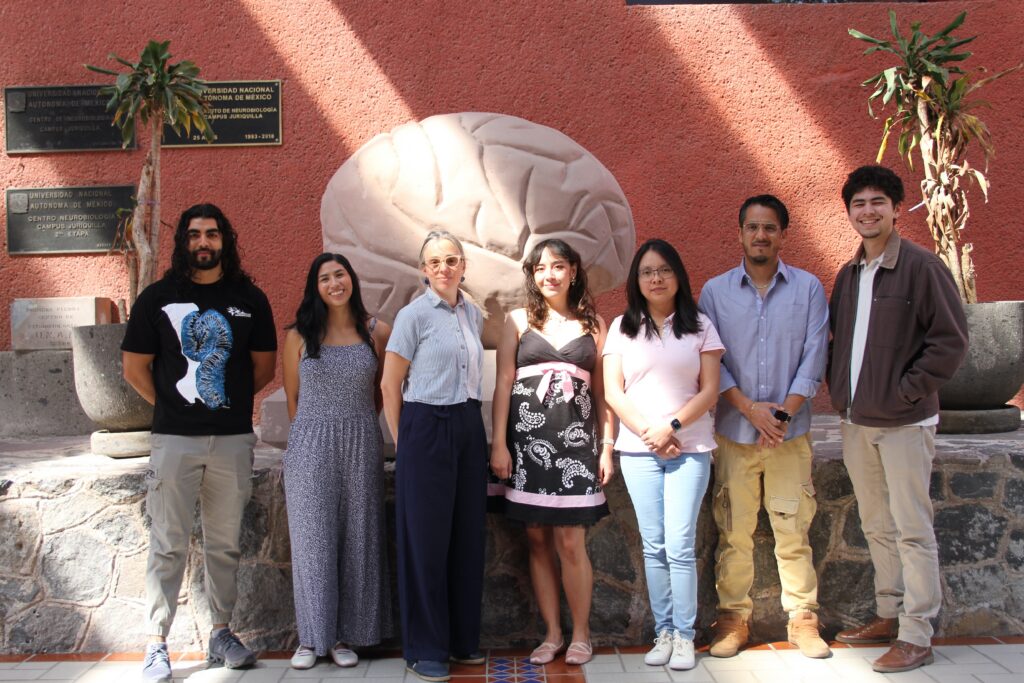
Members of the research team at the laboratory facilities on UNAM’s Querétaro campus.  

The work I’m conducting as part of the SNF Global Center Research Fellowship has encouraged us to begin thinking beyond the laboratory. This current fellowship has given us the opportunity to test the core scientific assumptions behind our proposed open-access intervention. If the pilot project proves successful, the next stages of the work will become considerably more ambitious, involving both the technological development of the intervention and its large-scale implementation and evaluation in school settings. Advancing toward those goals will likely require the support of larger international organizations and cross-sector collaborations. In this context, the opportunities provided by the SNF Global Center at the Child Mind Institute to share, disseminate, and give visibility to our work are extremely valuable, helping create the connections and momentum necessary to move from foundational research toward real-world impact.

More broadly, this kind of collaboration highlights the importance of building bridges between global institutions and local research communities. By combining international support with local expertise and close engagement with schools and communities, it becomes possible to develop solutions that are both scientifically rigorous and genuinely connected to the realities of the populations they aim to serve.

Learn more about the Research Fellowship

The post Rhythm-Based Video Games: Exploring the Cognitive and Learning Potential appeared first on Child Mind Institute.

Prediction of cardiac cycle duration for cardiac-gated closed-loop auricular vagus nerve stimulation

Auricular vagus nerve stimulation (aVNS) is a neuromodulation technology that establishes balance in the autonomic nervous system and, in turn, provides therapy for numerous chronic ailments. Personalized aVNS adapts the stimulation parameters in accordance with the time-varying physiological state of the body, and is suggested to improve the therapeutic outcomes and reduce side effects. The physiological state is estimated via recorded biomarkers such as the electrocardiogram (ECG). aVNS can be delivered in synchrony with any phase of the cardiac cycle before and after the R-peak. This paper proposes the prediction of the duration of the next cardiac cycle after the detected R-peak for the realization of the personalized cardiac-gated closed-loop aVNS applied at any time point during the predicted cardiac cycle. We propose and explore the feasibility of four different prediction methods for predicting the duration of the next cardiac cycle. Two methods are respiration-insensitive, last value and averaging, and the other two are respiration-sensitive, extrapolation and interpolation. Offline recorded ECG waveforms were used to evaluate the different methods. Subsequently, three of the four methods (last value, averaging, and extrapolation) were implemented in real-time on a proprietary aVNS hardware setup, with the data acquisition performed across normal and paced deep breathing. Offline evaluation of the methods revealed that extrapolation and interpolation achieved lower prediction errors during deep breathing with the median absolute error (MdAE) of 32.09 ms (interquartile range 16.07–56.61 ms) and 31.71 ms (15.5–54.06 ms), respectively, as compared with the averaging and last-value methods with 88.75 ms (58.73–124.15 ms) and 40.85 ms (19.7–68.4 ms), respectively. During normal breathing, all evaluated methods yielded lower prediction errors relative to the averaging method 28.5 ms (15.2–43.7 ms). Real-time implementation validated these methods for closed-loop cardiac-gated aVNS, with the best performance achieved by the extrapolation method with 31.4 ms (15.17–55.9 ms) during paced deep breathing. During normal breathing, comparable performance across prediction methods favors the computationally simple last-value approach (MdAE: 31.6 ms). Proposed methods establish the potential of ECG-based R-peak prediction in real-time as a reliable and individual biomarker for the personalized cardiac-gated aVNS, creating a foundation for future clinical applications of aVNS.

Affiliate Updates: Summer 2026

An IOCDF Affiliate carries out the mission of the International OCD Foundation through programs at the local community level within the United States. Each Affiliate is an independent 501(c)3 non-profit organization run entirely by dedicated volunteers.

Below will be quarterly updates from our Affiliates, organized by state. Click the (+) to open each menu and read updates and find contact information for clinics near you.

The post Affiliate Updates: Summer 2026 appeared first on International OCD Foundation.

STAT+: Cassidy proposes bill to rein in 340B drug discount program

WASHINGTON — The chair of the Senate health committee introduced a bill to restrict a federal drug discount program known as 340B that has been lucrative for nonprofit hospitals.

The bill by Sen. Bill Cassidy (R-La.) comes as hospitals face attacks on their bottom lines, especially in Medicaid. The tax bill that Republicans passed last summer significantly decreased the federal government’s share of Medicaid costs and is expected to reduce the number of people on Medicaid. Hospitals also face the prospect of legislation that would lower hospital payments to levels charged by doctor offices, an idea known as site-neutral payments. 

The 340B program also has received scrutiny, and it could be a target for lowering health care spending in future legislation. Cassidy has been looking into the 340B program for years, including an investigation into the company that contracts with the government to be the program’s vendor and a hearing in October.

Continue to STAT+ to read the full story…