To hear health systems tell the story, artificial intelligence tools like ambient scribes are helping not only reduce doctor burnout, but also increasing payments from insurers that haven’t been compensating them properly. But on insurer earnings calls, the payers position themselves as white knights sounding the alarm on providers using AI to raise health care costs to an unsustainable level.
However, at least behind closed doors, both sides appear to agree that AI scribes are driving up health care costs.
“The investors, the health plans, and the providers, in private, were like, ‘OK, well, it’s quite clear scribes are increasing coding intensity. One hundred percent,’” said Caroline Pearson, executive director at the Peterson Health Technology Institute, describing a roundtable PHTI held earlier this year. The nonprofit institute, founded in 2023, evaluates the impact of new technologies on health care costs and quality.
As cancer care becomes data-driven, artificial intelligence (AI) will play an increasingly central role across the treatment continuum, from biomarker identification and drug development to clinical trial recruitment and diagnostics. In this corner of healthcare, the ability of AI to interpret and annotate tumor sample slides that have been digitized is taking center stage. While the promise is great, and AI interpretation is already influencing some clinical care, it has not yet reached critical mass.
“There’s something like a billion slides created every year for diagnostic purposes, and today most of those, about 85%, are still read by a pathologist with a microscope on physical glass slides,” said David West, CEO and co-founder of digital pathology company Proscia. In practice, that means pathologists manually examine slides, identify cancer, grade tumors, and dictate reports in a traditional approach to diagnosing cancer that has seen little change in decades.
Mohamed Omar, MD Associate Professor Cedars-Sinai Medical Center
But that foundation is now shifting. Advances in slide scanning, cloud storage, and AI are turning digital pathology images into data that can be analyzed at scale. At Memorial Sloan Kettering Cancer Center, large archives of digitized slides helped launch Paige AI, one of the earliest companies to train deep learning systems on pathology images linked to clinical and genomic outcomes. This yielded the first U.S. Food and Drug Administration (FDA)-approved diagnostic using AI and digital pathology: Paige Prostate Detect. The company, which was acquired last year by AI-enabled precision medicine company Tempus, now combines Paige’s digital pathology-based AI with Tempus’s broad genomic sequencing data platform.
Researchers in the field say the implications of AI in digital pathology extend beyond image analysis. Mohamed Omar, MD, an associate professor of computational biology at Cedars-Sinai Medical Center, Los Angeles, noted that large language models can help clinicians navigate a research landscape that produces “hundreds of papers every single day” to inform ongoing cancer research. Multimodal AI tools promise to unlock even more insights from digital pathology data by combining it with genomic, radiomic, and clinical data to build powerful new models of both common and rare cancers for diagnosis, drug development, and clinical trial enrollment.
Razik Yousfi SVP and GM, Tempus
While adoption is in its early stages, the advent of faster and less expensive scanners is bringing digital pathology within reach of both regional and rural hospitals. Razik Yousfi, senior vice president and general manager of AI products at Tempus, and a co-founder of Paige, predicts that within the next 10 years, the majority of pathology workflows will be digital. The ultimate goal of the application of AI here is not to replace human pathologists, but to empower them with a capable assistant while spreading adoption beyond major medical centers.
Building the foundations
As the field of applying AI to digital pathology progresses, it needs to build the groundwork for a wider range of potential applications that could address rare cancers and other areas without an abundance of data. One such project is called Atlas, a collaboration between researchers in Korea, Germany, and the United States to build a foundation model trained using 1.2 million histopathology whole-slide images from 490,000 cases sourced from the Mayo Clinic and Charité – Universitätsmedizin Berlin.
Foundation models like Atlas allow large-scale pre-training of data to develop numerical representations called embeddings that capture both the structural and contextual features of slides in the dataset. Atlas incorporates a diversity of diseases, staining types, and scanners, and uses multiple image magnifications during training. This broad approach confers power and utility. It allows the digitized representations of the histology to be adapted, queried, or fine-tuned to very specific downstream tasks using much less data than would be needed to build a one-off model.
As such, a foundation model provides a reusable digitized computational backbone that can be tapped across a wide range of uses, like tumor classification, detection of morphologic structures, biomarker quantification, and outcome prediction. In short, foundational models make the process of querying digital pathology images more efficient compared with past approaches.
Andrew P. Norgan, MD, PhD CMO, Mayo Clinic
“In the case of pathology, the successful AI models developed using ‘conventional’ neural network approaches before the advent of FMs (foundation models) typically required huge amounts of training data to achieve high performance and generalizability—the ability to work across datasets distinct from the training data,” said lead Atlas researcher Andrew P. Norgan, MD, PhD, CMO of Mayo Clinic Digital Pathology and assistant professor of laboratory medicine and pathology. “We think of FMs as [an] enabler that allows model development in pathology … to move from artisanal or craft processes to more scalable and reproducible processes that should allow for the rapid development of high-quality models to address problems in pathology.”
At Paige AI, the company’s early work resulted in the first FDA-approved AI diagnostic, Paige Prostate Detect. Its algorithm was built using a technique called multiple instance learning instead of traditional supervised neural network techniques that require detailed human annotation of slides, a time-consuming and expensive method that could expose the learning to human error. The difference between the two methods is that traditional neural networks expose AI to a slide with cancer and tell it that there is cancer present. In multiple instance learning, the model is shown unannotated slides and is tasked with finding the cancer.
Even this approach, however, required a very large dataset. It became apparent to company leaders that the heavy lifting required to get Paige Prostate Detect to work wasn’t scalable.
“We had kind of cracked this recipe,” said Yousfi. “We know how to use a lot of GPU (graphics processing unit) compute, and if we get a ton of data and a lot of compute, we can build anything. But GPU infrastructure is very expensive, and it takes a lot of time to train a very large system.”
Perhaps the most important factor moving Paige away from this model is that it will not work when there is only a small amount of data available. This blocks the ability to train AI to recognize rare cancers for which sample counts are low. The company needed a different approach.
“We had this idea [for] a new system that was basically trained on all of the images we had access to, independent of the organ and indication and tissue and task,” Yousfi said. “Back then, we didn’t know what that thing was called. But ultimately, that became what everyone is calling today a foundation model.”
Originally trained on 200,000 slides, Paige’s new model now includes 3.5 million images and roughly two billion parameters, making it the backbone for other downstream applications the company builds today. This ability to use foundation models as the AI and data encyclopedia for smaller applications will ultimately propel the field of digital pathology forward by widening the playing field.
Going multimodal
To address more complex predictive problems, additional data types can be integrated. Clinical, radiologic, or genomic data can be combined with morphologic embeddings or used during training to help the model learn which tissue features carry a signal of disease or identify a biomarker. These approaches aim to support precision oncology by making morphologic data computable and aligning slide-derived features with other cancer-focused datasets. “These approaches can surface subtle or ‘latent’ patterns in pathology slides and align them with other data sources,” Norgan said. Pathologist and oncology care teams can then evaluate and interpret the features identified by the models within the clinical and biological context.
“In this way, pathologists and oncology teams use these outputs as decision-support tools, while clinical judgment remains central to diagnostic interpretation and therapeutic decision making,” Norgan added.
Atlas has now been succeeded by Atlas2, which was trained on 5.5 million pathology images and is now a two billion-parameter model, making it one of the largest pathology foundation models to date. The team has explored distilling methods to create smaller, more efficient, and targeted versions of the model that retain performance, with an eye toward finding a balance between scale and deployability.
Proscia is embarking on a different multimodal approach that combines vision models with language models, with the intent of creating methods to query the morphology of digitized slides. Their efforts in vision-language models (VLMs) combine textual data with visual data and allow the model to describe the morphology of a slide, answer questions about what it contains, find images in a database based on a text query, and even follow multimodal instructions such as “circle the tumor area on this image.”
In short, a VLM can be engaged in the same way you can engage a human. “I could go ask a pathologist to point out all the areas of tumor-infiltrating lymphocytes,” West said. “Now, because language-vision models are encoding language and images in the same space, they can do that, too. You can ask the model to describe what is happening in an image, and it will tell you exactly what it sees.”
At Cedars-Sinai, Omar’s work with large language models takes a less direct route of leveraging queries to gather information from research studies or even images. “Basically, you could go to the tool, ask questions, and the tool will provide you with pieces of code,” he explained. “These pieces of code are what you use on the slide to get more information.”
Atlas provides a similar function at the Mayo Clinic, Norgan noted. Because the model-generated embeddings in the digitized slide also encode semantic information, the Atlas team is now building a slide search function, which would allow researchers or clinicians to identify and access slides, or regions of slides, with related features.
Democratizing care
Although it will take time to disseminate the tools needed for AI-enabled digitized models of cancer care to smaller health systems, the future is now at Moffitt Cancer Center, where the research hospital is engaged in a top-to-bottom digitization of its system.
Marilyn Bui, MD, PhD Senior Member Moffitt Cancer Center
According to Marilyn Bui, MD, PhD, senior member of the departments of pathology and machine learning, the comprehensive cancer center plans for full digital adoption across clinical and research labs by 2027. Last August, it entered a multi-year collaboration with integrated AI and digital pathology company PathAI to deploy its cloud-based digital pathology image management system for both research and clinical applications.
Within the pathology department, the transition will mean that all glass slides will be scanned and reviewed digitally, providing the basis for applying AI computational tools to assist pathologists. Bui said that the cancer center is accelerating its move toward clinical AI adoption: “Just today I received an email asking which AI algorithms we plan to incorporate for clinical utility—prostate cancer, breast cancer, general tumor detection,” she said. “For us, it’s no longer just research.”
Moffitt is taking a hybrid approach to algorithm development and deployment within the system. Some AI tools will come from commercial vendors and will be validated internally, while others will be developed by investigators through the center’s translational pathology work. Taking this approach will allow it to apply AI to both common cancers and the rare tumor types Moffitt frequently encounters.
While the digital initiative will be transformational, Bui emphasized that the goal is not to replace pathologists but to enhance their capabilities. She prefers to refer to AI as augmented intelligence to reflect this. “Artificial intelligence suggests a robot replacing us,” she said. “But what we mean is augmented intelligence—tools that assist and enhance our ability to make clinical decisions.”
Further, Moffitt intends to integrate digitized slide data with genomic, proteomic, and clinical outcome data to build a multimodal data environment that could advance precision oncology. “Digital pathology and AI will allow us to extract far more information from tissue samples,” Bui said, “making our diagnoses more actionable for the clinical team and ultimately improving patient care.”
The promise of AI in oncology isn’t just better algorithms, it’s broader access. The maturation of computational pathology and its dissemination from large cancer centers like Moffitt to regional and rural health systems has the potential to provide levels of care typically only available at large research hospitals in community settings as well.
“It’s about democratizing access to care,” said Omar. “For a person in Maine or Wisconsin or another place to have access to the same high-quality care that you would get from a larger academic medical center in LA or New York, slides have to be digitized.”
Over the next 10 years, there could be a compelling business case for hospitals to embrace digital pathology. As the cost of scanners comes down and a broad range of diagnostic tools becomes available, digitizing routine H&E slides could become common.
While genetic cancer testing can cost hundreds of dollars, Omar pointed out that pathology slides “cost $5 [and] they are available universally, in all patients with cancer.” As AI models increasingly identify genomic-level insights directly from those inexpensive images, it represents a “huge win for accessibility, making AI work for patients who cannot afford genetic tests,” Omar said. If there is broad adoption of digital pathology “it is very easy to roll out any kind of AI models and computational tools across the board, across situations and locations that don’t have access to care.”
“At the end of the day, all slides will be digitized,” he concluded. “It’s just a matter of time.”
Chris Anderson, a Maine native, has been a B2B editor for more than 25 years. He was the founding editor of Security Systems News and Drug Discovery News, and led the print launch and expanded coverage as editor in chief of Clinical OMICs, now named Inside Precision Medicine.
“It took me years to find out that what I was dealing with was OCD!”
This is a phrase all too often repeated by people living with obsessive compulsive disorder. Currently, individuals live with OCD for an average of 7 years (Dell’Osso et al, 2019) before they even receive a diagnosis, all while symptoms may intensify and daily life often becomes increasingly constrained.
Clinicians, researchers, and advocates have long raised this concern. What has been missing is clear data behind how many people with OCD in the U.S. are missed in clinical settings or are not receiving the most effective treatment.
When the International OCD Foundation undertook this analysis, the scale of the problem became unmistakable. Millions of people in America are currently struggling with OCD without the most effective treatment.
Well established prevalence rates for OCD indicate that nearly 10 million people in America — roughly 3% (Ruscio et al, 2010; Stein et al,2025; Ringeisen et al, 2025) — will have OCD at some point in their lives. Yet our findings suggest that 75% of them are never even identified, and up to 95% aren’t receiving the most effective treatment for the disorder.
In our analysis, we discovered significant systemic breakdowns at several key points of a patient’s journey: screening, diagnosis, referral, and treatment.
Screening and Diagnosis: Receiving a clinical diagnosis is an important step toward recovery as it promotes understanding and opens paths to effective treatment. Yet our findings suggest that this crucial initial step is missing for many millions of people. Of the 10.4 million patient records reviewed in our analysis, only 0.51% received a formal OCD diagnosis, far below the 3% expected prevalence rate.
Referral to appropriate care: After a diagnosis is obtained, a handoff to appropriate care is needed to keep the patient from falling out of the treatment pathway. Here, too, we found an alarming gap within our sample: more than 72% of patients identified as having OCD did not receive a referral for cognitive-behavioral therapy (CBT), the most effective treatment for OCD.
Effective Treatment: Decades of research has established Exposure and Response Prevention (ERP) therapy, a specific form of CBT, as the most effective, first-line therapy for OCD. Yet, an astounding 95-98% of people with OCD had not received ERP treatment. Even when people seek help — and even when they are diagnosed — the vast majority never reach the treatment most likely to help them recover.
What We Can Do About It
The breakdowns seen in each step of the care pathway reinforce the focus of IOCDF’s Vision 2030, our five-year strategy to address the systemic barriers that keep effective OCD treatment out of reach.
While the findings are stark, they illuminate many opportunities for change:
Identify symptoms earlier by implementing routine OCD screening in primary healthcare and mental health settings.
Support clinicians in better understanding and treating OCD by expanding training in assessment, diagnosis, and evidence-based treatment modalities.
Help people receive care that works by strengthening adherence to existing professional treatment guidelines.
Increase the number of people with OCD who receive effective treatment by supporting affordable access to ERP and other evidence-based therapies.
Let people know they’re not alone by raising accurate public awareness of what OCD really is — and that it is treatable.
Vision 2030 outlines how the IOCDF is committing its resources, partnerships, and expertise toward advancing these priorities — by increasing awareness and community, expanding access to effective treatment, and advancing research. Together, these efforts are designed to work in concert, improving clinical training, implementing screening for early identification, strengthening pathways from diagnosis to care, and increasing the likelihood that people receive evidence-based treatment.
At the same time, the scale of the problem revealed in this report makes clear that progress depends on collective action across the field. Clinicians, health systems, educators, researchers, policymakers, advocates, and people with lived experience all have a role to play. Together, these efforts can help ensure that people with OCD reach effective treatment sooner, reducing years of unnecessary confusion and distress.
How You Can Help
Join us in building better access to effective treatment for people with OCD:
Share America’s OCD Care Crisis and other IOCDF resources with your clinicians and healthcare professionals.
Donate to the IOCDF to support training programs, advance research, and raise awareness of OCD and related disorders.
The current state of treatment for OCD in the U.S. is sobering, but it is not the end of the story. OCD is treatable, recovery is possible, and change can happen as awareness grows and access expands. With continued effort, the gap between how many are struggling and how many receive effective care can begin to close. A brighter future is possible — and we can build it together.
References
Dell’Osso, B., Benatti, B., Grancini, B., Vismara, M., De Carlo, V., Cirnigliaro, G., Albert, U., & Viganò, C. (2019). Investigating duration of illness and duration of untreated illness in obsessive compulsive disorder reveals patients remain at length pharmacologically untreated. International Journal of Psychiatry in Clinical Practice, 23(4), 311–313. https://doi.org/10.1080/13651501.2019.1621348
Ruscio, A. M., Stein, D. J., Chiu, W. T., & Kessler, R. C. (2010). The epidemiology of obsessive-compulsive disorder in the National Comorbidity Survey Replication. Molecular Psychiatry, 15(1), 53-63. https://doi.org/10.1038/mp.2008.94
Stein, D. J., Ruscio, A. M., Altwaijri, Y., Chiu, W. T., Sampson, N. A., Aguilar-Gaxiola, S., Al-Hamzawi, A., Alonso, J., Chardoul, S., Gureje, O., Hu, C., Karam, E. G., McGrath, J. J., Navarro-Mateu, F., Scott, K. M., Stagnaro, J. C., Torres, Y., Vladescu, C., Wciórka, J., Xavier, M., … Kessler, R. C. (2025). Obsessive-compulsive disorder in the World Mental Health surveys. Research Square, rs.3.rs-6090427. https://doi.org/10.21203/rs.3.rs-6090427/v1
Ringeisen, H., Edlund, M., Guyer, H., Dever, J., Carpenter, L., Olfson, M., First, M., Geiger, P., Liao, D., Peytchev, A., Carr, C., Chwastiak, L., Dixon, L. B., Monroe-Devita, M., Scott Stroup, T., Swanson, J., Swartz, M., Gibbons, R., Stambaugh, L., Bareis, N., … Mental Health and Substance Use Disorders Prevalence Study Consortium (2025). Prevalence of past-year mental and substance use disorders, 2021-2022. Psychiatric Services (Washington, D.C.), 76(8), 720–728. https://doi.org/10.1176/appi.ps.20240329
IOCDF Training & Resources for Clinicians
When clinicians have easier access to best practices in OCD diagnosis and treatment, more people can receive effective care. The IOCDF’s Training Institute offers evidence-based programs for clinicians at every stage of practice, including:
A robust, on-demand webinar catalog (CE-eligible!) covering fundamentals, modalities, related disorders, and comorbidities. The catalog includes access to the free webinar, OCD Basics.
IOCDF’s Training Institute offers intensive workshops and events, consultation groups, and more for clinicians of every level.
Professional Members at the IOCDF join a nationwide network of committed professionals, are eligible for listing on our Resource Directory, and have access to special pricing for Training Institute offerings.
A Conversation with Tatum Redmond and Amanda van der Vyver-Anderson from Community Keepers, South Africa
By Mai El Shoush, Partnerships Campaign Manager, Stavros Niarchos Foundation (SNF) Global Center for Child and Adolescent Mental Health at the Child Mind Institute
Community Keepers is an award-winning organization based in Stellenbosch, South Africa, which works to improve the social and emotional well-being of learners and their caregivers. The SNF Global Center at the Child Mind Institute works with the organization to further advance the comprehensive mission of transforming schools into safe spaces where student well-being is prioritized alongside academic achievement. This includes strengthening the workforce to expand evidence-based support and brief interventions through low-intensity psychological therapy approaches.
While addressing the workforce gaps, the partnership has yielded valuable insight into the essential competencies front line workers require to effectively support young people experiencing mental health challenges. Together with other NGOs, Community Keepers has also been instrumental in strengthening the process of developing context-sensitive and culturally appropriate training materials scheduled for pilot implementation in South Africa later this year – representing an important step towards strengthening mental health care systems for underserved communities. The partnership also extends beyond training development, as the SNF Global Center at the Child Mind Institute continues to collaborate closely with Community Keepers on an upcoming randomized control trial (RCT). The scientific evaluation will assess both the feasibility of establishing a virtual clinic for young people and the effectiveness of remotely delivered cognitive behavioral therapy (CBT) interventions via video consultations. The research is intended to expand access to equitable and quality mental health care for young people across South Africa. Tatum Redmond has been a care facilitator in one of the Community Keepers’ high school-based offices, while Amanda van der Vyver-Anderson is an educational psychologist and heads the training and development of Mental Health First Aiders for internal and external staff.
Amanda van der Vyver-Anderson
How important is it to approach issues such as academic pressure within the wider conversation around youth mental health in South Africa, and beyond?
It is critical to integrate discussions of exam stress into the broader dialogue surrounding youth mental health, both here in South Africa and internationally. We see countless students under immense pressure to not only pass, but also secure their future prospects and meet family expectations. This is unfortunately often dismissed as “just school” or a “normal” experience. However, it impacts a substantial number of young people, often more severely than we acknowledge. And the level of support available is not equitable across the board. Addressing this is crucial because of the detrimental effects on core cognitive functions — and ultimately, academic performance — as well as the significant toll on mental health. This can manifest as anxiety, burnout, and even depression.
In what ways can exam-related stress connect to broader mental health challenges?
While a certain level of stress can serve as a beneficial motivator, severe distress can lead to cognitive shutdown. This specifically impacts the executive functions — planning, organizing, prioritizing, working memory, focus, and concentration — that are fundamental to preparing for exams. This shutdown can then create a detrimental, ongoing cycle of heightened stress about exams or the future, coupled with a decline in the ability to take effective action.
It’s vital to recognize that exam stress does not merely stay in the exam room — it can be a gateway to larger mental health challenges. Constant stress regarding school performance, marks, or the fear of failure can escalate into conditions like anxiety, chronic overwhelm, or depression. Students may experience sleep disruption, poor nutrition, and feelings of inadequacy. And these symptoms often persist long after the test is over. Compounding this is the reluctance of most students to seek help because they believe their feelings are normal or fear appearing weak. Yet, if left unaddressed, sustained pressure along with these symptoms can profoundly affect their psychological well-being.
Tatum Redmond
What role do community-focused organizations such as Community Keepers play in linking academic stress to systematic youth mental health support and improvement?
Organizations like Community Keepers play a truly pivotal role — not merely as emergency responders but as an integrated support system within educational institutions as well. Crucially, they move beyond immediate crisis response by collaborating with schools to develop long-term support and to provide safe spaces to engage in dialogue. They offer genuine attention and care when learners are struggling with school demands, exams, and family pressures.
The approach is not just “addressing stress today” but asking, “How can we create an enduring environment where young people feel safe, supported, and connected?” Doing this requires collaboration with the learners themselves, educators and school staff, as well as parents, caregivers, and community leaders.
What factors make schools uniquely positioned to be safe and supportive spaces? Schools are exceptionally well-positioned to serve as safe and supportive spaces for students for several key reasons:
Learners spend a substantial portion of their day at school, making it a primary setting where adults can observe signs of distress, anxiety, or coping difficulties.
Schools have the opportunity to house critical personnel — teachers, counselors, and external partners like Community Keepers — who are on hand to offer support or a listening ear.
The curriculum can extend beyond academic skills and learning. It can include mental health and emotional literacy, stress management, and peer support.
When a school actively fosters an environment of safety, respect, and validation, it fundamentally alters how learners navigate pressure, stress, or complex personal problems. Having a guaranteed safe space at school is deeply stabilizing for the mind.
How can the goal of securing mental health support as a pillar of education be reached? Achieving the goal of establishing mental health support as a solid, non-negotiable pillar of education requires several strategic commitments:
Schools must actively allocate resources for it, ensuring adequate numbers of support staff, rather than relying on minimal provision. Teachers need training to recognize signs of distress and respond helpfully and appropriately.
Mental health literacy must be integrated into the curriculum. Instead of only focusing on academic subjects, topics like stress management, emotional intelligence, and maintaining healthy relationships should be covered.
The government must demonstrate a serious commitment, including mental health support in education budgets, developing clear policies, and ensuring rigorous follow-through.
How have your practices and initiatives in promoting and supporting schools as safe spaces made meaningful change? We’ve observed tangible change in the learners’ attitudes; those who feel comfortable expressing their emotions are generally happier and more resilient because they have established a safe, non-judgmental space where trust is built.
What role can teachers and school leadership play as partners in creating an evidence-based supportive learning environment? Where are the gaps in building capacity and how can they be better supported? Educators and school leadership are essential partners in establishing an environment that successfully supports learner mental health and cultivates a culture of well-being. They can do so by:
Prioritizing both the physical space and curriculum time necessary for learners to engage with support services.
Serving as role models who embody and encourage emotional regulation and actively normalize help-seeking behaviour.
Remaining deeply cognisant of factors that contribute to learner distress so as to not inadvertently exacerbate it.
Investing in staff wellness and support, capacity building, and policy reform is not merely beneficial, but a foundational requirement to capacitate educators effectively. This allows them to sustainably support the mental health of their entire school community.
The SNF Global Center’s work in South Africa is carried out through the Child and Adolescent Mental Health Initiative (CAMHI South Africa). We are proud to expand the partnership with Community Keepers and value their collaboration towards co-creating scalable, school-centered mental health approaches that authentically respond to the diverse lived-experiences of young people.
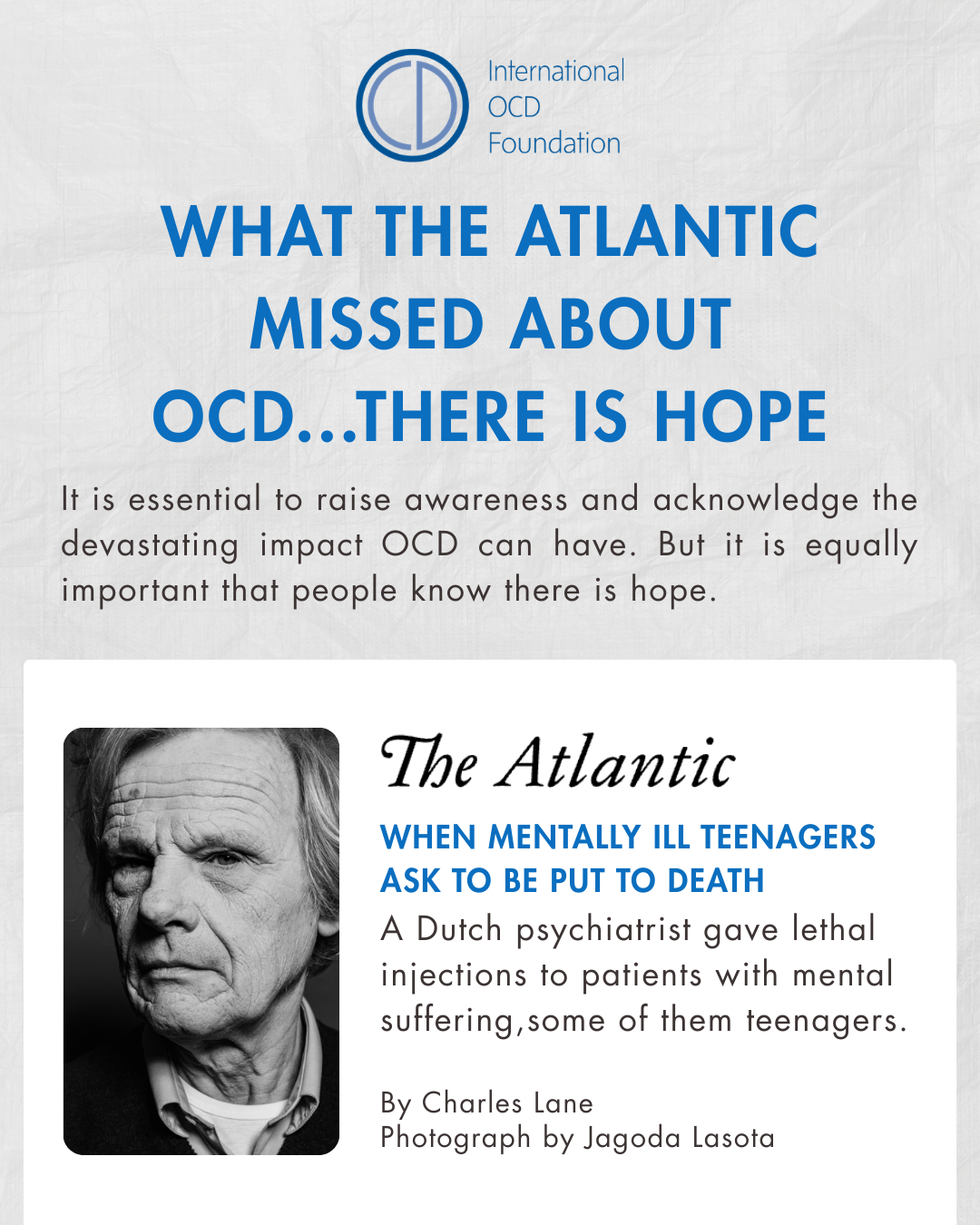
The Atlantic’s recent article, “When Mentally Ill Teenagers Ask to Be Put to Death,” brings needed attention to the profound and often misunderstood suffering caused by obsessive compulsive disorder (OCD). As the story illustrates, OCD can be severe, chronic, and life-threatening — so much so that individuals with OCD are at significantly elevated risk of suicide.
However, what is missing from this important conversation is an equally critical truth: effective, evidence-based treatments for OCD exist. Unfortunately, even after years in care, up to 98% of people never receive the many first, second, and third-line approaches that are available due to systemic breakdowns in proper screening, diagnosis, referral, and access to specialized care.
With appropriate care, many individuals who once felt trapped by their symptoms are able to reclaim their lives, pursue their goals, and thrive. At the International OCD Foundation, we regularly hear from people affected by OCD who have gone from a place of despair to one of hope because they were able to access evidence-based treatment, specifically Exposure and Response Prevention therapy (ERP).
It is essential to raise awareness and acknowledge the devastating impact OCD can have. But it is equally important that people know there is hope. The tragic outcomes outlined in “When Mentally Ill Teenagers Ask to be Put To Death” are not inevitable. With continued efforts on raising accurate awareness of OCD and strengthening our systems of care around the globe, more people with OCD can access the effective, life-saving treatment they deserve.
For those seeking help, resources and treatment guidance are available at iocdf.org.
The International OCD Foundation is alarmed by the apparent sudden and widespread termination of grants supporting vital mental health and addiction services previously funded through the U.S. Substance Abuse and Mental Health Services Administration (SAMHSA).
These programs provide life-saving services for individuals experiencing acute mental health crises and help prevent symptoms from escalating to emergency or inpatient levels of care.
As detailed in our recent white paper, America’s OCD Care Crisis, 95% of Americans with obsessive compulsive disorder (OCD) are not receiving the most effective treatment. When OCD goes untreated or is treated with approaches that are not evidence-based, individuals face increased distress, functional impairment, isolation, and elevated risk of crisis. Access to trained clinicians and community-based mental health services is essential for helping people remain safe during periods of heightened distress and navigate next steps for treatment.
At a time when so many people with OCD and related disorders already struggle to access appropriate care, reducing support for frontline mental health professionals further weakens an already fragile system.
The IOCDF urges the reinstatement of these grants and continued federal commitment to accessible, evidence-based mental health and addiction services for all who need them.
I remember the day my white high top Puma sneakers my parents gifted me for Christmas became the exact opposite of the color they came boxed in. It was a post rainy day in middle school, on a mulch covered, semi grassy area we considered our soccer field with two benches representing goals. After enjoying an intense match, what I did not enjoy but assumingly brushed off was the fact of how dirty my shoes were. Fast forward to later that day, I spent hours cleaning the shoes, trying to restore them to their original look.
Something felt different than other times I cleaned.
Every speck had to be clean. The more time I spent, the more visible other “not as clean” areas of the shoes became, requiring their own dedicated time of cleaning. Slowly, this cascaded into many other aspects of life such as my bedroom and closet needing to be organized a certain way, a tornado of relentless doubts concerning my relationships, with this dark monster in my head controlling what I can do, think, and feel. It felt like an eternity but at the same time as if no time passed from when I first touched to clean those shoes to when I could not sleep in my own bedroom and instead slept downstairs due to not wanting to mess the space up and not being able to enter and exit my closet as easily, so needing to rewear clothes days on end. I thought that doing what the monster or voice or whatever it was wanted would lead me to peace, as the relief from the sky high anxiety and gloom that came from performing what I know now as compulsions came only to have what I learned were obsessions come back, if not stronger, reinforcing this vicious cycle. My parents noticed my change in behavior, from avoiding my room at most costs to being late to dinner by up to an hour or two at times. I had only vaguely heard of obsessive compulsive disorder, OCD, and brought the idea up to my parents. The landscape we were dealing with was completely new and I felt even more alone due to this in addition to the isolation the condition induces you to be in. But we began to look for therapists, where I started talk therapy, with the therapist trying their best but the therapy modality was not the right one for me. Next up was a hypnotherapist, which also did not work for me. I needed some action to be okay with the high emotion filled state I was in when the bouts came on, in other words, exposure and response prevention therapy. After doing some research, I landed upon NOCD, an OCD teletherapy and advocacy organization.
I could not believe what I was hearing through the basement, not my room, laptop screen about actually going into my room, and that was not even the worst part. I just had to open my closet, take clothes out, move items in my room, and not do anything. “Maybe it is, maybe it is not” was a phrase that my therapist told me throughout therapy. With the significant support of my family, therapist, and friends, I was able to be okay with not being okay. Exposure and response prevention therapy makes you face the monster, making you enter the state in which you experience high anxiety. The therapy makes you look the monster in the face and realize it was not that big, not talking or engaging with you, making you sit in the discomfort and not do anything you so desperately want to do. With this methodology and rigor, I was able to coexist with the beast, and slowly it shrank, still existing though. But that is okay. That happens.
OCD belongs to a category of disorders called Obsessive Compulsive and Related Disorders within the Diagnostic and Statistical Manual for Mental Disorders, Fifth Edition, a manual that influences not only how patients receive care but also research funding and medical training. Although not officially recognized in the manual, there are many discussed subtypes of OCD depending on the obsessions and or compulsions one experiences. Some people, like me, had symptoms that ebbed and flowed in terms of severity and percolated from subtype to subtype. My symptoms throughout my experience with the condition range from having to keep most of the items in my room a certain way, doubting whether I want to be with my partner, questioning my morals, wondering whether something happened in the past pertaining to people in my life even though it did not, and more. Throughout typing this, thoughts flood my head, similar to ones I experienced, say, six years ago.
I hope to be able to perform research in the condition as well as treat people who were and are in my shoes. With up to 242 million people worldwide meeting clinical diagnostic criteria for OCD, about 40 to 60 percent experiencing treatment resistant OCD, more than two thirds of the general public not being able to accurately identify OCD, and mental health still being stigmatized today, there is more needed to be done from all fronts. When one type of online treatment is sought, about two thirds of patients achieve a clinically significant outcome, but on average, it takes greater than seven years for someone to receive a diagnosis of OCD and it can take up to seventeen years for an individual diagnosed with OCD to receive treatment. This is a multifaceted problem that requires a multifaceted approach which requires a banding of people worldwide to come together to promote awareness of the condition and a safe space for people throughout who have OCD.
Today, as I am typing this, I still am experiencing many of the symptoms I have before. The condition does not just go away, but it does become more manageable. If you are struggling, there is hope, there is a way, no matter how impossible it feels. I felt as if there was none, no light at the end of the tunnel, spending many hours crying out asking why to a source I was not even aware of, answered only by my own repetitive thoughts. But as someone who has been there, you will be okay. Even if multiple therapeutic modalities do not work, you feel like you want to give up because a current exposure seems impossible to do, you feel more anxiety at times, you feel like you are letting people down if you do not improve, you feel like the monster you were once fighting off keeps going, keep going. Seek help in many ways, rely on your community, and for those who have a hard time finding one, we are here for you, the International OCD Foundation community, and I most certainly am as well. Thank you for reading this and I am sending you hope and luck wherever you are. You are never alone.
By Karla Thorpe, Vice President, Programs and Priorities, Mental Health Commission of Canada.
The statistics are staggering, but they represent real human lives: 117 million people worldwide have been forcibly displaced from their homes due to war, famine, and other horrific conditions. To put this in perspective, that’s four times the number displaced during the Second World War. At this year’s International Association for Suicide Prevention conference, experts gathered to address a critical question: How do we support the mental health of those who have lost everything?
The Scale of the Crisis
The numbers tell only part of the story. Two-thirds of asylum seekers find refuge not in wealthy nations like Canada, but in low and middle-income countries that often lack the resources to meet their overwhelming needs. These displaced populations face a perfect storm of challenges: shrinking settlement options, limited support services, and a desperate shortage of culturally appropriate care.
For many refugees, the trauma doesn’t end when they reach safety. Prolonged exposure to violence, separation from loved ones, and the uncertainty of displacement create conditions where suicidal thoughts and behaviours become tragically common. Yet we lack comprehensive data on suicide within displacement camps, partly because refugees often fear that reporting mental health struggles could jeopardize their immigration prospects or those of their families.
Understanding Complex Needs
The mental health challenges facing refugees extend far beyond clinical symptoms. Families torn apart by circumstance may find themselves scattered across different camps or even different countries. The trauma manifests differently across demographics and cultures, requiring nuanced responses rather than one-size-fits-all solutions.
Men often struggle most with feelings of powerlessness, finding healing through employment opportunities that restore their sense of purpose and ability to provide for their families. Women face distinct vulnerabilities, including protection from violence while trying to create stability and hope for their children. Children, who make up approximately 40% of all refugees, grapple with profound losses: family members, security, and often their childhood itself.
It bears repeating what should be obvious but sometimes gets lost in clinical discussions: even the most sophisticated mental health interventions fail without access to basic necessities like food, water, and medicine.
Despite overwhelming challenges, the conference revealed inspiring examples of both systematic programs and grassroots innovations making real differences in refugees’ lives.
Structured Interventions
Throughout the conference, we heard about promising practices being implemented systematically across different countries and innovative, grassroots initiatives being spontaneously enacted to respond to specific local needs. The World Health Organization’s “Problem Management Plus” program trains refugee volunteers to deliver brief cognitive behavioural therapy interventions, creating a sustainable model that builds community capacity while addressing immediate needs.
Similarly, the “Contact and Safety Planning” (CASP) program offers a cost-effective approach: screening to identify those at highest suicide risk, then working directly with these individuals to develop personalized safety plans.
Community-Led Solutions
The most enheartening stories emerged from refugees themselves. Across displacement sites, people are organizing healing and listening circles for those sharing common experiences or challenges. Religious leaders, teachers, and sports coaches are stepping up to support overstretched health professionals. Women are training other women in low-intensity interventions to help those who cannot access care, conducting check-ins via WhatsApp, and providing peer support through text messages.
These organic solutions represent more than resourcefulness; they embody a fundamental truth that conference speakers repeatedly emphasized: refugees are resilient, understand their own needs, and possess valuable insights about healing and recovery.
Redefining Support
A central theme emerged throughout the discussions: supporting refugee mental health requires a power shift from traditional top-down service delivery. Effective interventions must be co-designed with refugee populations, ensuring cultural relevance and community buy-in. Many of the most impactful programs are also surprisingly low-cost, challenging assumptions about resource-intensive treatment models.
But perhaps the most important insight that stuck with me concerns our fundamental approach. After experiencing profound inhumanity throughout their journeys, refugees encounter a critical moment when receiving support: our response can either compound their dehumanization or offer compassion, care, and genuine connection. In a world that has shown them cruelty, our interactions become opportunities to demonstrate that humanity still exists.
Lessons for Canada
How can Canada apply these international insights to strengthen our own refugee support systems?
Stability as Foundation: Following tremendous upheaval and uncertainty, refugees need predictability. Offering permanent status rather than temporary measures provides crucial emotional stability during recovery.
Eliminating Barriers: We must address inequitable access to services, including waiting periods for health coverage that leave vulnerable populations without essential care during critical adjustment periods.
Shifting Public Narrative: Public education campaigns should help Canadians understand the global humanitarian crisis and reframe refugees not as burdens, but as resilient individuals deserving of support and capable of tremendous contributions to our communities.
A Call for Compassion
The refugee mental health crisis demands more than policy responses; it requires a fundamental commitment to recognizing the humanity in every displaced person. As we’ve learned from innovative programs worldwide, the most effective interventions often spring from refugees themselves, given proper support and respect for their expertise about their own experiences.
Globally, we can and must do better. The question isn’t whether we have the resources to support 117 million displaced people; it’s whether we have the collective will to demonstrate that compassion and human dignity remain powerful forces in our world.
In this issue of The Lancet Psychiatry, Benjamin Perry and colleagues1 present a collaboratively developed, refined, and externally validated risk prediction tool (the Psychosis Metabolic Risk Calculator [PsyMetRiC]) that is clinically available, and that can separately predict the risk of clinically significant weight gain, metabolic syndrome, and type 2 diabetes in young people with psychosis. Key to the collaborative development of PsyMetRiC has been the involvement of young people with a lived experience of psychosis, supported by the McPin Foundation and Equally Well UK.