SAN FRANCISCO — Matt Wilsey adjusted the plastic tube coming out of his 15-year-old daughter’s stomach and tried, again, not to think beyond the next 15 minutes. His job was to be there with Grace and let his wife, Kristen, rest. He could not think about the future. He could not wonder, again, if he had made the right choice or if his daughter would survive.
Three weeks before, Grace received a gene therapy meant to save her life and spare her further harm from NGLY1 deficiency, an ultra-rare genetic condition that came with a cascade of profound developmental challenges, preventing her from ever speaking or walking with ease.
Wilsey fashioned the therapy himself.
He did not sit in the lab. He did not inject the rats or slice open their brains. But he had hired the scientists who did. He recruited advisers, including Nobel Prize winners, brought together the families of other children diagnosed with the condition, and pulled together an A-team of investors and donors. Through it all, he was sustained by his devout Catholic faith.
He came to accept that Grace would never live an independent life. But he hoped the drug would allow her to live longer, maybe even say a few words. And he believed the game plan he wrote might serve as a guide to curing hundreds of other rare diseases.
“We carry the hopes of many,” he wrote to his staff once. “I’m not just talking about NGLY1 families. I receive emails, calls, and texts from professionals and other advocates. They are blown away by what we have accomplished and hope we are an ice breaker for them. Our trial has the potential to really boost / save a decimated field.”
Then the drug meant to save Grace’s life landed her back in the hospital, feebler than she had ever been. He sat beside his daughter, with her soft eyes and long braided hair, her face all puffed up, and prayed her condition would improve.
For a father and his sick child, it was a matter of life and death. But the entire pharmaceutical industry was watching, too.
Fujifilm Biotechnologies reports that its commercial-scale cell culture manufacturing facility in Holly Springs, NC, has been selected as one of only seven participants in the FDA’s PreCheck Pilot Program. The program, which also includes Amneal Pharmaceutical, Cellares, Eli Lilly, Kriya Therapeutics, Kyowa Kirin, and Regeneron, is a strategic initiative designed to strengthen America’s pharmaceutical manufacturing capabilities and help accelerate patient access to critical medicines.
“We are honored that our Holly Springs site has been selected to participate in the FDA’s PreCheck Pilot Program,” said Lars Petersen, president and CEO of the company. “We’re committed to helping our customers bring life-changing therapies to patients faster, and participation in this initiative will help support greater access to critical medicines in the U.S.”
The pilot program is designed to enhance FDA-industry engagement by facilitating earlier interactions to minimize uncertainty associated with manufacturing readiness, with the goal of creating a more efficient regulatory review process, and strengthening the resilience of the U.S. pharmaceutical supply chain. The FDA PreCheck Pilot Program will focus on manufacturing readiness, regulatory predictability, and expedited facility inspections.
Fujifilm’s customers at the Holly Springs site includes argenx, Johnson & Johnson, Regeneron, and a number of other pharma firms. On behalf of its customers, Fujifilm’s Holly Springs site manufactures monoclonal antibodies (mAbs), including treatments for complex diseases.
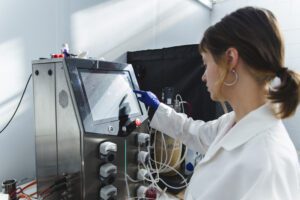
The pilot program is designed to enhance FDA-industry engagement by facilitating earlier interactions to minimize uncertainty associated with manufacturing readiness. [Westend61/Getty Images]
“As our customers continue advancing innovative biologic therapies, manufacturing readiness and regulatory predictability are increasingly important,” said Laurie Braxton, senior vice president and site head, Holly Springs at Fujifilm. “Our participation in the program reinforces our commitment to providing customers with high-quality manufacturing capabilities.”
Fujifilm’s Holly Springs facility is one of North America’s largest end-to-end cell culture biopharmaceutical manufacturing facilities and represents a key node in the company’s growing global manufacturing network, according to Lars Petersen. The $3.2 billion manufacturing site opened with a capacity of 8 x 20,000 L mammalian cell culture bioreactors, and will add a drug product line in early 2027, followed by Finished Goods. An expansion is underway to double drug substance capacity with an additional 8 x 20,000 L bioreactors.
With an increase in demand for U.S. manufacturing capacity, Fujifilm officials say they will accelerate the opening of its expansion by six months, targeting late FY2027. The Holly Springs site recently surpassed 800 employees, with the overall goal of hiring a total of 1,400 local employees by 2031.
Designed with standardized platforms and advanced digital capabilities, the site is part of the company’s interconnected kojoXTM operating system, which harmonizes systems, equipment, and processes across global sites to enable faster technology transfer, greater manufacturing flexibility, and consistent quality for customers worldwide
WASHINGTON — Last week, pharmaceutical leaders filed into a meeting room in the Eisenhower Executive Office Building, next to the White House, for a meeting with Secretary of State Marco Rubio, health secretary Robert F. Kennedy Jr., and HHS Chief Counsel Chris Klomp.
The administration officials had a message for the industry: It’s time to bring production of essential medications back to the U.S. — or at least closer to home.
The meeting, described by an administration official and two people familiar with the event, focused on increasing U.S. control of the supply chains for the 86 medicines deemed essential by the health department’s Assistant Secretary for Preparedness and Response.
Mammalian cell-based manufacturing systems cannot meet the needs of the Global South, say researchers, who suggest that local production with plant-based expression platforms is a potential low-cost alternative. The researchers made their case in a recent paper, arguing that although mammalian systems are a good option for countries where centralized production facilities can be established, they are less suited to resource-limited regions.
“Mammalian cell lines, particularly Chinese hamster ovary cells, are the industry standard for producing complex biologics that require human-like PTMs [post-translational modifications], offering high-quality mAbs and vaccines with established regulatory approvals for pandemic applications.
“However, their high operational costs, slow doubling times, susceptibility to viral contamination, and dependence on expensive media significantly limit global equity and accessibility, particularly in resource-constrained settings such as the Global South,” the authors write.
Plant-based expression
Overcoming these constraints and increasing access to medicines in the Global South, will require the establishment of local production capacity that is both economically and environmentally sustainable, the authors say, citing plant-based systems as a potential option.
“Plants are increasingly used as platforms for producing vital biological molecules, such as pharmaceuticals and industrial biomaterials, through advanced strategies, including genetic engineering, process automation, and precision agriculture.”
The authors point to things like the Gaucher’s disease drug, Elelyso, the Ebola treatment, ZMapp, and the COVID-19 vaccine, Covifenz, as examples of current plant-made biopharmaceutical products.
And the potential advantages are significant. For one thing, plant-based systems are generally faster to produce protein and more easily scalable than mammalian platforms, according to the authors.
“Plant-based expression systems, particularly seed-based platforms such as rice, wheat, tobacco, sorghum, etc., offer scalable, field-level production regarded as safe status, low-cost PTMs, and exceptional environmental advantages.
“These systems enable decentralized, long-term stable storage of biologics and the production of animal-free, glycosylated therapeutics, significantly enhancing health security in resource-limited settings,” they write.
And the utility of plant-based expression systems is being further enhanced by new genetic modification techniques. The authors cite AI-driven genomic optimization and glyco-engineering as examples of how such systems are being improved.
“Drought-tolerant plant platforms can significantly enhance local production capacity in developing economies, addressing critical barriers such as limited investment, infrastructure constraints, and regulatory hurdles.”
Seeds not cells
Plant-based systems can also help biopharma address one of the major challenges of working in the global south—the need for extensive cold chain logistics infrastructure.
Mammalian cells are sensitive to environmental conditions and, as a result, manufacturers use temperature-controlled environments to prevent damage. These concerns are less of an issue for plant-based systems produced from seeds.
“Seed-based platforms offer a strategic advantage by enabling ambient-temperature storage of recombinant proteins for extended periods without loss of bioactivity. This capability significantly reduces cold-chain dependency and enhances logistical resilience in resource-limited settings.
“Consequently,” the authors continue, “plant-based expression systems represent a premier, cost-effective pathway for the large-scale production of biologics.”
A new class of biotech buyer is emerging, as frontier AI and big tech companies acquire early-stage biology foundational platforms. How do big tech acquisitions differ from traditional pharma exits, and what are the potential implications for founders, investors and the pharmaceutical industry?
The infrastructure moment for AI-driven drug discovery continues to accelerate, with billion-dollar investments flowing into end-to-end platforms driven by models and compute, rather than single drug assets.
Underpinning this trend is the proliferation of AI reasoning workflows that accelerate biomedical research and large integrated datasets spanning genomics, transcriptomics, proteomics, metabolomics, and more. Together, these capabilities are enabling more powerful models of biological complexity for a new era of programmable therapeutics guided by prediction and rational design.
“This isn’t about developing therapeutics for a particular indication or target,” explained Max Jaderberg, PhD, president of Isomorphic Labs, on the Training Data podcast. Instead, the Google DeepMind spinout is building a general design engine applicable to any disease area.
Investors and pharma giants have rallied behind that vision. In May, Isomorphic announced a whopping $2.1 billion raise led by Thrive Capital. The AI drug developer has also secured major partnerships with Novartis, Eli Lilly, and Johnson & Johnson to embed AI-driven discovery workflows into pharma’s R&D pipeline.
While traditional drug discovery programs can be limited to known binding pockets revealed by structural biology, Isomorphic’s platform, known as IsoDD (Isomorphic Labs Drug Design Engine), expands the druggable landscape by probing previously inaccessible biology.
The platform’s capabilities include predicting induced-fit interactions, in which proteins change shape upon ligand binding, and identifying cryptic binding pockets that remain hidden in the absence of a ligand. IsoDD is also versatile across multiple drug modalities, including de novo antibodies and other large biologics.
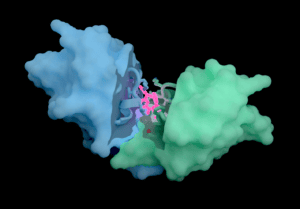
The Isomorphic Labs Drug Design Engine is able to predict the location of cryptic pockets at protein interfaces. A cryptic pocket is a ‘hidden’ binding site on a protein that is invisible under normal conditions but opens up when a specific molecule interacts with it. [Isomorphic Labs]
Isomorphic is only one vignette of DeepMind’s growing influence in life sciences. The AlphaFold developer is now building the AI scientist to accelerate the scientific method. In May, the team published a Nature study describing Co-Scientist, a multi-agent system built with Google’s Gemini that demonstrated an array of therapeutic applications, including drug repurposing, novel target discovery, and explaining mechanisms of anti-microbial resistance.
Decoupled from clinical proof
The industry’s investment in AI extends well beyond Isomorphic Labs. In recent months, a wave of major partnerships has emerged to train biological foundation models with proprietary datasets from leading pharma companies.
In May, Genesis Molecular AI and Incyte announced an expanded collaboration with a potential payoff that exceeds $1 billion. The partnership will apply the GEMS (Genesis Exploration of Molecular Space) platform for protein-ligand structure and property prediction across a wider set of difficult targets in Incyte’s pipeline, while incorporating Incyte’s proprietary data to improve GEMS’s performance.
Just two weeks later, AI biologics company Chai Discovery unveiled a licensing agreement with Pfizer that provides the pharmaceutical giant with early access to Chai-3, the company’s AI model for de novo antibody design, as well as a custom model trained on Pfizer’s proprietary data.
Meanwhile, Lilly has emerged as one of the industry’s most aggressive adopters of AI. In addition to securing its own AI-focused partnership with Chai in January, Lilly recently selected Tamarind Bio to host the inference infrastructure for TuneLab 2.0, a federated AI/ML drug discovery platform that gives biotech partners access to models trained on Lilly’s proprietary data.
Observing this massive investment into AI-native biotechs, commentators on social media were quick to note that few AI-designed drugs have reached the clinic.
In Isomorphic’s case, biotech and AI analyst Andrii Buvailo, PhD, posits that Thrive and Google’s parent company, Alphabet, have deep conviction in the company’s platform, AlphaFold lineage, and pharma partnerships, and are locking in ownership before clinical data resets the company’s valuation.
The alternative scenario, writes Buvailo on LinkedIn, is that the AI drug discovery valuation cycle has fully decoupled from clinical proof, and “we are watching capital chase computational promise on its own terms.”
Previously unsolvable
As the AI biology ecosystem grows increasingly crowded, some investors are explaining how they make their bets.
For Rohan Ganesh, a partner at Obvious Ventures, differentiation comes from pursuing problems that others are unable to tackle. He points to Obvious portfolio company, Inceptive, which is developing foundation models for sequence-based medicines that generalize across programs, including RNA interference (RNAi) therapies that silence disease-causing genes.
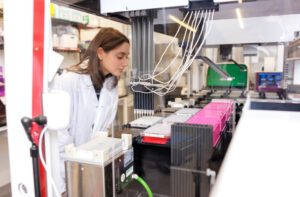
Benedetta Bernasconi, part of Inceptive Operations, observes automated RNA synthesis at the Inceptive wet lab in Palo Alto. [Inceptive]
Inceptive is led by CEO Jakob Uszkoreit, co-author of the seminal paper, “Attention Is All You Need,” which introduced the transformer architecture underpinning today’s large language models. Recently, the company announced a collaboration with Alnylam Pharmaceuticals to advance small interfering (si)RNA design by modeling target mRNAs while jointly exploring novel chemical modifications to enhance potency and efficacy. That partnership is worth up to $2 billion with upfront consideration of $30 million.
Ganesh also argues that owning business outcomes may be the most important aspect of differentiation. As an example, another Obvious-backed company, Inductive Bio, builds virtual labs that combine AI chemistry assistants, predictive ADMET (absorption, distribution, metabolism, excretion, and toxicity) and PK (pharmacokinetics) models, and human-relevant digital organ technologies to surface key risks earlier and accelerate candidate nomination timelines by months.
The platform gained external validation in February, when Inductive placed first in the OpenADMET-ExpansionRx blind challenge, a benchmarking competition in which participants predict properties of previously unseen compounds from real-world drug programs.
“A model that’s accurate but doesn’t change the pace or probability of success in the clinic is meaningless,” Ganesh told GEN.
Benedetta Bernasconi, part of Inceptive Operations, observes automated RNA synthesis at the Inceptive wet lab in Palo Alto. [Inceptive]
When Jim Tananbaum, MD, founded Foresite Capital in 2011, he believed that data, science, and machine learning were going to dominate the conversation for the foreseeable decades. Foresite was among the early investors in data generation for causal analysis and went on to back some of the leading players in the genomics space, including 10x Genomics and Element Biosciences.
A key metric of AI’s success, according to Tananbaum, is whether the technology can unlock previously intractable problems, such as neurological disease. In this vein, Foresite-backed Insitro, founded by CEO Daphne Koller, PhD, announced an expanded collaboration with Bristol Myers Squibb to advance a broadened portfolio of therapeutic programs for amyotrophic lateral sclerosis (ALS) in March.
Foresite is also among the investors of closely watched AI unicorn, Xaira Therapeutics, which launched in 2024 with more than $1 billion in funding. Xaira has spent its initial years building virtual cell models trained on scalable single-cell perturbation datasets to advance target and mechanism-of-action discovery, patient stratification, and toxicity prediction.
“Genetic, biochemical, and multiomic data go hand-in-hand in untangling the biological relationships that will be fundamental for automating discovery,” Tananbaum told GEN.
Window for innovation
Jory Bell, general partner at Playground Global, concurs that “the special sauce” is in the data, not the model. He cites portfolio company Manifold Bio, which is building an AI-driven platform that scales in vivo measurements for biologics, such as PK and biodistribution, valuable for addressing challenges in tissue-specific delivery.
“Any biotech startup these days will be using AI as a core part of workflow, so the critical question is how you actually apply the AI,” Bell told GEN.
Simon Barnett, partner at Dimension, describes an investment thesis where small, focused groups effectively using machine learning will be wildly successful, regardless of whether they pursue therapeutic assets.
Notably, Dimension led Tamarind’s $13.6 million Series A in February, betting that as biology foundation models mature, the industry will move from piecemeal adoption to large-scale deployment of integrated model ecosystems.
“Platform companies need strong, informed views on whether frontier AI labs may eventually subsume their technology,” says Barnett. “Everyone needs something uniquely valuable that confers a durable advantage, whether it’s their team, cycle time, data assets, structural positioning, or something else.”
Dimension’s early bets paid off earlier this year, when portfolio company Coefficient Bio, a roughly 10-person AI drug discovery start-up founded by former Genentech scientists, was acquired by Anthropic for $400 million.
At SynBioBeta’s annual conference in May, Eric Kauderer-Abrams, PhD, head of biology and life sciences at Anthropic, said the team has focused primarily on the technical core, training AI assistant, Claude, in scientific fundamentals spanning chemistry, structural biology, and bioinformatics.
“Our thinking with the [Coefficient] acquisition was to accelerate the other side for biotech operators,” said Kauderer-Abrams. “How do we actually plan out and manage a biotech program from start to finish and make choices along the way?”
Taken together, Dov Gertz, PhD, co-founder and CEO of Converge Bio, reiterates that modern AI, particularly deep neural networks and their derivatives, has powered a dramatic transition from predictive modeling to generative design. However, the shift is still early, having only taken hold in the past decade. “Don’t expect a generatively designed molecule to reach patients for another seven years,” he tempered on LinkedIn.
Nevertheless, now is the time to invest.
“If you wait for that first FDA approval before engaging with the technology, you’ve likely already missed the most valuable window for innovation,” wrote Gertz. “Drug discovery rewards those who can see where the field is heading, not just where it is today.”
While time will tell how these bets translate in the clinic, one belief is deepening across the industry: that AI’s most important application is to improve human health.
Good morning, and welcome to a new week from STAT’s London outpost, with Andrew Joseph here filling in for Mr. Pharmalot. This country is celebrating its World Cup win last night (or rather, very early this morning local time — lots of bleary-eyed people out in the neighborhood today), and I can only hope that the U.S. will be in the same place tomorrow. Yet the World Cup (and Wimbledon) can’t completely distract from the news of the day, so onto the headlines we go. …
Novartis is pushing deeper into antibody-drug conjugate development, paying $1.1 billion upfront to buy Myricx Bio for a pipeline based on a novel payload, Fierce Biotech writes. The Swiss pharma company has been slower to buy into ADCs than some of its peers, but it’s made its move with London-based Myricx, which is designing cancer treatments that deliver N-myristoyltransferase inhibitor (NMTi) payloads. It’s a bit of a different approach from other ADCs, which Novartis predicts could tackle resistance and other limitations of existing payloads, broadening the use of ADCs across multiple tumor types.
While clinical trials got caught up in the Trump administration’s attack on policies related to diversity, equity, and inclusion, congressional Republicans would like to change that, STAT says. Last month, the Republican-controlled House passed a bill, mostly along party lines, to fund the Food and Drug Administration that was accompanied by a report that, while not legally binding, tells agency officials what congressional appropriators expected of them. The report states that it wants the FDA to continue implementing a law that requires companies to give the FDA their plans for diversifying clinical trials.
The most convincing thing Dario Amodei, the CEO and co-founder of Anthropic, said to me during an on-stage conversation last week was that perhaps his original vision of how AI would change biotech might not start to be visible for a decade.
In a 2024 essay, “Machines of Loving Grace,” Amodei had argued that artificial intelligence, and in particular large language models like Anthropic’s Claude, could allow researchers to make what we think of as a decade’s worth of progress every year, covering a century in a decade. Now he admits we’re not there yet.
“I don’t think that today we can make progress at a rate of ten years per year for a number of reasons,” Amodei said. Those included: Models aren’t as good as they someday will be; researchers need time to figure out how to use these tools; and the infrastructure and regulatory systems will take time to change.
Amodei and I were speaking at an Anthropic event where the company, a public-benefit corporation meant to be focused on improving the world, unveiled a product for biologists and pharmaceutical companies called Claude Science. I agreed to interview Amodei on-stage as part of the event, with the stipulation that I would decide on my own what to ask.
Less than a month after its stock roller-coastered on safety signals associated with its late-stage ulcerative colitis (UC) drug candidate obefazimod, shares of Abivax (Euronext Paris and Nasdaq: ABVX) enjoyed smoother sailing this past week—namely a 63% surge in Europe and a 50% leap in the United States over four trading days, following more positive data that appeared to reassure investors.
Abivax declared that obefazimod “delivered meaningful clinical benefit” to adults with moderately to severely active UC in the ABTECT Maintenance Part 2 supplemental portion of its Phase III UC maintenance program, with 37.2% of induction nonresponders achieving clinical remission and 34.5% achieving endoscopic remission at Week 44 following continued 50 mg treatment. Of those patients, 61.5% also showed clinical response, 48.0% endoscopic improvement, and 44.6% Histologic-Endoscopic Mucosal Improvement (HEMI).
In patients whose doses were escalated to 50 mg, clinical remission was recaptured in 45.5% of patients who relapsed during ABTECT Maintenance Part 1—a result Abivax said supported a practical dose-escalation strategy for regaining and sustaining disease control over time.
Of special interest to investors, no new safety signals were seen since earlier this month, when Abivax disclosed various malignancies in nine patients among the 580 enrolled in the study. The earlier disclosure triggered price plunges of 44% for both Abivax’s ordinary shares traded on Euronext Paris and the company’s American depositary shares (ADSs) traded on the Nasdaq Global Market.
Established risk factors
The latest data from ABTECT Maintenance Part 2 showed four total cases of non-melanoma skin cancer (NMSC)—two in the study’s 25 mg arm, two in the 50 mg arm: “All occurred in patients with established NMSC risk factors including advanced age, thiopurine use, prior skin cancer history, and failure of multiple prior advanced therapies,” Abivax stated.
Significantly, incidence rates of malignancies (including NMSCs) when adjusted for patient-year exposure were well within the pre-defined background reference ranges based on previous UC studies.
Exposure-adjusted incidence rates (EAIRs) for malignancies excluding NMSC were 0.48 and 0.69 events per 100 person-years (PYs) in the all-active combined (50 mg + 25 mg) and 50 mg cohorts, respectively, and for NMSC were 0.95 and 0.69 events per 100 PYs, in the all-active combined (50 mg + 25 mg) and 50 mg cohorts respectively, all consistent with expected UC background rates
EAIRs for malignancies excluding non-melanoma skin cancer (NMSC) were 0.48 per 100 PYs in the all-active combined (50 mg + 25 mg) cohort, and 0.69 events per 100 PYs in the 50 mg cohort. For NMSC, EAIRs were 0.95 in the all-active combined cohort and 0.69 in the 50 mg cohort. All those results were consistent, Abivax said, with expected UC background rates ranging from 0.30–0.70 for malignancies excluding NMSC, and 0.70–1.40 for NMSC.
“Paradigm-defining treatment”
“The expanded cumulative safety data further strengthens our confidence in the long-term safety profile of obefazimod and reinforces the favorable benefit-risk profile for our program as we prepare for our planned NDA [New Drug Application] submission later this year,” Abivax CEO Marc de Garidel stated. “We believe this growing body of evidence positions obefazimod, if approved, to become a paradigm-defining treatment option for patients living with ulcerative colitis.”
Investors appeared to share de Garidel’s optimism. The data sparked a buying surge among investors, who sent Abivax shares traded on Euronext Paris soaring 39% the day after the announcement, from €83.30 ($94.71) to €115.50 ($131.31) on Tuesday. The shares rose another 1.7% Wednesday, closing at €117.50 ($133.59), then climbed another 9% Thursday to €127.80 ($145.28) before finishing the week with a 6% increase, to €135.80 ($154.38) and a 63% one-week gain.
On Nasdaq, Abivax ADSs surged 50% for the week, consisting of a roughly 39% leap Tuesday from $96.15 to $133.26. From there, shares dipped 0.5% the following day to $132.56, before rebounding 9% Thursday, finishing the Independence Day holiday-shortened week at $144.65.
Wednesday was a shorter trading day than usual since the company requested a temporary, single-day halt. Abivax requested the halt to price an upsized offering of its U.S. American depositary shares (ADSs), which increased from the originally announced $600 million to $800 million—6.4 million ADSs at $125 per ADS, which the company expected would extend its cash runway into the second quarter of 2029.
The offering closed Thursday at $920 million, of which approximately $874.1 million consisted of net proceeds, after underwriters exercised in full their option to purchase 960,000 additional ADSs representing 15% of the total number initially sold in the offering.
The size of the offering appeared, based on investor chatter cited by Stocktwits, an effort to dampen speculation about Abivax being a prime candidate for a buyout; the company appears in GEN’s most recent A-List of Top 10 Takeover Targets of 2026. But the upsizing of the offering rekindled buyout speculation by individual or “retail” investors, the same outlet reported Thursday.
Abivax said it intends to use the net proceeds toward expenses relating to potential commercialization of obefazimod in the United States; clinical R&D expenses, primarily related to UC and Crohn’s disease; and the remainder, if any, for general corporate purposes.
Leerink Partners, Morgan Stanley, Piper Sandler, and Guggenheim Securities were joint bookrunning managers for the offering, while LifeSci Capital acted as a passive bookrunning manager and Van Lanschot Kempen as the lead manager.
“Response rates (clinical & endoscopic remission) in this portion also appear compelling, especially given the refractory nature of patients in this subset, reaffirming obe’s best-in-disease efficacy,” Thomas J. Smith, senior managing director, immunology and metabolism, and a senior research analyst with Leerink Partners, commented in a research note.
“Should allay investor concerns”
“We believe this update further de-risks obe’s profile in UC and Crohn’s and should allay investor concerns following Part 1 maintenance data released earlier this month,” Smith added.
Smith raised his firm’s 12-month price target on Abivax shares 6%, from $140 to $148.
Two other firms also raised their price targets on Abivax stock:
BTIG (Julian Harrison)—Up 17%, from $150 to $175, maintaining “Buy” rating.
Wedbush Securities (David Nierengarten)—Up 22% from $90 to $110, maintaining “Neutral” rating.
Even more positive feedback on the latest data came from Faisal Khurshid, a managing director and equity research analyst with Jefferies. Khurshid upgraded his firm’s rating on Abivax’s stock from “Hold” to “Buy,” and boosted Jefferies’ price target 46%, from $108 to $158.
On June 1, Khurshid downgraded Jefferies’ rating on Abivax from “Buy” to “Hold,” citing the safety concerns he said have since been addressed.
“Mgmt. did a nice job addressing investor concerns w/ how they presented the safety data [June 29] vs. the Part 1 update. On top of that, the efficacy profile strengthens w/ each add’l piece of data,” Khurshid observed.
He also cautioned: “There is still risk on cash runway, catalyst path, and commercial needs for a pot’l standalone launch. But ultimately, good data should generate value.”
The biggest outstanding risk for Abivax, Khurshid wrote, is the need for significant resources associated with a commercial launch for an indication in inflammatory bowel disease (IBD): “We still think pot’l of asset better realized w/ a strategic partner.”
Obefazimod is a small molecule upregulator of miR-124, an anti-inflammatory microRNA. It enhances the selective splicing of a single long noncoding RNA to generate miR-124, which downregulates cytokines and chemokines shown to promote inflammation, including tumor necrosis factor (TNF) alpha, IL-6, monocyte chemoattractant protein-1 (MCP-1), and IL-17, as well as Th17+ cells.
Under its former name ABX464, obefazimod was initially developed against HIV but was repurposed to fight inflammatory conditions based on its anti-inflammatory effect.
Leaders and laggards
Elicio Therapeutics (Nasdaq: ELTX) shares tumbled 37% from $5.14 to $3.22 Thursday after the developer of immunotherapies for high-prevalence cancers said it entered into a definitive securities purchase agreement led by two new “fundamental institutional investors” with participation from a large existing shareholder—all undisclosed—to purchase 4,380,313 shares of Elicio common stock through a registered direct offering. The offering is expected to result in gross proceeds of approximately $15 million before deducting placement agents’ fees and other expenses, Elicio said. Titan Partners, a division of American Capital Partners, is acting as lead placement agent while B. Riley Securities is acting as co-placement agent.
Takeda Pharmaceutical (Tokyo Stock Exchange: 4502) shares increased 2.4% from ¥5,150 ($31.91) to ¥5,274 ($32.68) Thursday and rose another 1.6% to ¥5,359 ($33.20) after the pharma announced an up to $600 million artificial intelligence (AI)-based drug discovery collaboration with Insilico Medicine (Hong Kong Exchange: 3696.HK). Insilico agreed to use its end-to-end platform in leading AI-driven discovery to identify molecules meeting predefined scientific and early development criteria, while Takeda agreed to apply its global development capabilities to advance selected candidates through clinical validation across its therapeutic areas. Takeda gained exclusive worldwide rights to develop, manufacture, and commercialize novel therapeutics selected through the collaboration. Takeda’s American depositary shares (NYSE: TAK)rose 5% from $15.95 to $16.77 Thursday (U.S. markets were closed Friday for the Independence Day holiday). Insilico shares fell 4.1% from HKD 39.62 ($4.97) to an even HKD 38 ($4.77) Thursday and slid 1.6% to HKD 37.38 ($4.66) Friday.
Japanese CDMO Peptistar reports that it has integrated Asahi Kasei’s forward osmosis–membrane distillation (FO–MD) system into its facility for trial production of active pharmaceutical ingredients (APIs).
Asahi Kasei announced in 2018 the development of a system that dehydrates and concentrates liquids without the application of heat or pressure. This reduces the number of freeze-drying batches and the amount of time required for freeze-drying, thereby shortening API manufacturing time. Peptistar has begun operation of the system at manufacturing scale as part of its evaluation toward GMP production.
FOMD system for concentration without heating or pressurization installed at Peptistar’s peptide and oligonucleotide API manufacturing facility. [Asahi Kasei]
Recently, demand for APIs has shifted from traditional, high-volume small molecules to a broader need across biologics, peptides, oligonucleotides, viral vectors, and more, according to officials at both companies. API needs are becoming increasingly complex due to their high specificity and growing role in next-generation therapeutics.
Some of the next-generation APIs such as peptides and oligonucleotides are heat sensitive. Their manufacturing processes have thus relied on the costly, time-consuming, and energy-intensive freeze-drying method, which can remove solvents without heating, to obtain APIs with high quality explains an Asahi spokesperson.
Although the freeze-drying process can be shortened by concentrating the raw material solution to reduce the volume of liquid feed prior to the freeze-drying step, conventional concentration technologies such as vacuum distillation carry the risk of quality degradation due to heating, and the formation of precipitates caused by changes in solvent composition during the concentration step, adds the spokesperson.
Overview of the FOMD system for concentration without heating or pressurization. [Asahi Kasei]
Asahi Kasei’s system for forward osmosis (FO) and membrane distillation (MD) addresses such manufacturing challenges by concentrating the raw material solution for pharmaceutical applications without applying heat or pressure, notes another Asahi official, explaining that FO utilizes an osmotic pressure difference across a membrane to remove water from liquids, achieving highly concentrated API solutions under mild conditions. MD leverages a vapor pressure difference across a membrane to remove volatile components such as acetonitrile, alcohol, or ammonia, at or below room temperature.
Asahi Kasei says it looks forward to studying the prospects for future commercialization of the FO–MD system.



![FOMD-system-for-concentration-without-heating-or-pressurization-installed-at-Peptistars-peptide-and-oligonucleotide-API-manufacturing-facility [Asahi Kasei]](https://www.genengnews.com/wp-content/uploads/2026/07/FOMD-system-for-concentration-without-heating-or-pressurization-installed-at-Peptistars-peptide-and-oligonucleotide-API-manufacturing-facility-300x225.jpg)
![Overview-of-the-FOMD-system-for-concentration-without-heating-or-pressurization. [Asahi Kasei]](https://www.genengnews.com/wp-content/uploads/2026/07/Overview-of-the-FOMD-system-for-concentration-without-heating-or-pressurization-731x1024.jpg)