

Bioprocessing at Full Throttle

In biomanufacturing, scale has long been synonymous with success. Bigger bioreactors, larger facilities, and expanded footprints traditionally defined the path to higher output. But that paradigm is shifting with intensified bioprocessing. Today, the industry is embracing a more nuanced, efficient approach—one that prioritizes productivity over size, agility over rigidity, and integration over segmentation. Intensified bioprocessing is not just an incremental improvement; it is a fundamental rethinking of how biologics are made.

“Intensified bioprocessing aims to improve the productivity and efficiency of biomanufacturing,” explains Julie Kozaili, PhD, principal scientist at Asahi Kasei Bioprocess. “This is often achieved by designing new processes or modifying existing ones to increase output per unit time or equipment volume.”

That deceptively simple definition captures a sweeping transformation. Instead of relying on traditional batch processes, intensification often involves running at higher cell densities, integrating multiple process steps, and transitioning toward continuous or semi-continuous operations.

The implications are significant. Intensified processes can reduce facility size, minimize resource consumption, and shorten development timelines—all while maintaining or even improving product quality. For an industry under constant pressure to deliver therapies faster, these advantages are hard to ignore.

The urgency behind intensification is driven by both scientific and economic realities. Many modern therapeutics—particularly viral vectors and gene therapies—face inherent production challenges. Low yields, complex manufacturing requirements, and stringent quality standards make scaling difficult and expensive.

In viral-vector development, one of the central bottlenecks is simply producing enough material. Clinical applications often require a minimum effective dose volume, yet production systems struggle to generate sufficient yield, forcing manufacturers to concentrate limited output into small delivery formats. Legacy adherent cell culture technologies compound the problem by relying on scale-out strategies—adding more units rather than increasing efficiency—making cost reductions difficult as production expands.

Intensified bioprocessing offers a different path. It “is important because it allows manufacturers to increase capacity without new facilities, reduce equipment footprint, reduce media, buffer, and utility usage per gram of product, and shorten scale-up, tech transfer, and time-to-clinic timelines,” Kozaili says.

For companies working with unstable or complex molecules, speed can be just as important as scale. Faster processing reduces the risk of degradation and accelerates the path from development to commercialization.

Beyond cost: speed and flexibility

Although cost savings are often cited as a benefit of intensification, industry leaders emphasize that its true value lies beyond the cost of goods. “Intensified bioprocessing is less about driving down cost and more about enabling speed, flexibility, and fit,” says Mark Schofield, PhD, director of science at Cytiva. “For monoclonal antibodies in particular, the industry’s priorities are getting to launch faster, making better use of existing facilities, and being able to respond to uncertain or fluctuating demand.”

This shift in perspective reflects broader changes in the biopharmaceutical landscape. Pipelines are increasingly diverse, with smaller patient populations and more specialized therapies. Manufacturing systems must be adaptable, capable of switching between products or scaling production up and down as needed. “Intensification helps companies do all three by rethinking how processes are designed and scaled,” Schofield adds.

Companies such as Repligen are advancing upstream intensification through perfusion-based systems designed to sustain high cell densities and continuous productivity. Perfusion cell culture, a cornerstone of many intensified strategies, continuously feeds fresh media while removing waste and product, allowing cells to remain in an optimal growth state over extended periods. This approach not only improves yield but also creates a more stable and controlled production environment compared to traditional fed-batch methods. Repligen’s filtration and analytical technologies further support this shift by enabling continuous clarification and real-time monitoring, helping bridge the gap between process development and scalable manufacturing.

Beyond large platform providers, a growing number of specialized innovators are helping push intensified bioprocessing forward, particularly in high-demand areas like viral-vector manufacturing and upstream control.

Meanwhile, Batavia Biosciences is tackling one of the most persistent challenges in gene therapy: low viral-vector yields. Traditional adherent cell culture systems often require scaling out—adding more equipment rather than increasing efficiency—which drives up costs without significantly improving productivity. Batavia’s intensified approach centers on integrated solutions that combine optimized cell lines, streamlined purification processes, and novel bioreactor designs to dramatically increase output. By enabling higher yields within a smaller footprint, these strategies effectively miniaturize manufacturing, making it possible to produce clinical and commercial quantities without the need for large-scale facilities.

Together, these efforts underscore a key theme in intensified bioprocessing: innovation is not confined to a single step or technology. Instead, it is emerging across the entire workflow, from upstream cell culture to downstream purification and process analytics.

Intensified bioprocessing
On the left, rigid legacy thinking and siloed bioprocessing models dominate a complex industrial environment. On the right, intensified bioprocessing enables agile, integrated systems where collaborative teams continuously test, optimize, and scale innovative manufacturing solutions. [Image generated with Google Gemini]

Real-world applications

The promise of intensified bioprocessing is being realized through a growing ecosystem of technologies. Asahi Kasei Bioprocess, for example, has developed solutions that support intensification at multiple stages. “We support intensified bioprocessing across upstream and downstream operations,” Kozaili explains, pointing to innovations such as hollow-fiber microfilters for high-intensity cell culture clarification and advanced virus filtration systems designed for continuous processing.

These technologies are engineered to handle the increased throughput associated with intensified upstream processes. High-density cultures generate larger volumes of product, which must be efficiently clarified, purified, and stabilized without compromising quality.
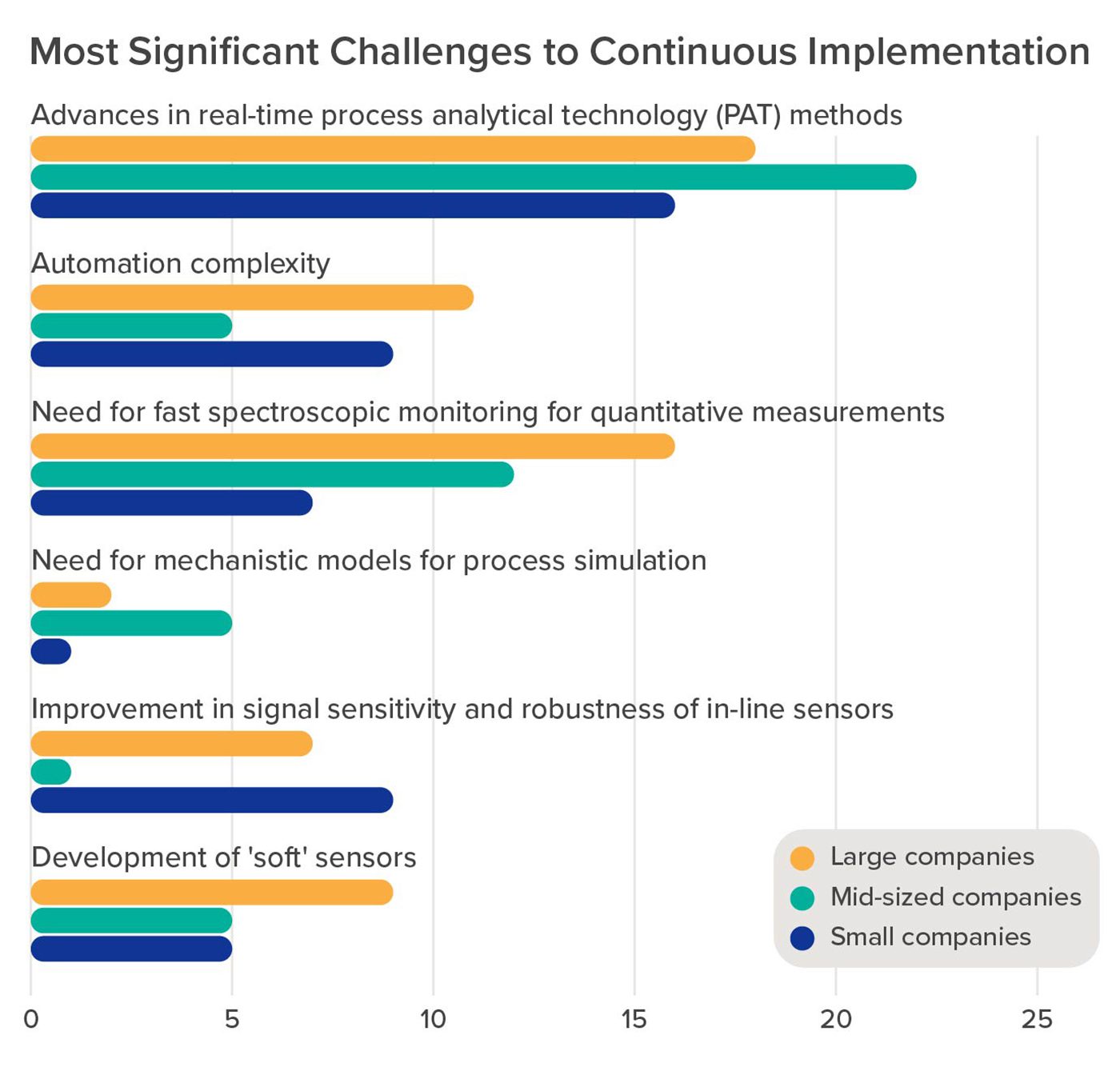
CRB Horizons: Life Sciences Report chart
Continuous implementation is a key element of intensified bioprocessing, and a company’s size impacts its key challenges. [CRB Horizons: Life Sciences Report]

Downstream, continuous virus filtration systems can operate at low flux over extended periods while maintaining robust viral clearance. Inline buffer formulation systems further streamline workflows by eliminating the need for large storage tanks and ensuring consistent buffer quality in real time.

Automation and integration are also key components. New ultrafiltration and diafiltration systems are being designed for flexibility, allowing them to be deployed upstream or downstream and enabling seamless process integration.

Designing for intensification

Though technology is a crucial enabler, successful intensification requires more than just new equipment. It demands a holistic approach to process and facility design. “At CRB, our role is to help clients translate emerging process concepts into facilities that are safe, operable, and scalable,” says John Rubero, senior fellow in purification bioprocessing.

One of the defining characteristics of today’s intensification efforts is that they are often partial or hybrid implementations. Fully continuous, end-to-end processes remain relatively rare. Instead, manufacturers are adopting elements of intensification—such as integrating continuous perfusion with multi-column capture chromatography—within otherwise traditional workflows. This incremental approach allows companies to realize benefits without fully overhauling their operations. It also provides a pathway for future evolution as technologies mature.

Despite its advantages, intensified bioprocessing is not without challenges. One of the most significant is bridging the gap between process development and commercial-scale implementation. “While the practice of linking unit operations together is largely accepted, real-time control of an end-to-end continuous process remains challenging,” Rubero explains.

In traditional batch processes, control strategies are relatively straightforward because lot traceability is easy to maintain. But intensified systems—especially continuous ones—require real-time monitoring and advanced control strategies to ensure process stability and product quality.

“It is not realistic or necessary to find and assign a sensor to monitor each critical process parameter or critical quality attribute,” Rubero says. “Instead, a combination of direct measurements, soft sensors, multivariate models, and process understanding is required for effective process control.”

So, the industry is moving toward integrated approaches that combine process analytical technology (PAT) with mechanistic and data-driven models. These systems enable more sophisticated monitoring and control but are still evolving in terms of reliability and adoption.

Operational barriers

Technical challenges are only part of the equation. Intensification also requires a shift in mindset—one that can be difficult for organizations accustomed to established manufacturing paradigms. “In many cases, the technologies are either new or have novel applications, creating a learning curve,” Kozaili acknowledges.

Training gaps, operational changes, and resistance to new approaches can slow adoption. Teams must adjust not only their processes but also their thinking, moving away from long-standing practices toward more dynamic, integrated systems.

As Schofield notes, “adopting new approaches inevitably comes with skepticism.” Externally, there can be hesitation to move away from established technologies. Internally, organizations might question how intensified solutions might impact existing product lines. Those discussions, however, are part of the transition.

Despite these challenges, momentum is building. As intensified technologies demonstrate their value in real-world applications, resistance is gradually diminishing. “Over time, evidence and adoption speak for themselves,” Schofield says.

Kozaili emphasizes the importance of organizational alignment. “We had to change the company’s established mindset by securing support to develop these technologies and clearly show the value of these approaches,” she explains.

Collaboration also plays a key role. For technology providers, working closely with customers to test and refine solutions helps build confidence and accelerate adoption. “For our customers, it’s about finding the right partners to test the technologies, while providing appropriate feedback for improvement,” Kozaili adds.

Looking ahead, the trajectory of intensified bioprocessing is clear. Purpose-built facilities designed specifically for intensified operations will become more common, replacing retrofitted batch plants that struggle to accommodate new workflows, because intensified bioprocessing is no longer a niche concept reserved for early adopters. It is rapidly becoming a central pillar of modern biomanufacturing strategy.

The post Bioprocessing at Full Throttle appeared first on GEN – Genetic Engineering and Biotechnology News.

<![CDATA[Phase 3 data show COMP360 psilocybin delivers rapid, lasting relief in treatment-resistant depression; FDA filing advances toward 2027 launch.]]>

Self-esteem and inner strengths: a network study in Thai university students with borderline personality disorder symptoms

IntroductionSelf-esteem is widely regarded as an important construct in the psychological functioning of individuals with borderline personality disorder (BPD) symptoms. During emerging adulthood, fluctuations in self-esteem are often linked to emotional dysregulation and maladaptive adjustment; however, self-esteem has rarely been examined within a broader system of culturally relevant psychological resources. Drawing on the Theravāda Buddhist framework of the Ten Pāramīs, inner strengths may represent protective resources that can be examined alongside self-esteem to clarify how these strengths co-occur among students experiencing BPD symptoms.MethodsThe present study employed a regularized psychological network approach to investigate partial associations between self-esteem and Ten Pāramī–based inner strengths among Thai university students screening positive for BPD symptoms. Participants were 346 Thai university students (25.4% male, 74.6% female; mean age = 21.60 ± 2.24 years) identified using a standardized BPD screening instrument. Inner strengths included Truthfulness, Perseverance, Wisdom, Generosity, adherence to the Five Precepts, Meditation, Tolerance, Equanimity, Determination, and Loving-kindness.ResultThe estimated network showed a predominantly positive pattern of partial associations among strengths. The strongest edge was observed between Generosity and Loving-kindness, and links between self-esteem and Determination (and Equanimity) were among the most consistently estimated associations (based on bootstrap confidence intervals). Centrality indices were examined descriptively; however, case-dropping bootstrap results indicated very limited stability of centrality estimates (CS(cor = 0.7) = 0.13 for strength and expected influence), and centrality rankings were therefore treated as strictly exploratory. Discussion: Although some negative partial associations were estimated (e.g., involving Truthfulness, Perseverance, and Equanimity), their precision was limited and such patterns should be treated as exploratory. Exploratory gender-stratified analyses suggested that the strongest edges were similar in the female subsample, whereas the male subsample yielded a sparse/near-empty regularized network, limiting inference regarding gender differences. Given the cross-sectional design, all associations are interpreted as conditional co-occurrence rather than directional or causal effects.ConclusionOverall, these findings highlight a small set of robust co-occurring inner strengths linked to self-esteem in Thai university students with BPD symptoms and provide a culturally informed basis for hypothesis generation regarding strengths-based skills cultivation and supportive interventions in university settings.
<![CDATA[Expert explores fast-acting depression treatments, psilocybin trial pitfalls, and why stigma still limits buprenorphine access for opioid use disorder.]]>

Effects of Balint group combined with mindfulness-based stress reduction on humanistic care ability and psychological resilience among obstetric nurses

BackgroundHumanistic care competence and psychological resilience are essential for improving nursing quality, particularly in high-stress specialties such as obstetrics. However, effective interventions that simultaneously enhance both interpersonal and intrapersonal capacities among nurses remain limited.MethodsA total of 87 obstetric nurses from a tertiary hospital in Hebei Province, China, were enrolled and allocated into three groups: a combined Balint group and mindfulness-based stress reduction (MBSR) intervention group, a Balint group, and a control group (n = 29 each). The intervention was conducted over 8 weeks. Outcomes, including humanistic care competence, empathy, emotional intelligence, and psychological resilience, were measured at baseline, post-intervention, and 6-week follow-up using validated Chinese versions of standardized scales. Data were analyzed using repeated-measures analysis.ResultsThe combined intervention group showed significantly greater associations with improvements in all outcomes compared with the Balint and control groups (all P < 0.001). Empathy, humanistic care competence, emotional intelligence, and psychological resilience were significantly higher after the intervention and continued to show positive trends at follow-up. Although the Balint group alone also demonstrated moderate improvements, the combined intervention consistently produced stronger and more sustained associations.ConclusionThe integration of Balint group and MBSR interventions eff is associated with enhanced psychological resilience and humanistic care competence among obstetric nurses. This study builds on previous research by examining the combined effect of reflective and mindfulness-based approaches in a specific clinical population, providing evidence for a feasible strategy to improve nurses’ professional quality and mental well-being.

STAT+: Another big deal, another sign biotech M&A is back

Want to stay on top of the science and politics driving biotech today? Sign up to get our biotech newsletter in your inbox.

Good morning! Pharma companies are on a biotech buying spree, an LSD pill just delivered unusually strong late-stage depression data, and the FDA reverses course of Regenxbio’s treatment.

Also: Today, thousands of industry players (and me!) are gathering in San Diego for BIO to talk deals, science, and whatever comes next. Check out the last item for a jaunt down memory lane about the conference.

Continue to STAT+ to read the full story…

Prevalence and Predictors of Self-Reported Adverse Experiences in Digital Meditation Training: 2 Randomized Controlled Trials

Background: Digital meditation-based interventions (MBIs) reach vast global audiences with millions of active users, yet concerns persist about the frequency and nature of adverse experiences (ie, AExs) occurring during meditation training. Some researchers have argued that AExs are substantially underdetected and reflect iatrogenic harm caused by meditation (ie, adverse effects [AEfs]). Others contend that these experiences largely reflect common stressors that would be experienced without meditation. These competing perspectives underscore the need for further research, particularly in the context of digital MBIs, the most widely used form of meditation training. Objective: This study examined the prevalence, predictors, and subjective evaluations of AExs during a digital MBI and tested whether reported experiences may be caused by meditation practice via comparisons between meditation-exposed and nonexposed participants. Methods: Data were drawn from 2 trials of the Healthy Minds Program. Exploratory study 1 (n=315) consisted of a sample of distressed US undergraduate students to estimate the prevalence of AExs and identify baseline predictors. Preregistered confirmatory study 2 (n=594) sampled distressed US adults from all 50 states to replicate findings from study 1 and to examine participants’ subjective evaluations of AExs. Study 2 additionally compared AEx rates between participants who did and did not complete guided meditations to assess whether AExs could be caused by meditation exposure. Study 3 (n=87) used qualitative methods to analyze study 1 participants’ responses to an open-ended question regarding their strategies for coping with AExs. Results: In studies 1 and 2, 27.9% (88/315) and 10.1% (40/396) of participants, respectively, reported at least one AEx during the study period, with 6.7% (21/315) and 3% (12/396) reporting functional impairment, largely aligning with previous research. Critically, in study 2, rates of AExs did not significantly differ between participants who did and did not complete guided meditations, suggesting that these experiences were not caused by meditation practice. Higher baseline depression, anxiety, loneliness, experiential avoidance, and perceived barriers to meditation predicted more frequent AExs. In studies 1 and 2, 89.8% (79/88) and 90% (36/40) of participants who reported AExs, respectively, indicated that they were glad to have learned to meditate. Qualitative analyses showed that participants used diverse coping strategies, often using skills learned through the Healthy Minds Program. Conclusions: AExs were relatively common but occurred at comparable rates among participants who did and did not meditate, challenging claims that such experiences were caused by meditation practice in distressed individuals. Although a small subset of participants reported some degree of functional impairment, most evaluated their AExs as tolerable and described their overall MBI experience as positive. Together, these findings highlight the importance of distinguishing AExs that likely reflect epiphenomena of preexisting distress or symptoms from iatrogenic harm attributable to MBIs. Trial Registration: Study 1: ClinicalTrials.gov NCT04741529; https://clinicaltrials.gov/study/NCT04741529; Study 2: ClinicalTrials.gov NCT06282523; https://clinicaltrials.gov/study/NCT06282523
<img src="https://jmir-production.s3.us-east-2.amazonaws.com/thumbs/09106e6bad7f3f15798304e0c00626ec" />

The therapeutic role of self-transcendence in moral injury recovery: theory, mechanisms, and clinical implications

A growing body of psychological and neuroscientific research suggests that moral injury (MI) involves maladaptive self-referential processing, including disruptions in moral identity, rigid negative self-appraisals, and impaired meaning-making following exposure to potentially morally injurious events (PMIEs). Building on Mindfulness-to-Meaning Theory (MMT), this paper proposes self-transcendence (ST)—a metacognitive state characterized by reduced self-focus, expanded awareness, transcendent affect, and prosocial meaning—as a potential mechanism for MI recovery. Within MMT, mindfulness practice is theorized to cultivate ST via decentering and meta-awareness, processes that broaden attentional scope, promote flexible cognitive reappraisal, and modulate habitual self-referential processing. Mindfulness and contemplative research further link ST to increased cognitive flexibility, reduced in shame-focused narrative self-processing, and adaptive integration of emotionally and morally disruptive experiences. Drawing on an integrative review of ST-consistent and MI-related mechanisms, this paper argues that fostering ST through mindfulness-based and contemplative practices may reduce rigid self-focus, expand interpretive frameworks of meaning, and support moral identity repair and meaning-making. Implications are discussed for designing interventions that intentionally cultivate ST as both standalone approaches and modular components, while acknowledging current limitations in measurement, readiness assessment, and the reliable induction of ST states.
<![CDATA[Explore 2026’s fast-moving psych med pipeline: new Alzheimer agitation option, potential novel ADHD therapy, and promising psilocybin for depression.]]>