

<![CDATA[Share insights on substance use care—practice tips, research, and cases—for Psychiatric Times’ July 2026 series. Pitch your article today.]]>
Chimeric Allergen Receptor Treg Cells Suppress Allergic Asthma in Mice
Genetically engineered CAR T cells expressing artificial receptor proteins are increasingly used in the clinic to boost the immune system’s response against leukemias and other cancers. Researchers at Lausanne University Hospital and University of Lausanne, and at Center for Human Immunology Lausanne, have now adapted this approach to suppress the immune system’s response to a common birch pollen allergen. The investigators developed regulatory T cells (Tregs) armed with chimeric allergen receptors (CAlleR Tregs), which in tests reduced or preventing asthma symptoms in mice sensitized to the allergen. The team suggests that their technique could eventually be used to treat a wide variety of allergies in humans.
“Our study provides proof-of-concept and preclinical evidence that CAlleR Tregs redirected against a birch pollen allergen can downmodulate birch pollen–induced allergic asthma,” said study lead Yannick D. Muller, MD, PhD, an associate professor at Lausanne University Hospital and the University of Lausanne.
Muller and colleagues reported on their study in Journal of Experimental Medicine (JEM) in a paper titled “Chimeric allergen receptor regulatory T cells suppress birch pollen allergic airway inflammation,” concluding “These findings unveil a novel mechanism for targeting soluble antigens and highlight the potential of CAlleR Tregs to prevent and treat severe allergies.”
Asthma affects over 300 million people worldwide, around 60% of whom suffer from allergic asthma. Allergens trigger an immune response in a patient’s airways, causing inflammation, excessive mucus production, and difficulty in breathing. “Allergic asthma is driven by an exacerbated type 2 immune response, characterized by the overproduction of IL-4, IL-5, and IL-13 by Th2 cells,” the authors explained. These cytokines trigger events that ultimately result in airway hyperresponsiveness, and airway mucus plugging, which is the primary cause of death in asthma.
Allergen immunotherapy (AIT), which involves the administration of gradually increasing doses of allergen, is the only treatment that addresses the underlying cause of asthma. Yet, it is not recommended for patients with severe asthma, representing the most vulnerable population at greatest risk of asthma-related morbidities and mortality. “This highlights the need for new, safe, and durable treatments for restoring allergen tolerance in severe allergic asthma,” Muller commented.
Regulatory T cells (Tregs) are immune cells that can dampen the body’s immune responses and prevent excessive inflammation. Tregs are being investigated as potential therapies for a variety of inflammatory and autoimmune disorders. “Importantly, Tregs can be expanded ex vivo and reinfused with multiple clinical trials evaluating their potential in autoimmune and inflammatory disorders,” the team continued. “However, Treg therapy has shown only limited efficacy, which has been mostly attributed to the lack of antigen specificity.”
Muller and colleagues wondered whether they could boost the therapeutic potential of Tregs by genetically engineering them to express receptor proteins that recognize specific allergens. This approach is analogous to the CAR T cell method that is now commonly used to treat cancers: cytotoxic T cells are engineered to express chimeric antigen receptors that specifically recognize proteins on the surface of cancer cells, directing the immune system to attack and kill the tumor cells.
A leading cause of allergic asthma is birch tree pollen, to which 8–16% of the European population are sensitive. The birch allergen Bet v1 is the most abundant allergenic protein, the authors commented. And while AIT for birch pollen–associated rhinitis and asthma has been shown to be effective, it is contraindicated for patients with severe and uncontrolled asthma. “This highlights the unmet need for new, safe, and durable treatments for restoring allergen tolerance in severe allergic asthma.”
Muller’s team constructed chimeric allergen receptors (CAlleRs) that specifically recognize the Bev v1 component of birch tree pollen. These CAlleRs were based on antibodies isolated from a birch-allergic patient, linked to protein signaling domains that can activate Treg cells. “We identified and characterized four novel anti–birch-specific antibodies and generated single-chain variable fragments (scFvs) fused to a CD28-ζ signaling domain,” the investigators noted.
Exposure to the birch pollen allergen, when stabilized by noncompetitive antibodies, boosted the suppressive activity of Tregs expressing these CAlleRs. The researchers found that simultaneous binding by a CAlleR and a non-competing antibody promotes receptor–allergen cross-linking underlying a novel mechanism to induce T cell activation by soluble antigens. “This mechanism opens new avenues not only for rewiring synthetic receptors against any soluble antigens including autoantigens for therapeutic intervention but also for delineating a more global pathway for antigen cross-presentation in allergies.”
Muller and colleagues injected these CAlleR-expressing Tregs into mice that were already allergic to birch pollen. When these treated animals were re-exposed to birch pollen, they showed decreased signs of allergic inflammation, reduced mucus production, and increased lung function. Next, the researchers injected CAlleR-expressing Tregs into mice that had never been exposed to birch pollen. When these animals were subsequently exposed to pollen, they failed to develop any asthma symptoms.
The team concluded, “These findings unveil a novel mechanism for targeting soluble antigens and highlight the potential of CAlleR Tregs to prevent and treat severe allergies.” Muller added, “Future studies should evaluate the persistence and stability of CAlleR Tregs over time and define the optimal modalities for implementing such a therapeutic approach.” CAlleRs could also be developed that specifically suppress the immune response to other common allergens, including house dust mites or certain food allergens.” Future work should evaluate whether such approach could also be suitable to restore tolerance against food allergies,” the investigators said.
The post Chimeric Allergen Receptor Treg Cells Suppress Allergic Asthma in Mice appeared first on GEN – Genetic Engineering and Biotechnology News.
Pharma Races to Scale AI as Billions Flow into Drug Discovery
The infrastructure moment for AI-driven drug discovery continues to accelerate, with billion-dollar investments flowing into end-to-end platforms driven by models and compute, rather than single drug assets.
Underpinning this trend is the proliferation of AI reasoning workflows that accelerate biomedical research and large integrated datasets spanning genomics, transcriptomics, proteomics, metabolomics, and more. Together, these capabilities are enabling more powerful models of biological complexity for a new era of programmable therapeutics guided by prediction and rational design.
“This isn’t about developing therapeutics for a particular indication or target,” explained Max Jaderberg, PhD, president of Isomorphic Labs, on the Training Data podcast. Instead, the Google DeepMind spinout is building a general design engine applicable to any disease area.
Investors and pharma giants have rallied behind that vision. In May, Isomorphic announced a whopping $2.1 billion raise led by Thrive Capital. The AI drug developer has also secured major partnerships with Novartis, Eli Lilly, and Johnson & Johnson to embed AI-driven discovery workflows into pharma’s R&D pipeline.
While traditional drug discovery programs can be limited to known binding pockets revealed by structural biology, Isomorphic’s platform, known as IsoDD (Isomorphic Labs Drug Design Engine), expands the druggable landscape by probing previously inaccessible biology.
The platform’s capabilities include predicting induced-fit interactions, in which proteins change shape upon ligand binding, and identifying cryptic binding pockets that remain hidden in the absence of a ligand. IsoDD is also versatile across multiple drug modalities, including de novo antibodies and other large biologics.
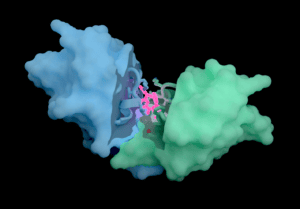
Isomorphic is only one vignette of DeepMind’s growing influence in life sciences. The AlphaFold developer is now building the AI scientist to accelerate the scientific method. In May, the team published a Nature study describing Co-Scientist, a multi-agent system built with Google’s Gemini that demonstrated an array of therapeutic applications, including drug repurposing, novel target discovery, and explaining mechanisms of anti-microbial resistance.
Decoupled from clinical proof
The industry’s investment in AI extends well beyond Isomorphic Labs. In recent months, a wave of major partnerships has emerged to train biological foundation models with proprietary datasets from leading pharma companies.
In May, Genesis Molecular AI and Incyte announced an expanded collaboration with a potential payoff that exceeds $1 billion. The partnership will apply the GEMS (Genesis Exploration of Molecular Space) platform for protein-ligand structure and property prediction across a wider set of difficult targets in Incyte’s pipeline, while incorporating Incyte’s proprietary data to improve GEMS’s performance.
Just two weeks later, AI biologics company Chai Discovery unveiled a licensing agreement with Pfizer that provides the pharmaceutical giant with early access to Chai-3, the company’s AI model for de novo antibody design, as well as a custom model trained on Pfizer’s proprietary data.
Meanwhile, Lilly has emerged as one of the industry’s most aggressive adopters of AI. In addition to securing its own AI-focused partnership with Chai in January, Lilly recently selected Tamarind Bio to host the inference infrastructure for TuneLab 2.0, a federated AI/ML drug discovery platform that gives biotech partners access to models trained on Lilly’s proprietary data.
Observing this massive investment into AI-native biotechs, commentators on social media were quick to note that few AI-designed drugs have reached the clinic.
In Isomorphic’s case, biotech and AI analyst Andrii Buvailo, PhD, posits that Thrive and Google’s parent company, Alphabet, have deep conviction in the company’s platform, AlphaFold lineage, and pharma partnerships, and are locking in ownership before clinical data resets the company’s valuation.
The alternative scenario, writes Buvailo on LinkedIn, is that the AI drug discovery valuation cycle has fully decoupled from clinical proof, and “we are watching capital chase computational promise on its own terms.”
Previously unsolvable
As the AI biology ecosystem grows increasingly crowded, some investors are explaining how they make their bets.
For Rohan Ganesh, a partner at Obvious Ventures, differentiation comes from pursuing problems that others are unable to tackle. He points to Obvious portfolio company, Inceptive, which is developing foundation models for sequence-based medicines that generalize across programs, including RNA interference (RNAi) therapies that silence disease-causing genes.
Inceptive is led by CEO Jakob Uszkoreit, co-author of the seminal paper, “Attention Is All You Need,” which introduced the transformer architecture underpinning today’s large language models. Recently, the company announced a collaboration with Alnylam Pharmaceuticals to advance small interfering (si)RNA design by modeling target mRNAs while jointly exploring novel chemical modifications to enhance potency and efficacy. That partnership is worth up to $2 billion with upfront consideration of $30 million.
Ganesh also argues that owning business outcomes may be the most important aspect of differentiation. As an example, another Obvious-backed company, Inductive Bio, builds virtual labs that combine AI chemistry assistants, predictive ADMET (absorption, distribution, metabolism, excretion, and toxicity) and PK (pharmacokinetics) models, and human-relevant digital organ technologies to surface key risks earlier and accelerate candidate nomination timelines by months.
The platform gained external validation in February, when Inductive placed first in the OpenADMET-ExpansionRx blind challenge, a benchmarking competition in which participants predict properties of previously unseen compounds from real-world drug programs.
“A model that’s accurate but doesn’t change the pace or probability of success in the clinic is meaningless,” Ganesh told GEN.

When Jim Tananbaum, MD, founded Foresite Capital in 2011, he believed that data, science, and machine learning were going to dominate the conversation for the foreseeable decades. Foresite was among the early investors in data generation for causal analysis and went on to back some of the leading players in the genomics space, including 10x Genomics and Element Biosciences.
A key metric of AI’s success, according to Tananbaum, is whether the technology can unlock previously intractable problems, such as neurological disease. In this vein, Foresite-backed Insitro, founded by CEO Daphne Koller, PhD, announced an expanded collaboration with Bristol Myers Squibb to advance a broadened portfolio of therapeutic programs for amyotrophic lateral sclerosis (ALS) in March.
Foresite is also among the investors of closely watched AI unicorn, Xaira Therapeutics, which launched in 2024 with more than $1 billion in funding. Xaira has spent its initial years building virtual cell models trained on scalable single-cell perturbation datasets to advance target and mechanism-of-action discovery, patient stratification, and toxicity prediction.
“Genetic, biochemical, and multiomic data go hand-in-hand in untangling the biological relationships that will be fundamental for automating discovery,” Tananbaum told GEN.
Window for innovation
Jory Bell, general partner at Playground Global, concurs that “the special sauce” is in the data, not the model. He cites portfolio company Manifold Bio, which is building an AI-driven platform that scales in vivo measurements for biologics, such as PK and biodistribution, valuable for addressing challenges in tissue-specific delivery.
“Any biotech startup these days will be using AI as a core part of workflow, so the critical question is how you actually apply the AI,” Bell told GEN.
Simon Barnett, partner at Dimension, describes an investment thesis where small, focused groups effectively using machine learning will be wildly successful, regardless of whether they pursue therapeutic assets.
Notably, Dimension led Tamarind’s $13.6 million Series A in February, betting that as biology foundation models mature, the industry will move from piecemeal adoption to large-scale deployment of integrated model ecosystems.
“Platform companies need strong, informed views on whether frontier AI labs may eventually subsume their technology,” says Barnett. “Everyone needs something uniquely valuable that confers a durable advantage, whether it’s their team, cycle time, data assets, structural positioning, or something else.”
Dimension’s early bets paid off earlier this year, when portfolio company Coefficient Bio, a roughly 10-person AI drug discovery start-up founded by former Genentech scientists, was acquired by Anthropic for $400 million.
At SynBioBeta’s annual conference in May, Eric Kauderer-Abrams, PhD, head of biology and life sciences at Anthropic, said the team has focused primarily on the technical core, training AI assistant, Claude, in scientific fundamentals spanning chemistry, structural biology, and bioinformatics.
“Our thinking with the [Coefficient] acquisition was to accelerate the other side for biotech operators,” said Kauderer-Abrams. “How do we actually plan out and manage a biotech program from start to finish and make choices along the way?”
Taken together, Dov Gertz, PhD, co-founder and CEO of Converge Bio, reiterates that modern AI, particularly deep neural networks and their derivatives, has powered a dramatic transition from predictive modeling to generative design. However, the shift is still early, having only taken hold in the past decade. “Don’t expect a generatively designed molecule to reach patients for another seven years,” he tempered on LinkedIn.
Nevertheless, now is the time to invest.
“If you wait for that first FDA approval before engaging with the technology, you’ve likely already missed the most valuable window for innovation,” wrote Gertz. “Drug discovery rewards those who can see where the field is heading, not just where it is today.”
While time will tell how these bets translate in the clinic, one belief is deepening across the industry: that AI’s most important application is to improve human health.
The post Pharma Races to Scale AI as Billions Flow into Drug Discovery appeared first on GEN – Genetic Engineering and Biotechnology News.
STAT+: Online GLP-1 prescriptions are often fast, easy — and low on clinical oversight
A secret shopper study has pulled back the veil on the practices of nearly 50 telehealth sites that prescribe popular GLP-1 medications for weight loss.
Direct-to-consumer telehealth companies have grown rapidly in response to patients’ demand for GLP-1s like semaglutide and tirzepatide, especially after shortages created a market for compounded versions that aren’t approved by the Food and Drug Administration. As online prescribing has grown, clinicians and public health experts have raised concerns about the potential for lax virtual care practices to put patients at risk.
In a study published Monday in the Journal of the American Medical Association, one researcher at Yale University set out to document those online prescriptions by posing as a patient. The results capture what many Americans have learned in the last few years: It is extraordinarily fast and easy to get a GLP-1 online.
ALS Drug Extends Survival in Mice, Targets TDP-43 Low-Complexity Domain
In a new study published in Nature Aging titled, “Therapeutic targeting of the conserved region within the low-complexity domain of TDP-43 is neuroprotective and extends survival in amyotrophic lateral sclerosis mice,” researchers from University of Arizona present a new therapeutic target to shield nerve cells from the damage of ALS.
“Current FDA-approved treatments for ALS provide only modest benefits. There is an urgent need for a real breakthrough,” said Xinglong Wang, PhD, corresponding author of the study a professor at the R. Ken Coit College of Pharmacy.
ALS is difficult to treat because diagnosis occurs after substantial nerve cell damage. Causes of ALS are unclear. Fewer than one in 10 cases are inherited through a known genetic mutation. More than 90% of cases arise sporadically with no family history or clear genetic cause. However, nearly all cases demonstrate abnormal TDP-43 aggregation inside nerve cells, which often informs post-mortem diagnosis.
“We asked a simple question that had never been tested: is there one specific part of TDP-43 that’s causing the harm, something a drug could switch off without disturbing the rest?” Wang said.
The team found a region of TDP-43 were disease-causing mutations clustered. When this region was deleted in mice, the nerve cell death caused by TDP-43 dropped sharply while normal protein function remained intact. The researchers identified experimental drug, XL20, which could latch onto the target region in the TDP-43 protein. Notably, the drug could cross the blood-brain barrier.
In mice, the XL20 extended median survival by approximately a week, protected nerve cells and reduced muscle weakness. When XL20 was tested on human motor neurons, the specialized nerve cells in the brain and spinal cord, the experimental drug reversed damage.
Wang says XL20 represents a promising candidate for future clinical development. As ALS typically develops over months to years after symptoms first appear, earlier treatment could provide greater opportunity to slow disease progression.
Additionally, the study’s findings may have applications for other neurological diseases. The same TDP-43 pathology is central to limbic-predominant age-related TDP-43 encephalopathy (LATE), a common dementia which affects roughly one in three people over 80. TDP-43 pathology is also found in more than half of Alzheimer’s patients and is associated with faster cognitive decline.
“The same TDP-43 pathology is implicated in several other neurodegenerative diseases,” Wang said. “If future studies show this approach works in those diseases as well, it could eventually benefit a much larger patient population.”
The post ALS Drug Extends Survival in Mice, Targets TDP-43 Low-Complexity Domain appeared first on GEN – Genetic Engineering and Biotechnology News.
STAT+: Four major biotech updates to catch up on
Happy post-fourth. Hope you had a nice extended weekend, and hi from San Francisco!
Today, we’re reading about Medicare proposing staggering cuts to 340B payments, Republicans moving to preserve diversity in clinical trials, and a former surgeon general, Jerome Adams, offering counsel on peptides regulation.
The need-to-know this morning
- Novartis is buying the privately held Myricx Bio for $1.1 billion upfront, picking up an antibody-drug conjugate platform designed to create cancer-fighting drugs for different solid tumors and overcome some of the limitations of existing ADCs. The deal for the U.K.-based Myricx includes milestone payments of up to $400 million and extends Novartis’ recent acquisition spree.
Anthropic CEO understands biology’s stubborn limitations
Anthropic CEO Dario Amodei is tempering his own bold predictions about AI transforming biotechnology, STAT’s Matt Herper writes. While, sure, AI could eventually compress decades of scientific progress into years, biology’s inherent complexity and glacial timelines mean that future remains years away.
The Download: South Korea’s hottest bachelors, and advancing eye transplants
This is today’s edition of The Download, our weekday newsletter that provides a daily dose of what’s going on in the world of technology.
South Korea’s hottest new bachelors are chip workers
Baek, a 35-year-old manager at the South Korean semiconductor titan SK Hynix, was enrolled in a matchmaking company a year ago. In a move typical of anxious South Korean parents, his mother signed him up, hoping to find a good wife for her son.
Lately, says Baek, he and his coworkers are having better luck finding dates—perhaps because of the dazzling bonuses they just got. Flush with eye-popping profits from the AI chip boom, SK Hynix agreed to pay 10% of operating profits to employees, which translates to an extra $476,000 per employee this year. Samsung workers received a similar deal this May.
With their newfound wealth, chip workers like Baek have become the most sought-after bachelors and bachelorettes in South Korea.
Discover how AI chip profits are transforming South Korea’s dating market—and stoking anxieties.
—Michelle Kim
A device that revives eyeballs from dead donors could make eye transplants possible
It’s not easy to transplant a whole human eye. The surgery is difficult, and eyes start to degenerate as soon as they’ve left the body. When surgeons attempted it a few years ago, the newly transplanted eye couldn’t see.
But researchers believe they might have a solution: a device that maintains and revives freshly removed eyeballs using a technique called perfusion. Treated eyes don’t degrade as quickly and appear to retain the ability to transmit electrical signals—and potentially see.
The device could one day make whole-eye transplants a viable possibility. Here’s how it works.
—Jessica Hamzelou
The must-reads
I’ve combed the internet to find you today’s most fun/important/scary/fascinating stories about technology.
1 The UN’s chief has warned that AI is outpacing global rules
He’s called for globally harmonised guardrails. (Reuters $)
+ The UN also said AI could worsen global inequality. (Guardian)
2 An Israeli battlefield system identified 850,000 targets in Gaza and Lebanon
Elbit Systems says it detected targets in real time. (Guardian)
+ Congress wants to permanently integrate US and Israeli defence tech. (Intercept)
+ How AI turned the Iran conflict into theater. (MIT Technology Review)
3 EU transparency rules have exposed Microsoft’s tax haven tactics
A new report shows how it shifts profits around to reduce tax bills. (NYT $)
+ Other US companies will soon need to provide similar reports. (Engadget)
4 A spacecraft has launched an audacious mission to rescue a NASA telescope
LINK will try to tug the SWIFT observatory to a higher orbit. (New Scientist $)
+ It will attempt to grab the telescope with three robotic arms. (BBC)
+ The observatory studies gamma-ray bursts. (NBC News)
+ We’re putting more stuff into space than ever. (MIT Technology Review)
5 Chinese tech giants are disabling humanlike AI due to new regulations
ByteDance and Alibaba have shut down the features. (SCMP)
+ Beijing is tightening its AI regulations. (Nikkei Asia)
6 Anthropic wants to develop its own drugs
The company says it will pursue treatments for “neglected” diseases. (Verge)
+ It’s also got a new AI for science product. (MIT Technology Review)
7 India is testing an alternative to Silicon Valley’s AI playbook
It’s based on small, offline, multilingual, open-source AI. (Rest of World)
+ India’s AI infrastructure is also attracting investors. (CNBC)
8 Big Tech has suddenly flipped on the AI jobs wipeout scenario
Negative public opinion has sparked a more optimistic public stance. (WSJ $)
+ The AI jobs hysteria needs a reality check. (MIT Technology Review)
9 Midjourney has accused Hollywood studios of covertly using AI
It’s escalated its legal fight with Disney, Universal, and Warner. (Gizmodo)
10 A martian rock has lots of carbon on it, and it’s not clear why
Scientists cannot yet tell whether biology played a role. (Ars Technica)
Quote of the day
“It’s just his AI and my AI going back and forth.”
—An anonymous employee explains why she’s struggling to develop a good working relationship with her boss, Fortune reports.
One More Thing

The AI relationship revolution is already here
AI is everywhere, and it’s starting to alter our relationships with our spouses, kids, colleagues, friends—and even ourselves.
Although the technology remains unpredictable and sometimes baffling, individuals from all across the world and from all walks of life are finding it useful, supportive, and comforting too.
People are using large language models to seek validation, mediate marital arguments, and help navigate interactions with their community. They’re using it for parenting support, self-care, and even to fall in love.
Explore how AI is changing our relationships.
—Rhiannon Williams
We can still have nice things
A place for comfort, fun, and distraction to brighten up your day. (Got any ideas? Drop me a line.)
+ Radiohead’s seminal album “OK Computer” has been reimagined as a Nintendo 64 soundtrack.
+ Graphic design history meets stamp collecting in this beautifully curated archive of postage stamp design.
+ As Lionel Messi lights up another World Cup, his former coach breaks down his style of play in this fascinating analysis.
+ Armchair engineers will enjoy the brilliant product teardowns of everyday items like clicky pens and lighters on Mechanical Pencil.
STAT+: Pharmalittle: We’re reading about a Novartis acquisition, Republicans backing clinical trial diversity, and more
Good morning, and welcome to a new week from STAT’s London outpost, with Andrew Joseph here filling in for Mr. Pharmalot. This country is celebrating its World Cup win last night (or rather, very early this morning local time — lots of bleary-eyed people out in the neighborhood today), and I can only hope that the U.S. will be in the same place tomorrow. Yet the World Cup (and Wimbledon) can’t completely distract from the news of the day, so onto the headlines we go. …
Novartis is pushing deeper into antibody-drug conjugate development, paying $1.1 billion upfront to buy Myricx Bio for a pipeline based on a novel payload, Fierce Biotech writes. The Swiss pharma company has been slower to buy into ADCs than some of its peers, but it’s made its move with London-based Myricx, which is designing cancer treatments that deliver N-myristoyltransferase inhibitor (NMTi) payloads. It’s a bit of a different approach from other ADCs, which Novartis predicts could tackle resistance and other limitations of existing payloads, broadening the use of ADCs across multiple tumor types.
While clinical trials got caught up in the Trump administration’s attack on policies related to diversity, equity, and inclusion, congressional Republicans would like to change that, STAT says. Last month, the Republican-controlled House passed a bill, mostly along party lines, to fund the Food and Drug Administration that was accompanied by a report that, while not legally binding, tells agency officials what congressional appropriators expected of them. The report states that it wants the FDA to continue implementing a law that requires companies to give the FDA their plans for diversifying clinical trials.
Isle of Man minister: Single patient record will be ‘revolutionary’
Speaking to Digital Health, the Isle of Man’s health minister described plans for a single patient record as “revolutionary”.
Targeted stool metabolomics suggests exploratory catecholamine- and tryptophan-linked metabolic features in autism spectrum disorder
BackgroundGut-brain axis dysregulation and microbiome-linked metabolic alterations have been implicated in autism spectrum disorder (ASD), but the contribution of gut-derived neuroactive metabolites remains incompletely characterized.MethodsWe conducted a cross-sectional case-control study of 59 participants (32 ASD, 27 controls) and quantified 18 stool metabolites related to catecholamine synthesis, inhibitory neurotransmission, and tryptophan-linked NAD+-precursor metabolism using targeted liquid chromatography-tandem mass spectrometry. Group differences were assessed using fold-change analysis and linear models adjusted for age and sex. Random forest models evaluated classification performance, and within-group Spearman correlations were used to examine metabolic relationships.ResultsNorepinephrine showed the largest increase in ASD, whereas dopamine and tetrahydrobiopterin exhibited nominal group differences that did not remain significant after correction for multiple testing. A three-metabolite panel comprising tetrahydrobiopterin, γ-aminobutyric acid, and kynurenine showed exploratory discrimination between groups (area under the receiver operating characteristic curve = 0.750, 95% confidence interval 0.622–0.878), but this performance requires external validation. Correlation analysis revealed conserved bile acid coupling in both groups. In controls, tryptophan was positively associated with kynurenine, whereas this relationship was not observed in ASD. Instead, ASD samples showed broader associations between tryptophan and metabolites linked to neurotransmission and NAD+-precursor metabolism.ConclusionStool metabolite profiling revealed altered organization of tryptophan- and catecholamine-linked metabolic associations in ASD and identified a small metabolite panel with exploratory discriminative potential. These findings provide a foundation for future studies examining gut-derived neuroactive metabolites in ASD and their relationship to gut-brain axis biology.