

The Download: the North Pole’s future and humanoid data

This is today’s edition of The Download, our weekday newsletter that provides a daily dose of what’s going on in the world of technology.

Digging for clues about the North Pole’s past

In the past, getting to the North Pole involved a treacherous trip through ice many meters thick. But last year, a research vessel encountered open water and thin ice, which created an easy passage. It provided a reminder of how quickly the Arctic is changing. 

Now scientists are digging deep below the seabed to find out if the Arctic Ocean was ever ice-free—and what that could mean for the future of Earth’s northernmost waters. Here’s what they hope to discover.

—Tim Kalvelage

This story is from the latest issue of our print magazine, which is all about nature. Check out the full issue here, and subscribe to get the next one when it lands. 

Humanoid data: 10 Things That Matter in AI Right Now

I was recently invited to join an app that would pay me to film myself doing tasks like putting food in a bowl and microwaving it. Another site asked if I’d like to remotely control a robotic arm to help improve its dexterity. What on earth is happening?

These examples are just part of a growing push by robotics companies to collect data on our movements for training humanoids. As the race for real-world data heats up, our everyday movements are being turned into training data. Read the full story.

—James O’Donnell

Humanoid data is one of our 10 Things That Matter in AI Right Now, a new look at the big ideas, trends, and technologies really worth your attention in the buzzy world of AI.

The must-reads

I’ve combed the internet to find you today’s most fun/important/scary/fascinating stories about technology.

1 Google, Microsoft, Amazon, and Meta have all set AI spending records
Collectively, they’re up 71% on the same quarter last year.  (NYT $)
+ Microsoft, Google and Amazon reported big payoffs from the splurge. (FT $)
+ But Meta’s shares slid after its plans spooked investors. (BBC)
+ What even is the AI bubble? (MIT Technology Review)

2 The White House opposes Anthropic’s plan to expand Mythos access
It’s concerned about the model’s cyber risks. (Bloomberg $)
+ And worried that the government will lose compute access. (WSJ $)
+ Anthropic is seeking funding at a valuation over $900 billion. (Bloomberg $)

3 Elon Musk has claimed OpenAI’s leaders “looted the nonprofit”
During testimony, Musk said he “was a fool” for trusting them. (Gizmodo)
+ But he had raised his own concerns about OpenAI’s non-profit status. (The Verge)
+ The case could reshape the AI landscape. (MIT Technology Review)

4 Autonomous vehicles may be worsening
According to emergency first-responders, glitches are increasing. (Wired)

5 OpenAI has abandoned much of its Stargate plan
It will no longer develop its own data centers. (FT $)
+ The project’s compute requirements have been questioned. (MIT Technology Review)

6 A convicted Harvard scientist is rebuilding a brain-computer lab in China
He had previously been named the world’s top chemist. (Reuters $)
+ But was then convicted for lying about payments from China. (NYT $)

7 Families have sued OpenAI over a mass shooter’s use of ChatGPT
They say OpenAI provided a dangerously defective version of the chatbot. (NPR)

8 Apple is reportedly close to giving up on the Vision Pro
After the latest model flopped. (MacRumors

9 Senators are interrogating US AI firms on safeguards against China
Over fears of IP theft. (Axios)

10 Friendly AI chatbots are more likely to be inaccurate
A new study found kinder answers contained more mistakes. (BBC)

Quote of the day

“Never talk about goblins, gremlins, raccoons, trolls, ogres, pigeons, or other animals or creatures unless it is absolutely and unambiguously relevant to the user’s query.” 

—OpenAI instructs Codex to avoid critter talk in a system prompt for the coding agent, Ars Technica reports.

One More Thing
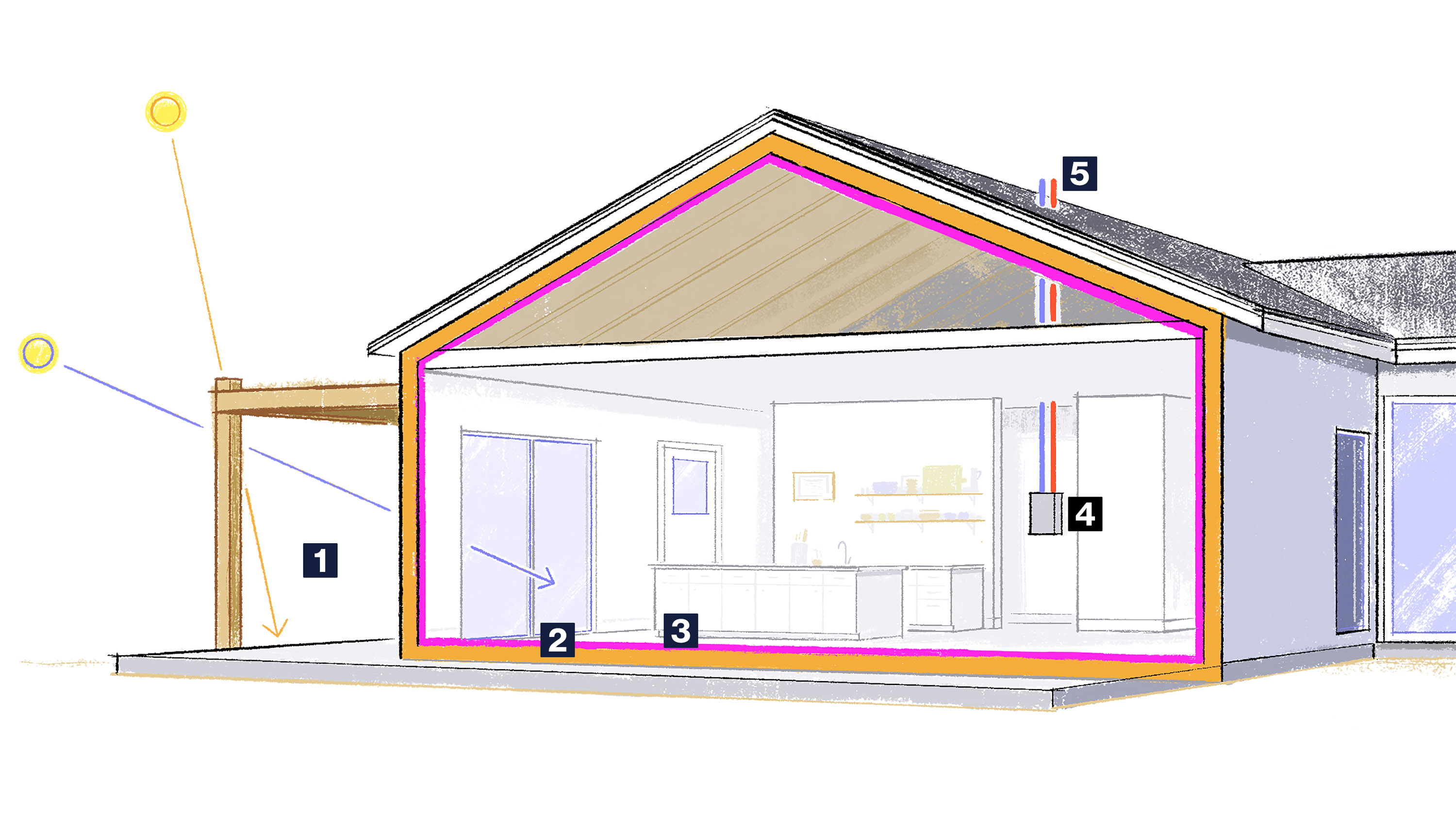
illustration of a house with numbered features

ARTHUR MOUNT


Is this the most energy-efficient way to build homes?

When engineers began designing an ultra-efficient home in the 1970s, they realized the trick wasn’t generating energy in a greener way, but using less of it. They needed to make a better thermos, not a cheaper coffee maker.

That idea helped inspire today’s passive-house standard: airtight buildings that can cut energy use by up to 90% through better windows, insulation, and ventilation.

Although they’re often considered a cold-climate approach, passive houses actually have universal benefits. Find out what makes them so efficient.


—Patrick Sisson

We can still have nice things

A place for comfort, fun and distraction to brighten up your day. (Got any ideas? Drop me a line.)

+ Finally, someone built a gaming PC inside a microwave that runs DOOM.
+ Experience the rhythm of the city through this rapid-fire collage of urban photography.
+ Get a dose of pure cuteness as these tiny snow leopard cubs leave their den for the first time.
+ If you’re staring at a random assortment of groceries, SuperCook will find a recipe based on what’s already in your pantry.

Artificial intelligence-based analysis of visual electrophysiological signals for clinical interpretation support

IntroductionVisual electrophysiology, including electroretinograms (ERG) and visual evoked potentials (VEP), provides a real-time functional assessment of retinal and post-retinal pathways, complementing structural imaging. Subtypes such as transient, periodic, multifocal, and code-modulated signals probe distinct physiological mechanisms and reveal pathological signatures ranging from photoreceptor dysfunction to cortical pathway impairment. However, interpretation is often challenged by low signal amplitude, noise, and inter-individual variability. Advances in artificial intelligence (AI) enable automated, objective and reproducible analysis, and may improve sensitivity, and scalability in clinical and research environments. We undertook a literature review to identify the potential of automated analysis of brief visual electrophysiology signals to support medical interpretation in ophthalmology.Materials and methodsA review of the 2020–2025 literature was undertaken.ResultsAI has been increasingly applied to ERG and VEP signals. These signals encode complex pathophysiological processes. Their features vary widely as they are transient (triggered by a single stimulus), periodic (repeated over time), multifocal (capturing signals from multiple visual field locations), or dependent on specific timing or coding schemes. These properties influence the choice of the most appropriate AI method for analysis. Classical ML methods remain useful for interpretable, feature-based classification of relatively scarce medical data, such as transient/aperiodic VEP and ERG. By modeling latent dynamics, AI can identify subtle or early dysfunction and harmonize interpretation across centers.ConclusionAI supports reproducible, clinician-independent pipelines for electrophysiology, well-suited to high-volume clinics and large-scale screening. The convergence of standardized acquisition protocols with advanced AI analysis has the potential to deliver more personalized, timely, and objective assessments of visual system integrity in neuro-ophthalmic practice.

Clinical application of 1H MRS in the human brain at 7T

Proton magnetic resonance spectroscopy (1H MRS) enables non-invasive biochemical sampling of tissues, potentially aiding diagnosis, prognosis and monitoring of various pathologies, while providing novel imaging biomarkers. Ultra-high-field (UHF) imaging at 7 tesla (7T) benefits from improved spectral dispersion due to an increase in chemical shift differences between metabolites, and a higher signal-to-noise ratio (SNR), making 1H MRS at 7T a particularly promising diagnostic tool for identifying and separating metabolites not clearly resolved at lower field strengths. However, 1H MRS at UHF presents technical challenges related to the short RF wavelength at 7T, resulting in B1 transmit field inhomogeneity, and the increased magnetic susceptibility gradients leading to B0 field inhomogeneity. Appropriate MRS methods are required to address these issues. In this article, we describe the technical aspects and challenges of 1H MRS at 7T, based on the experience in our centre, where single voxel 1H MRS has featured prominently in clinical 7T research applications for several years. We present data from six patients with glial tumours, including three who were post-operative, in whom post-surgical metalware affects the specific absorption rate (SAR), along with two patients with neuroinflammatory conditions and two with neurodegenerative diseases. The potential clinical use of 1H MRS for these pathologies and its possible integration as a promising biomarker into advanced imaging pathways are discussed.

A novel music-based real-time fMRI neurofeedback interface modulates interhemispheric connectivity and enhances mood

IntroductionMusic is a universal language that transcends cultures and is deeply rooted in human evolutionary history. Its creation and appreciation recruit the limbic and reward systems, leading to the evocation of emotions ranging from happiness and sadness to tenderness and grief. Here, we investigate the potential of music as an interventional tool in a novel neurofeedback connectivity-based experiment. MethodsThis study proposes a musical interface for real-time functional magnetic resonance imaging neurofeedback that is adaptable to diverse experimental paradigms, namely the ones aiming at improving mood and other affective dimensions. Using a previously developed motor imagery connectivity-based approach, we evaluate its feasibility and efficacy by comparing the modulation of bilateral premotor cortex activity during functional runs with real versus sham (random) feedback in 22 healthy adults. We also assess its performance against a visual feedback interface. The experiment involves a 50-minute MRI session, including anatomical scans, a premotor cortex functional localizer run, and four neurofeedback runs (two with active feedback and two with sham feedback). Pre- and post-session questionnaires assess the neurobehavioral impact on mood, musical background (as a potential predictor of neurofeedback success), and subjective feedback experiences. During neurofeedback, participants perform motor imagery of finger-tapping, with feedback delivered as a dynamic, pre-validated chord progression that evolves or regresses based on the functional connectivity between left and right premotor cortex.ResultsWe found that our implementation of music-based feedback was successful, with participants managing to modulate their own connectivity using the proposed interface. The modulation performance was similar for active and sham runs, possibly due to the power of music to boost neuromodulation, but the network recruitment was stronger for active neurofeedback, including in the insula, putamen, and target regions of interest. Behaviorally, we found a decrease in tension and an improvement in the overall mood of the participants after the session. DiscussionWhen comparing our results to previous neurofeedback data with a visual interface, we found stronger brain activations, in particular in neurofeedback-relevant regions such as the insula and the putamen. This work shows that it is possible to directly modulate interhemispheric connectivity using a real-time functional magnetic resonance imaging musical interface with potential effects on mood and recruitment of saliency and learning networks.

Acceptance of mental illness and attitude towards pharmacotherapy among patients hospitalized in forensic psychiatry departments

Aim of the studyThe aim of the study was to assess the level of acceptance of the disease and attitudes towards pharmacological treatment in patients hospitalized in forensic psychiatry departments and to analyze the relationship between these variables and the length of hospitalization.Materials and methodsThe study included 121 patients hospitalized in forensic psychiatry wards. The Acceptance of Illness Scale (AIS) and the Drug Attitude Inventory (DAI) were used. Statistical analysis was performed using nonparametric tests, with a significance level of p < 0.05.ResultsThe mean AIS score was 28 points, indicating moderate to good disease acceptance. A positive attitude toward pharmacological treatment was demonstrated by 74% of respondents. There was no significant correlation between disease acceptance and attitudes toward treatment (p = 0.70), nor was there any effect of hospitalization length on attitudes toward pharmacotherapy (p = 0.317).ConclusionsPatients of forensic psychiatry wards demonstrate a medium or high level of acceptance of the disease and a mostly positive attitude towards pharmacotherapy; the lack of significant correlations between these variables and the independence from the length of hospitalization indicate the need for individualized therapy.

A phenomenological study on psychological resilience among medical vocational college freshmen

BackgroundMedical vocational college freshmen face severe challenges to their psychological resilience from various stressful events upon their enrollment. This qualitative study aimed to explore the authentic experiences and intrinsic characteristics of psychological resilience among medical vocational college freshmen.MethodsThe study employed a descriptive phenomenological design. A purposive sample of 24 medical vocational college freshmen was recruited as participants. Semi-structured interviews were conducted to collect data between January 2025 and February 2025. The interviews were transcribed verbatim and analyzed using the Colaizzi descriptive analysis method.ResultsData analysis identified nine subthemes falling into three macrothemes: (a) Challenges: The Erosion of Psychological Resilience, describing how freshmen’s psychological resilience is eroded when they face difficulties in adapting to college life; (b) Support: The Recovery of Psychological Resilience, focusing on how freshmen regain resilience through internal and external support; (c) Cognition: The Maintenance of Psychological Resilience, explaining the factors that promote the sustained development of freshmen’s psychological resilience.ConclusionFreshmen face pressures in academics, interpersonal relationships, and self-management. Family and peer support, together with personal growth, contribute to resilience recovery. Educators should employ cognitive restructuring, experiential learning, and other strategies to help maintain their psychological resilience.

Harsh discipline mediates the association between parenting stress and internalizing problems in children and adolescents: survey-based and online intervention evidence

BackgroundParenting stress evokes harsh discipline and induces internalizing problems in children and adolescents. To test this hypothesis, this study examined the potential mediating role of harsh discipline in the association between parenting stress and internalizing problems in children and adolescents while considering the moderating effect of emotion regulation.MethodsTwo studies were conducted: Study 1 was a cross-sectional survey using questionnaires (N = 971), and Study 2 implemented a three-week online parental intervention training program combining courses and psychological diary recording (N = 123).ResultsBoth studies consistently demonstrated that harsh discipline mediated the link between parenting stress and internalizing problems in children and adolescents. Furthermore, acceptance and cognitive reappraisal reduced the effect of parenting stress on harsh discipline, whereas distraction and rumination enhanced it. Expressive suppression had no significant moderating effect. The intervention enhanced parents’ emotion regulation (increased acceptance), reduced parenting stress and alleviated internalizing problems in children and adolescents, with preliminary evidence of reduced harsh discipline.ConclusionThese findings clarify the psychological mechanisms through which parenting stress influences child adaptiveness and underscore the value of interventions focused on emotion regulation in mitigating parenting stress, harsh discipline and enhancing child mental health.

Combinatorial effects of multi-site stimulation on depression-related brain regions: clinical data analysis and predictive modeling

BackgroundDespite growing evidence supporting deep brain stimulation (DBS) for treatment- resistant depression (TRD), how stimulation delivered across hemispheres or across multiple targets interact to shape large-scale network activity remains poorly characterized.ObjectiveUsing a unique opportunity to simultaneously stimulate the subcallosal cingulate (SCC) and ventral capsule/ventral striatum (VC/VS) in subjects with TRD while recording neural activity across putative prefrontal networks underlying depression via intracranial electrodes, we investigated whether bilateral or multi-target stimulation has additive, synergistic/super-additive, or antagonistic/sub-additive effects on power modulation across depression-related brain networks.MethodsFour DBS leads, and ten stereo-electroencephalography (sEEG) leads were implanted in depression-related prefrontal brain regions in three subjects with TRD. Power modulation in response to unilateral and bilateral stimulation, as well as interaction classes of combinatorial stimulations, were evaluated across various combinations of frequency bands and region of interests (ROI) using marginal predictions from a linear mixed-effects model which were then used as input for machine learning classifiers to predict the additive interaction class of combinatorial stimulations.ResultsBilateral and multi-target stimulation produced additive or sub-additive interactions in most cases. A decision tree classifier identified ROI as the most important feature for predicting interaction class, followed by stimulation target and spectral frequency band.

A data-driven risk stratification framework for clinical obesity

Nature Medicine, Published online: 30 April 2026; doi:10.1038/s41591-026-04370-1

To inform precision management of obesity, this study developed and externally validated a parsimonious model (OBSCORE) that accurately predicts the risk of 18 obesity-related complications. This was achieved by integrating thousands of clinical, molecular and other health-related characteristics assessed in 200,000 individuals with overweight or obesity within a machine-learning framework.