Allogeneic natural killer (NK) cells appear promising as an adoptive cell therapy (ACT) that targets cancer. They’re limited, however, by production methods that can’t readily produce these cells in therapeutically relevant quantities.
Researchers led by Sang-Ki Kim, DVM, PhD, professor, Kongju National University in Korea, and CSO at Vaxcell Bio, along with Seung-Hwan Lee, PhD, professor, University of Ottawa, appear to have solved that bottleneck with an engineered version of the feeder cell line known as ARH-77, a B-lymphoblast cell line that stimulates NK cells. Even in its unmodified form, ARH-77 cells expanded NK cells extracted from peripheral blood samples 681-fold after 28 days. In contrast, K562, the cell line typically used, enabled 155-fold expansion during that time.
That expansion pales in comparison to that of the engineered cell line. The now-modified ARH-77 cells, modified to express four specific stimulatory ligands, expanded NK cells by 101,241-fold in 28 days. Making the same modifications to the K562 cells, however, improved production only 4.4-fold. In each of the cell lines, purity and cytotoxicity were considered equivalent.
Kim, Lee, and colleagues chose the ligands B7-H6, CD137L, IL-15, and IL-15Rα to provide multi-axis stimulation to enhance NK cell activation and proliferation as well as to enhance persistence. For example, B7-H6 stimulates production and exhibits early cytotoxic benefits, but those benefits dissipated by week four. CD137L appears to compensate for that attenuation, the scientists report. Notably, the feeder performance was consistent across donors.
While these ligands were more effective than other ligands the team considered, they stress that more work is needed to “formally establish the added value of each ligand.” They also want to evaluate the engineered ARH-77 in terms of in vivo persistence and anti-tumor activity against additional models. Large-scale manufacturing constraints also should be considered in future studies.
Because feeder cell performance is considered stable across the donor population, Kim and Lee suggest their engineered ARH-77 cell line may be a reliable option for NK cell expansion as therapeutic production scales up. As the scientists note, “These findings establish ARH-77 as a promising alternative feeder cell platform that could enhance the scalability, consistency, and potency of allogeneic NK cell manufacturing for clinical adoptive immunotherapy.”
The manufacturing of weight loss drugs at large scale could get cheaper and more sustainable thanks to an engineered strain of Escherichia coli (E. coli) bacteria.
That’s according to Constructive Bio, the company that recoded the E.coli and now hopes this synthetic strain will transform the production of some high-volume hard-to-manufacture protein/peptide therapeutics.
“Our key message is that we’re able to produce long peptides containing non-canonical amino acids to deliver therapeutic proteins at scale by biomanufacturing,” explains Rob Salmon, PhD, head of bioprocess at Constructive Bio.
“And our key differentiator is there’s currently a market in, for example, weight loss drugs.”
According to Salmon, glucagon-like peptide-1 (GLP-1) agonists for weight loss are currently produced using chemical synthesis approaches such as solid phase peptide synthesis, which is hard to scale and generates high volumes of toxic waste.
By contrast, the synthetic E. coli strain can potentially produce these peptides using fermentation via standardized industrial processes, he says.
“We want to fit into standardized industrial unit operations and, through that, scale to thousands of liters of product that we can sell to the market,” he explains.
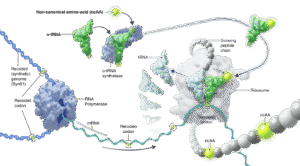
The strain was developed as part of research into reducing the number of codons needed to synthesize proteins in an organism from 64 to 61, allowing slots for three new non-canonical amino acids, according to the company.
A schematic demonstrating how non-canonical amino acids are incorporated into a protein or peptide chain using the ribosome in Constructive Bio’s Syn61 strain of E. coli. [Constructive Bio]
Constructive Bio was founded in 2022 to take the strain forward into industrial applications, including optimizing for applications such as antibody fragments or the long peptides used for GLP-1 agonist therapies.
Since then, the optimized strain has been taken through some industrial fermentations and demonstrated promising titers, he explains, adding that he will present results at the upcoming Bioprocessing Summit in Boston.
“We’re challenging some of the assumptions from chemists that biology can’t be used to do this,” he says.
Human pluripotent stem cells (hPSCs) have long been viewed as one of regenerative medicine’s most promising raw materials. Now, as more than 100 clinical trials evaluate hPSC-derived therapies for diseases ranging from Parkinson’s disease to heart failure and type 1 diabetes, attention is turning toward a crucial challenge: how to manufacture these cells reliably and economically at industrial scale.
According to Kevin Cyrys and Robert Zweigerdt, PhD, both of Hannover Medical School in Germany, the field has entered a new phase. Rather than simply demonstrating that stem cells can be grown in bioreactors, researchers are increasingly focused on creating robust production platforms that can deliver consistent quality across facilities and patient populations.
“Human pluripotent stem cells can serve as an unlimited, renewable ‘raw material’ for essentially any therapeutic cell product,” the authors wrote, highlighting the technology’s potential to overcome limitations associated with donor-derived tissues and organs.
The manufacturing challenge is substantial. While some therapies, such as treatments for age-related macular degeneration, require only tens of thousands of cells per dose, others may demand billions of cells for a single patient treatment. Conventional laboratory-scale methods are unlikely to meet such requirements efficiently.
To address this gap, developers are increasingly adopting three-dimensional suspension cultures in bioreactors. Compared with traditional two-dimensional cell culture systems, bioreactors provide tighter control over temperature, oxygen levels, pH, and carbon dioxide while supporting automated, closed-system manufacturing compatible with good manufacturing practice (GMP) standards.
The field has already demonstrated notable progress across multiple therapeutic areas. Researchers have developed scalable processes for producing cardiomyocytes, pancreatic islet cells, hepatocyte-like cells, neural tissues, and immune effectors derived from hPSCs. Some cardiac manufacturing platforms have reported production of billions of cardiomyocytes in liter-scale bioreactors, while immune-cell manufacturing programs have successfully expanded induced pluripotent stem cell-derived natural killer cells in 1–10 L systems while maintaining product quality.
Yet scaling production involves more than increasing cell yields. “Industrial-scale success depends on more than headline totals,” Cyrys and Zweigerdt note, citing the importance of volumetric productivity, production time, reproducibility, and integration of expansion, differentiation, and downstream processing into a coherent GMP-ready workflow.
Looking ahead, Cyrys and Zweigerdt argue that the next generation of stem-cell manufacturing will be defined by data-driven process control. They predict that AI-enabled systems will help move the industry from retrospective quality analysis toward real-time decision support, ultimately improving comparability between batches and strengthening product definitions across manufacturing networks.
Despite ongoing challenges involving cost, quality control, and regulatory compliance, the authors conclude that stem-cell bioprocessing has already crossed an important threshold. Scalable culture systems are no longer the primary obstacle. Instead, the focus has shifted toward engineering reliable industrial processes capable of transforming complex stem-cell biology into reproducible therapeutic products.
Ireland’s National Institute for Bioprocessing Research and Training (NIBRT) will help biopharma engineers hone their automation and AI skills as part of a new World Health Organization (WHO) network.
The WHO named the University College Dublin-based organization as its newest training center, explaining it will provide engineers with context-specific skills courses aligned with “regional priorities, regulatory environments.”
NIBRT spokesman Killian O’Driscoll tells GEN, “Following a competitive application process, NIBRT has now been designated as the WHO Training Center for the European Region. NIBRT will work with partners and stakeholders to identify the skills gaps within the region and provide the appropriate training solutions, which will involve a blend of online, classroom, and practical training on biopharma manufacturing.”
Engineers who take part will be taught how to use advanced bioprocessing technologies in a variety of manufacturing settings, according to O’Driscoll, who says the plan is to use the organization’s syllabus as a foundation.
“Training will cover all aspects of biopharma manufacturing based on NIBRT’s award-winning curriculum, including drug substance, drug product, QC, engineering, digitalization, etc. Automation, digitalization, AI, and related areas are a core component of the NIBRT curriculum and will form part of the training solutions,” he adds.
LMIC capacity
The WHO established the Biomanufacturing Workforce Training Initiative in 2023 to address critical skills gaps across the biomanufacturing value chain and enable countries to translate technological advances into sustainable local production.
NIBRT is now one of seven institutions selected. The rest of the network consists of the Institut Pasteur de Dakar in Senegal, the Council for Scientific and Industrial Research in South Africa, the Oswaldo Cruz Foundation in Brazil, the Translational Health Science and Technology Institute in India, Egypt’s Center for Continuing Professional Development, and Peking University in China.
The initiative directly supports World Health Assembly resolution WHA74.6, which called on member states to strengthen local production of medicines and other health technologies to prepare for emergencies.
This will be a focus of NIBRT’s training activities, according to O’Driscoll.
“One of the key actions the WHO identified following the COVID-19 pandemic was to increase biopharma manufacturing capabilities within lower-middle-income countries (LMICs). The WHO’s Biomanufacturing Workforce Training Initiative addresses critical skills gaps in the biomanufacturing value chain to support sustainable local production of vaccines and biotherapeutics in LMICs,” he says.
In a press statement, director-general, Tedros Adhanom Ghebreyesus, PhD, said, “We have designated regional training centers in each of WHO’s six regions to build the skilled workforce needed to sustain local production of vaccines and biologics. They will operate as part of a coordinated global network, delivering context-specific training aligned with regional priorities, regulatory environments, and languages.”
Europe is in the middle of a record-breaking heat wave, and the grid is being pushed to its limits as people turn to fans and air-conditioning to try to stay cool. Some power plants won’t be online to help handle the load.
On June 23, France saw its hottest day since record-keeping began in 1947. Temperatures climbed to over 44 °C (111 °F), and overnight temperatures remained unusually high. This prolonged hot weather warmed up the water in some rivers across the country, a problem for the many nuclear plants that rely on those bodies of water for cooling. One reactor has already shut down, and others are being ramped down or will see limitations later in the week.
Unit two at the Golfech nuclear power plant in southern France shut down at about 11:45 p.m. on June 22 when the river used to cool the plant got too hot. The move was a precautionary measure, according to Brid Nelligan, a spokesperson for EDF, the plant’s owner and operator.
The power plant takes in water from the Garonne River and then returns most of it to the river at slightly higher temperatures after using it to cool equipment. French regulations limit the temperature of that return stream, so the warm water (it was expected to reach 28 °C, or around 82 °F) forced the operator to shut down the plant.
EDF, which operates France’s entire nuclear fleet, is also limiting the output of other reactors across the country—one reactor at the Nogent-sur-Seine power plant was ramped down as of Tuesday, and more will follow later in the week, Nelligan says.
Extreme heat has affected France’s nuclear industry before. At least seven gigawatts’ worth of nuclear energy was forced to shut down across the country during a heat wave in July 2025, according to data from Ember Energy. That’s more than the entire grid of Ireland.
This time, power plant outages and limitations aren’t expected to be drastic enough to affect the ability to meet demand in France, according to RTE, operator of the national electric grid.
Nuclear power has made most of the headlines during this heat wave, but other forms of electricity generation face similar challenges. Hydropower plants frequently run into problems when dry conditions lower the amount of water available to generate energy and force them to decrease or shut off operations. In the first five months of 2025, high temperatures and low water conditions cut hydropower supplies in Europe by 13% compared with the year before.
Even established coal and natural-gas plants can be challenged by high temperatures. Hot weather can stress equipment and limit the efficiency of cooling towers. Five gas plants across the UK have reported output reductions due to the conditions, cutting a total of about 2.5 gigawatts from the power supply.
Increased demand, largely driven by cooling, is the main factor stressing Europe’s power grid, says Jean-Paul Harreman, director of Montel, an energy intelligence provider, via email. Even countries that haven’t historically relied much on cooling technologies are turning to them now—the number of UK homes that use air-conditioning has roughly doubled since 2022.
Around the world, the challenges heat presents for the grid are only expected to get worse as climate change brings more frequent and intense heat waves. Globally, energy use for cooling is set to double by 2050 relative to 2023 levels, according to the International Energy Agency.
“Utilities can adapt by planning for summer peaks, making cooling demand more flexible, reinforcing grids for high temperatures, deploying batteries and demand response, and climate-proofing power plants’ cooling systems,” says Simone Tagliapietra, senior fellow at Bruegel, an economic and policy think tank, via email.
But those changes could be expensive. Earlier this year, EDF shared a climate-change vulnerability assessment for its business, including nuclear and hydropower operations across France. Upgrades are expected to cost about €600 million per year (about $680 million) over the next 15 years.
Meanwhile, high temperatures are expected to continue across much of Europe through the end of the week.
You’re reading the web edition of STAT’s AI Prognosis newsletter, our subscriber-exclusive guide to artificial intelligence in health care and medicine. Sign up to get it delivered in your inbox every Wednesday.
I’m writing to you from a hotel room in San Diego, four hours before this newsletter is scheduled to send.
I’m also still reeling from this absolutely crazy story my colleague Lizzy Lawrence wrote. Imagine STAT executive editor Rick Berke reading of the top of the story out loud to a group of STAT reporters over dinner at a waterfront restaurant, and my jaw dropping as I realize what’s going on.
As AI infrastructure for drug discovery continues to proliferate with reasoning workflows capable of generating hypotheses, candidate molecules, and experimental plans, Medra CEO Michelle Lee, PhD, argues that physical AI is the solution to addressing the next bottleneck: experimental validation at scale.
“Building foundation models in biology that can predict and cure disease will take thousands of years of data generation,” Lee explained in an interview with GEN Edge. “The more I looked at the field, the more I realized that this data problem is actually a robotics problem.”
In a new collaboration with the Defense Advanced Research Projects Agency (DARPA), Medra has launched AI Experimentalist, the scientific reasoning layer of its robotics platform. The system translates high-level research goals expressed in natural language into executable workflows that span the entire experimental cycle, from literature review, wet-lab execution, data analysis, and protocol refinement.
In a blog post, Medra presents an example where scientists prompt to “build an Epidermal Growth Factor Receptor (EGFR) blocking antibody assay cascade.” AI Experimentalist can propose small optimizations in execution, including testing linear DNA templates in parallel, optimizing expression conditions, and feeding results immediately into the next run, for compounding time savings from days to hours.
Partners can access AI Experimentalist through physical AI labs deployed on site at customer facilities or operated remotely through Medra’s flagship science laboratory, Medra Lab 001 (ML001), which unveiled in April and touts running experiments 24/7. Medra describes the 38,000 square foot facility as the largest autonomous lab in the United States.
Artisanal nature
In contrast to industrial automation, which has been powerful for repeatable tasks, such as combinatorial chemistry and screening, physical AI equips the same hardware with sensors to enable intelligent decision-making.
While many robotics players in biology are focused on the manufacturing step, Medra has the ambitious goal of accelerating end-to-end drug discovery campaigns.
“The artisanal nature of science is actually what makes certain experiments work and others fail,” said Lee. She noted that seemingly subtle variables, such as the angle of a pipette or the precise timing of mixing reagents, can have an outsized impact on experimental outcomes.
Medra is currently working with partners across academia, biopharma, and government to run and develop assays across a wide array of applications, including antibody discovery, protein engineering, gene editing, and cell biology.
Looking ahead, Lee says the bottleneck is not robotic capability, but integration and deployment. AI Experimentalist addresses this challenge through a multi-agent architecture and model-agnostic harness that allows Medra to incorporate new biological AI models and scientific agents. Among them are NVIDIA Nemotron models for protocol editing and optimization and the newly launched NVIDIA BioNeMo Agent Toolkit.
“The flexibility of physical AI will be incredibly key in making scientific discovery truly autonomous,” asserts Lee.
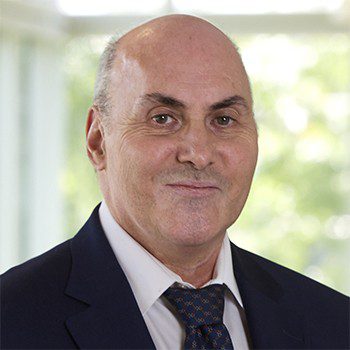
Drew Weissman, MD, PhD, is a world-renowned physician and Roberts Family Professor in Vaccine Research at Penn Medicine. He is best known for his contributions to RNA biology and the development of COVID-19 RNA vaccines. Weissman and Katalin Karikó, PhD, were jointly awarded the 2023 Nobel Prize in Medicine for their discoveries that enabled the modified mRNA technology used in Pfizer-BioNTech and Moderna’s vaccines to prevent COVID-19. More than 15 years ago, Weissman and Karikó found a way to modify mRNA and developed a delivery technique to package the mRNA in lipid nanoparticles. The COVID-19 RNA vaccine received FDA approval in August 2021.
Weissman is one of the academic leaders of the NSF AIRFoundry, an effort to leverage AI to improve, accelerate, and scale the design, manufacture, and delivery of RNA, which officially opened in April 2026. Weissman’s lab is currently working on a pan-coronavirus vaccine, a universal flu vaccine, and a vaccine to prevent herpes. They are working with Penn colleagues to develop cancer therapeutics with mRNA technology. And they are developing a SARS-CoV-2 mRNA vaccine with Chulalongkorn University in Thailand to help residents of Thailand and other Asian countries access lifesaving vaccines.
Before joining Penn in 1997, Weissman was a fellow at the National Institutes of Health studying HIV in the lab of Anthony Fauci, MD. Weissman received his bachelor’s degree and master’s degree from Brandeis University. He earned his MD and PhD from Boston University and completed his residency at Beth Israel Hospital.
Zachary Ives, PhD
Professor of Computer and Information Science University of Pennsylvania
Panelist
Zachary Ives, PhD
Zachary Ives, PhD, is the department chair and Adani President’s Distinguished Professor of Computer and Information Science at the University of Pennsylvania. Zack’s research interests include data integration and sharing, data provenance and trustworthiness, and machine learning systems. He is a recipient of the National Science Foundation (NSF) CAREER award, and an alumnus of the DARPA Computer Science Study Panel and Information Science and Technology advisory panel. He has also been awarded the Christian R. and Mary F. Lindback Foundation Award for Distinguished Teaching and an IEEE Technical Committee on Data Engineering Education Award, and he is a fellow of the ACM.
Zack is one of the academic leaders of the U.S. NSF Artificial Intelligence-driven RNA BioFoundry (NSF AIRFoundry), an $18-million effort to leverage AI to improve, accelerate, and scale the design, manufacture, and delivery of RNA. The center officially opened in April 2026.
Zack studied computer science at Sonoma State University and holds a PhD in computer science from the University of Washington. He joined the faculty of Penn in 2003. He is a co-author of the textbook Principles of Data Integration. He has been an associate editor for the Proceedings of the VLDB Endowment and The VLDB Journal.
Silvi Rouskin, PhD
Asst. Professor of Microbiologyy Harvard Medical School
Panelist
Silvi Rouskin, PhD
Born in Bulgaria, Silvi Rouskin, PhD, is an assistant professor of microbiology at Harvard Medical School. She is the winner of the 2021 Vilcek Prize for Creative Promise in Biomedical Science. Following a six-year spell at the Whitehead Institute, where she was the Andria and Paul Heafy Whitehead Fellow, Silvi joined the faculty of Harvard Medical School in 2021.
Silvi’s Harvard lab studies alternative RNA structures and the myriad roles they have in both viral and human biology. In particular, the lab studies how RNA folding informs alternative splicing and how misfolding can lead to disease. The lab developed DMS-MaPseq (dimethyl sulfate mutational profiling with sequencing) and DREEM (Detection-of-RNA-folding-Ensembles-using-Expectation-Maximization) algorithm to distinguish multiple RNA conformations formed by the same underlying sequence in vivo at single nucleotide resolution.
Silvi immigrated to the United States as a teenager to pursue a career in science. She holds a degree in physics from Florida Institute of Technology and a PhD in biochemistry and molecular biology from the University of California, San Francisco. Her interest in RNA began while working as a staff research associate in the lab of Joseph DeRisi, PhD, at UCSF, where she began developing techniques for the detection of viruses associated with human disease.
Broadcast Date:
Time:
In anticipation of RNA Day (on August 1), GEN invites you to join our exciting Spotlight virtual event on RNA Therapeutics on Wednesday, July 29.
We are living in a “post-genomic” world where RNA is no longer just a messenger but a programmable drug and molecular therapeutic. From the global impact of mRNA vaccines to advances in RNA editing and the potential of circular RNA, the field of RNA therapeutics is truly taking off. RNA is rapidly becoming a universal software for precision medicine.
Over 2.5 hours, this GENSpotlight on RNA Therapeutics brings you three interlinked sessions that feature outstanding researchers exploring various aspects of RNA biology and therapeutics, including:
A keynote panel including two founding members of the AIRFoundry (Artificial Intelligence-driven RNA BioFoundry) at the University of Pennsylvania—Zachary Ives, PhD, and Nobel laureate Drew Weissman, MD, PhD
A talk from Silvi Rouskin, PhD, a leading microbiologist at Harvard Medical School, presenting new research on alternative RNA structures and their relevance in health and disease
Presentations from our two sponsors, 4basebio and Aldevron
Registration to our Spotlight on RNA Therapeutics is entirely free. We look forward to celebrating RNA Day with you (a few days early).
This is today’s edition of The Download, our weekday newsletter that provides a daily dose of what’s going on in the world of technology.
Introducing: the Engineering issue
We can’t fix everything, but we can be ambitious. We can take on the challenge of making the world better through human ingenuity. That’s what the new Engineering issue of MIT Technology Review is all about.
Sometimes the challenges we face are giant, like tunneling beneath the seafloor. Some exist at the nanoscale, as with a new ASML machine powering the future of chipmaking. Others represent problems at a planetary scale and in truly unknown territory, like replicating a volcano’s mechanism to cool the Earth on purpose.
These incredible engineering stories show we can come together to get to work and, when the smoke clears, find we’ve made real progress. Subscribe now to read all of them—and more—in the full print issue.
Stripe, Anthropic, and OpenAI are backing an effort to stop respiratory infections
The common cold comes for us all—often more than once a year. And there is no way to prevent it. The best you can do is take vitamin C and stay away from people with the sniffles.
Now, the payment company Stripe is funding a new $500-million nonprofit aiming to prevent both the common cold and the flu. Its eventual goal is to get rid of respiratory viruses altogether.
Anthropic, OpenAI, and Bill Gates have also backed the venture, which will investigate whether modern technologies can counter the common cold and the flu. Dive into the nonprofit’s plans.
—Antonio Regalado
MIT Technology Review Narrated: inside the hunt for the most dangerous asteroid ever
As asteroid 2024 YR4 hurtled toward Earth, astronomers determined that this massive rock posed a higher risk of impact than any object of its size in recorded history. Then, just as quickly as history was made, experts declared that the danger had passed.
This is the inside story of the network of global scientists who found, followed, planned for, and finally dismissed the most dangerous asteroid ever discovered —all under the tightest of timelines and with the highest of stakes.
—Robin George Andrews
This is our latest story to be turned into an MIT Technology Review Narrated podcast, which we publish each week on Spotifyand Apple Podcasts. Just navigate to MIT Technology Review Narrated on either platform, and follow us to get all our new content as it’s released.
The must-reads
I’ve combed the internet to find you today’s most fun/important/scary/fascinating stories about technology.
1 China has taken the US’s crown for the world’s fastest supercomputer Shenzhen’s LineShine overtook California’s El Capitan. (Axios) + China had not had a machine at the top of the list since 2017. (NYT $) + But the supercomputer race isn’t geared for AI work. (Reuters $)
2 Mythos reportedly found flaws in classified US government systems A US official said Anthropic’s model identified certain vulnerabilities. (AP News) + The model has now been suspended over US security concerns. (BBC) + The NSA has lost access to Anthropic’s tools in fallout. (Engadget) + The feud raises new questions about AI safety. (MIT Technology Review)
3 A US pilot reported seeing Iranian drones swarm in “jellyfish” formation Which would represent an alarming advance in Iranian drone capabilities. (CNN) + The US is heading toward a drone-filled future. (MIT Technology Review)
4 Mark Zuckerberg directed Meta to create a prediction markets app It will be similar to Polymarket and Kalshi. (NYT $) + But won’t let users wager real money. (The Verge) + Another new app, Meta Photos, will create media with AI. (Reuters $)
5 SpaceX’s “Starfall” just launched a secretive test flight The orbital delivery spacecraft blasted off for the first time yesterday. (Axios) + It could also support space manufacturing. (New Scientist $)
6 Alibaba has sued the US for being linked to the Chinese military It wants to be removed from a Pentagon blacklist. (Reuters $)
7 Nvidia’s banned AI chips have doubled in price on China’s black market The DGX B300 now costs more than $1.1 million. (Financial Times $)
8 Tesla claims a driver “manually overrode self-driving” in a deadly crash It said the accelerator was pressed “all the way to 100%.” (The Verge $)
9 The US science retreat has created an opportunity for Europe But questions about funding and innovation remain. (Nature) + Trump has dealt many blows to US science. (MIT Technology Review)
10 Meta’s new smart glasses ditch Ray-Bans for Kylie Jenner Meta logos and Jenner designs have replaced the Ray-Ban branding. (Wired $)
Quote of the day
“It’s blasphemy against AI if you say it’s a bubble.”
—SoftBank founder and CEO Masayoshi Son tells shareholders that the AI boom is still in its early stages, Reuters reports.
One More Thing
ERIK CARTER
Video games are dividing South Korea
They say StarCraft was the game that changed everything. When the science fiction strategy game arrived in South Korea in 1998, it wasn’t just a hit—it was an awakening.
Out of 11 million copies sold worldwide, 4.5 million were in the country. The game was so popular that it triggered another boom: “PC bangs,” pay-as-you-go gaming cafés.
StarCraft and PC bangs spoke to a generation of young South Koreans boxed in by economic anxiety and rising academic pressures. But they also sparked arguments about game addiction. They’ve led to feuds between government departments—and a national debate over policy.
A place for comfort, fun, and distraction to brighten up your day. (Got any ideas? Drop me a line.)
+ This archive lovingly documents the beautiful design of over 1,700 obsolete objects. + Classic TV theme tunes like Hey Arnold! Have been revived in a musician’s marvellous samples. + Marvel at the mind-boggling geometry of nature and see how bees perfectly construct honeycombs. + Hear the ominous, deeply atmospheric tones of a custom string instrument built inside a plastic drainage pipe.