Conner James Black, associate director of the Autism Center at the Child Mind Institute, encourages families to have two separate devices: one for communication and another for entertainment, rather than using one for both.
Laura Sepp-Lorenzino, PhD, is scientific advisor and former chief scientific officer at Intellia Therapeutics, a clinical-stage genome editing company developing potential curative CRISPR-based medicines. Previously, she was vice president and head of Nucleic Acid Therapies at Vertex Pharmaceuticals and part of External Innovation. She also held roles at Alnylam Pharmaceuticals and Merck & Co. In addition, she currently serves as the director of the American Society of Gene and Cell Therapy (ASGCT).
Shengdar Tsai, PhD
Associate Member, Department of Hematology St. Jude Children’s Research Hospital
Panelist
Shengdar Tsai, PhD
Shengdar Tsai, PhD, is an associate member in the Department of Hematology at St. Jude Children’s Research Hospital. His lab’s research focuses on developing genome editing technologies for therapeutics, with a special interest in editing human HSCs for treatment of hemoglobinopathies such as sickle cell disease and T cells for cancer immunotherapy. In 2020, he was chosen as one of the American Society for Gene and Cell Therapy (ASGCT) Outstanding New Investigators.
Broadcast Date:
Time:
Complex biologics such as bifunctional antibodies are opening new therapeutic possibilities in oncology, but these molecules present CRISPR is now a household term. Stories of genome editing therapies like Casgevy and Baby KJ have been headlines in our inboxes for years. Despite those cases, and the optimism they bring, genome editing has had significant challenges moving into the clinic.
This GEN Live show will bring together a panel of leading experts to break down the latest advances, innovations, and challenges shaping genome editing. The discussion will cover a lot of bases: CRISPR breakthroughs, emerging gene editing platforms, clinical trial milestones, regulatory shifts, access, off-target effects and safety considerations, and the growing role of large-scale population genomics in guiding precision therapies. Please join us to learn more and—because we plan to take questions from the audience—please bring your questions for our panelists, too!
Researchers at Weill Cornell Medicine and Roswell Park Comprehensive Cancer Center have genetically engineered CAR T cells that specifically target and kill bladder cancer (BCa) cells. Through their preclinical study the team, co-led by Taha Merghoub, PhD, a professor at Weill Cornell Medicine, identified the protein MUC16 as a clinically relevant target for bladder cancer, and demonstrated that direct delivery of MUC16-targeting CAR T cells into the bladder via a catheter can control bladder tumors in mice. The investigators say their study raises hopes that a similar approach may be effective in humans.
The team reported on their results in Journal of Experimental Medicine, in a paper titled “Intravesical mesothelin-based CAR T cells targeting MUC16 effectively control bladder cancer in preclinical models,” concluding that their findings “… not only establish MUC16 as a clinically relevant target for anti-BCa CAR T-cell therapy, but also suggest that intravesical delivery, a commonly used administration route in urological practice, represents a viable, easy-to-implement, and more effective strategy of antitumoral adoptive CAR T-cell transfer.”
Approximately 600,000 new cases of bladder cancer are diagnosed worldwide each year, causing nearly 200,000 deaths, the authors wrote. Treatment generally involves surgical removal of the tumor followed by chemotherapy or immunotherapy. But these approaches are associated with high recurrence and progression rates, often necessitating complete removal of the bladder, a life-altering procedure that can lead to significant complications. “Intravesical therapies are the mainstay of bladder cancer (BCa) management, but their efficacy is limited by toxicities and recurrences,” they continued. “Given these challenges there is a significant unmet clinical need, driving renewed interest in bladder-sparing therapies for patients with high-risk bladder cancer who are unfit or unwilling to have their bladder removed,” Merghoub said.
CAR T cells are immune cells genetically engineered to express an artificial receptor protein capable of specifically targeting cancer cells. This type of immunotherapy has been successfully used to treat many different types of blood cancer. But success against solid tumors has so far been limited due to challenges that include poor tumor infiltration and off-target toxicity. Merghoub and colleagues attempted to overcome these issues by creating CAR T cells with high specificity for bladder cancer cells and then delivering them directly to the bladder via a catheter, known as intravesical delivery.
The team developed an antigen discovery pipeline, through which they identified MUC16 as a promising BCa target. “In this study, we leveraged a computational antigen-identification pipeline, which prioritized high tumor specificity and minimal pan-tissue expression to rationally identify MUC16 as a potential target for BCa-directed CAR T-cell therapy,” they stated. The researchers also noted that MUC16 and its soluble form, CA-125, have previously been identified as prognostic biomarkers for BCa, and MUC16 has been investigated as a CAR T-cell therapy target in other malignancies, and particularly ovarian cancer.
Through their newly reported study the investigators found that MUC16 is highly expressed on the surface of many bladder cancer cells, including types that are resistant to existing therapies, but is largely absent from normal bladder cells and other healthy tissues. “Given its favorable expression profile, absence in normal bladder, and high expression across a broad spectrum of bladder tumors analyzed collectively spanning a total of 1,292 patients, including those recalcitrant to existing therapies, MUC16 was selected as the lead candidate for BCa-specific CAR T-cell therapy development,” they wrote.
The researchers then generated CAR T cells that target MUC16. In initial tests these CAR T cells were able to kill MUC16-positive tumors grown in the lab from patient-derived bladder cancer cells. Merghoub and colleagues then tested the ability of the MUC16-targeting CAR T cells to control the growth of human bladder cancer cells implanted in the bladders of mice. The team found that the CAR T cells were ineffective when administered intravenously, but when delivered intravesically, they reduced tumor growth and extended survival. When administered directly into the bladder, the CAR T cells were unable to spread into the rest of the body, minimizing the risk of any side effects in other tissues. “Intravesical delivery of these CAR T cells reduced the growth of BCa xenografts and prolonged survival in xenograft-bearing mice, showing superior efficacy compared with typical systemic CAR T-cell administration,” the investigators noted.
“Development of engineered T cells for solid tumors has been challenging, in part due to normal tissue expression of potential target antigens,” Wolchok says. “Using a compartmentalized delivery system allows us to overcome this hurdle and hopefully come one step closer to broader use of CAR and transgenic T cells for common solid tumors, like bladder cancer.”
“Our findings establish MUC16 as a clinically relevant target for CAR T-cell therapy in bladder cancer, and highlight that intravesical delivery, a commonly used administration route in urological practice, represents a feasible, effective, and readily easy-to-implement strategy for adoptive CAR T-cell transfer,” Merghoub said. “This approach could be useful for both initial treatment of bladder cancer as well as treatment refractory subsets of tumors, offering an attractive therapeutic option for patients who may have limited therapeutic alternatives besides bladder removal.”
In their paper the team also suggest that their findings “… lay the groundwork for refining CAR T-cell therapies targeting other antigens for BCa.”
<![CDATA[New phase 3 analyses show centanafadine improves adult ADHD executive function and emotional regulation beyond core symptoms, as FDA review advances toward July 2026.]]>
Nipah virus—and the closely related Hendra virus—are zoonotic pathogens causing severe respiratory and neurological disease with high mortality rates. Outbreaks are rare but often devastating, with mortality rates ranging from 40 to 75 percent. There are no approved human vaccines or therapeutics for people infected with these viruses.
Now, an international research team led by investigators at the Icahn School of Medicine at Mount Sinai has developed the first fully human monoclonal antibody cocktail shown to provide complete protection against Nipah and Hendra virus infection—even when treatment was given after infection had begun. The findings represent an important step toward developing the first antibody-based therapy for Nipah virus and establish a promising strategy for combating emerging infectious diseases.
“One of the biggest challenges in developing treatments for henipaviruses is that human survivor samples are extremely rare,” said Axel Guzman-Solis, a graduate student in the Department of Microbiology at the Icahn School of Medicine. “We wanted to determine whether we could create fully human antibodies that target the virus in multiple ways at once, making it much more difficult for the virus to evolve resistance.”
The researchers used vaccinated humanized mice with the fusion protein (F) and receptor binding protein (RBP) of Nipah virus with the goal of isolating monoclonal antibodies. The investigators discovered two antibodies, 8G3 and 2A1, which targeted the RBP and F proteins, respectively, and together, could neutralize the virus and limit the potential for immune escape. Because the antibodies work through independent mechanisms, they create multiple barriers to infection and make it more difficult for the virus to develop resistance.
Using cryo-EM, the researchers discovered that the 2A1 antibody neutralizes the virus by stabilizing a sugar-containing structure on the viral fusion protein rather than displacing it, as scientists had anticipated. This previously unrecognized strategy may help explain the antibody’s potency and resilience against viral escape.
“We were surprised to find that the antibody essentially embraces a structure on the virus that many antibodies try to move out of the way,” said Benhur Lee, MD, chair in microbiology at the Icahn School of Medicine. “The finding suggests that stabilizing a viral protein can sometimes be just as effective—or even more effective—than disrupting it.”
When administered together, the antibody cocktail completely protected hamsters from lethal Nipah virus infection. The treatment remained effective even after infection was established, an encouraging result for a disease that progresses rapidly and carries a high fatality rate.
The findings may have broader implications for pandemic preparedness. Because many viruses rely on multiple proteins to infect cells, the researchers believe this dual-targeting strategy could be adapted for other high-priority pathogens.
“This work provides a blueprint for developing antibody therapies that are more resistant to viral evolution,” said Lee. “Rather than relying on a single target, we can attack a virus at multiple vulnerable points simultaneously.”
Next steps include studies in nonhuman primates, evaluation of long-term safety, and efforts to optimize the antibodies for clinical use. The team is also exploring next-generation antibody formats, including single molecules capable of targeting multiple viral proteins simultaneously, as well as approaches that could broaden protection against additional members of the henipavirus family.
“As zoonotic outbreaks continue to emerge around the world, there is an urgent need for therapies that can be deployed quickly against high-consequence pathogens,” said Lee. “Our long-term goal is to translate these discoveries into practical tools that help protect people during future outbreaks.”
<![CDATA[David Dunner, MD, FACPsych, reveals insights into rapid cycling roots, bipolar II, and weighing lithium as an often overlooked treatment option.]]>
Norway-based Circio and Tcelltech, based in Germany, will collaborate using the double-stranded, non-integrating nanoSMAR vector platform for the development of next generation engineered T-cell therapies.
Engineered T-cell therapies such as CAR-T have transformed the treatment of certain cancers. However, ex vivo manufacturing remains complex, and the shift towards in vivo approaches currently relies on viral vectors that have significant safety concerns, according to Richard Harbottle, PhD, head of vector technology and manufacturing at Tcelltech. By integrating the technologies developed by Circio and Tcelltech, the parties aim to engineer T-cells with enhanced and sustained CAR/TCR expression, without the need for viral vectors, he adds.
“The combination of Tcelltech’s non-viral, episomal nanoSMAR DNA vector platform with Circio’s circVec expression technology holds great promise for the development of in vivo gene delivery systems that are non-disruptive to target cells, maintain high expression levels, and enable straightforward, cost-effective manufacturing,” says Harbottle. “Furthermore, the exceptionally large cargo capacity of nanoSMAR vectors—beyond what is achievable with viral approaches—enables the design of complex, and sophisticated constructs incorporating multiple payload genes and regulatory elements.”
Circio and Tcelltech will combine Circio’s circVec circular RNA expression technology with Tcelltech’s non-viral, high-cargo capacity nanoSMAR vector platform and evaluate the combination in engineered T cells through a staged research program. An initial proof-of-concept phase will compare how strongly and how durably the different technology combinations drive gene expression in primary human T cells, followed by a functional phase in which CD19-directed CAR T cells are generated and tested for their ability to kill tumor cells.
“In vivo T-cell therapy is one of the most exciting frontiers for our circVec technology and is a rapidly advancing approach that could make these therapies more scalable and accessible,” adds Victor Levitsky, PhD, CSO of Circio. “Tcelltech´s universal nanoSMAR platform is a promising and differentiated delivery technology for T-cells, which we expect will act synergistically with circVec-enhanced payload expression.
“This collaboration fits into Circio’s broad business development strategy of testing circVec across multiple modalities and delivery systems to identify the optimal technology combination and identify the most promising therapeutic avenues.”
By Florencia Assaneo, PhD, Research Fellow, Stavros Niarchos Foundation (SNF) Global Center for Child and Adolescent Mental Health at the Child Mind Institute
Educational challenges for Latin American children
Primary education in Latin America has faced a steady decline over recent decades, contributing to what many organizations now describe as an educational crisis. International institutions such as the Economic Commission for Latin America and the Caribbean (ECLAC), the United Nations Educational, Scientific and Cultural Organization (UNESCO), as well as the World Bank Group have all called for urgent action to address worsening learning outcomes across the region. The situation is particularly concerning in Mexico. Results from the 2022 Programme for International Student Assessment showed that Mexico scored well below the Organization for Economic Co-operation and Development (OECD) average in reading, mathematics, and science — placing the country among the lower-performing educational systems evaluated globally.
The consequences of this crisis extend far beyond the classroom. Educational difficulties during childhood are closely linked to long-term social and mental health outcomes. Research has shown that additional years of basic education are associated with lower rates of depression and anxiety (Kondirolli & Sunder, 2022), as well as higher levels of resilience and perceived control over one’s life (Niemeyer et al. 2019). In this sense, poor academic performance in primary school can have lasting effects that continue into adulthood, limiting employment opportunities, increasing vulnerability, and negatively affecting overall well-being.
Can rhythm-based video games improve learning?
Open-access interventions that strengthen children’s cognitive and academic abilities could have enormous value in low- and middle-income countries, where educational resources are often limited. Our work explores whether the ability to coordinate movements with rhythmic sounds — such as clapping, tapping, or dancing to music — can be leveraged to support children’s learning and cognitive development through engaging digital tools.
Over the last decade, multiple studies have shown that children who are better at synchronizing their movements to rhythm also tend to perform better on a wide range of cognitive and language-related tasks. These include reading, phonological awareness, processing speed, rapid naming, and other foundational abilities linked to academic success. Researchers have assessed these rhythmic coordination skills in multiple ways, from walking to the beat of music to tapping along with a steady rhythm or coordinating movements while playing musical instruments. Across these different approaches, one result consistently emerges: children who are better at aligning movement with sound also tend to show stronger cognitive performance.
Building on these study findings, my current fellowship project, supported by the Stavros Niarchos Foundation (SNF) Global Center for Child and Adolescent Mental Health at the Child Mind Institute, seeks to better understand how these rhythm synchronization abilities develop during childhood and whether they could eventually be strengthened through interactive digital interventions. Specifically, we are studying the developmental stage at which these abilities become established in children, and whether individuals with stronger rhythmic coordination also show advantages in attention and language-related skills. Understanding when these abilities emerge is particularly important because it may help identify the developmental window during which they are most malleable and therefore most responsive to training or intervention.
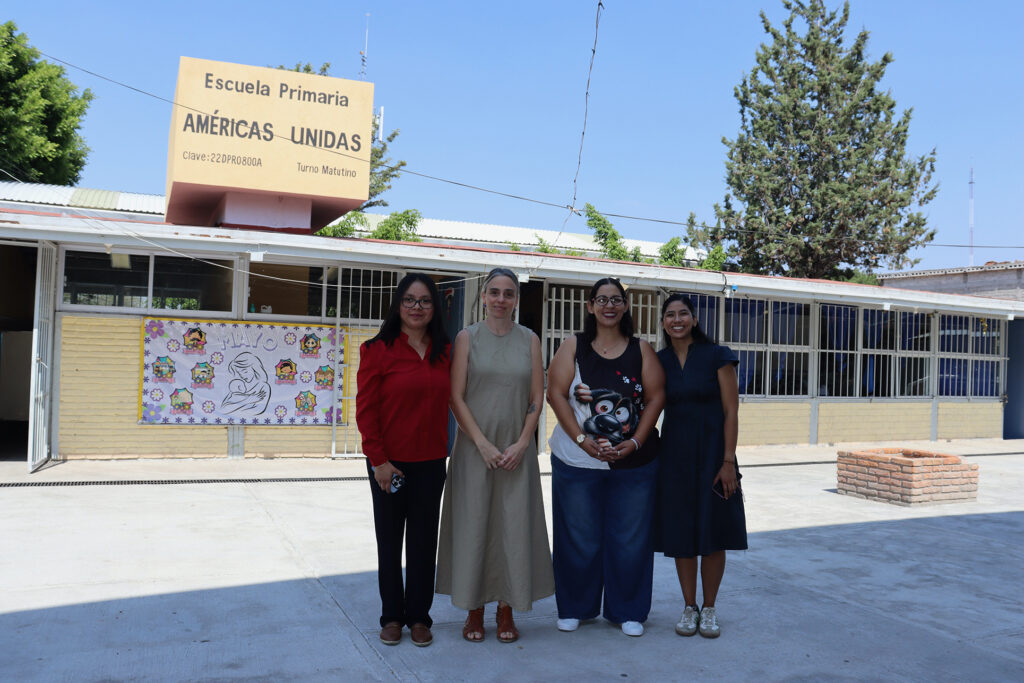
From left to right: Rebeca Hernández Soto, associated researcher at the lab; M. Florencia Assaneo; principal of the public primary school; and Moramay Ramos Flores, a PhD student working on the project. At the public school “Américas Unidas” in Querétaro, Mexico.
In parallel, we are using functional magnetic resonance imaging (fMRI) — a non-invasive brain imaging technique that allows us to observe which brain regions become active during different tasks — to explore the relationship between rhythmic synchronization and the brain’s reward system. Importantly, these same reward-related regions are also strongly engaged during video game play. If the pathways within this reward system are similarly activated during rhythmic coordination, this could mean that children who initially struggle to synchronize movements with sound may be able to strengthen these abilities through a carefully designed video game experience. One possible future application could involve an open-access mobile game in which children synchronize taps or hand movements to musical rhythms while progressing through increasingly challenging levels and unlocking rewards or visual customizations.
Overall, the current project seeks to generate the scientific evidence necessary to determine whether rhythm-based digital interventions could become a viable tool for supporting children’s cognitive development. This work has the potential to contribute to the future development of accessible and scalable tools that can strengthen foundational cognitive skills linked to academic performance in children. These tools can be applied to children in Mexico and, more broadly, across low- and middle-income countries (LMICs), expanding access to education resources and interventions.
The power of collaboration between the SNF Global Center and UNAM
Our laboratory at Universidad Nacional Autónoma de México (UNAM) is primarily dedicated to basic neuroscience research. Based at UNAM’s campus in Querétaro, our team brings together researchers and students from different disciplines — including neuroscience, psychology, physics, engineering, and data analysis — united by a shared interest in understanding how rhythm and brain dynamics shape human cognition and behavior. Here, we have access to excellent infrastructure for fundamental research, including neuroimaging facilities and high-performance computational resources. However, translating basic scientific discoveries into interventions capable of improving people’s daily lives is often much more challenging and requires strong cross-sector collaboration.
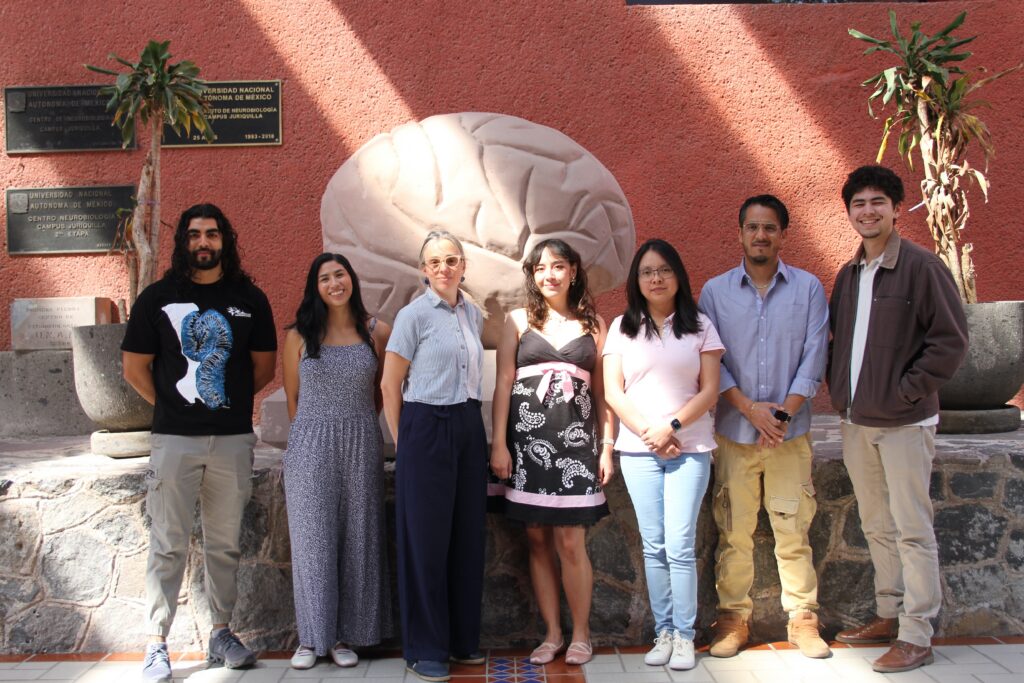
Members of the research team at the laboratory facilities on UNAM’s Querétaro campus.
The work I’m conducting as part of the SNF Global Center Research Fellowship has encouraged us to begin thinking beyond the laboratory. This current fellowship has given us the opportunity to test the core scientific assumptions behind our proposed open-access intervention. If the pilot project proves successful, the next stages of the work will become considerably more ambitious, involving both the technological development of the intervention and its large-scale implementation and evaluation in school settings. Advancing toward those goals will likely require the support of larger international organizations and cross-sector collaborations. In this context, the opportunities provided by the SNF Global Center at the Child Mind Institute to share, disseminate, and give visibility to our work are extremely valuable, helping create the connections and momentum necessary to move from foundational research toward real-world impact.
More broadly, this kind of collaboration highlights the importance of building bridges between global institutions and local research communities. By combining international support with local expertise and close engagement with schools and communities, it becomes possible to develop solutions that are both scientifically rigorous and genuinely connected to the realities of the populations they aim to serve.
This is today’s edition of The Download, our weekday newsletter that provides a daily dose of what’s going on in the world of technology.
Heat waves mess with your brain. Scientists are trying to figure out why.
—Jessica Hamzelou
It’s been hot in London this week. Really hot. A dangerous heat wave has hit Western Europe. On Wednesday, the UK recorded its highest ever June temperature at 36.1 °C (about 97 °F). But as the weather app on my phone confirmed, it felt like 39 °C.
Much of Western Europe is suffering, bringing awful consequences for agriculture, infrastructure, and the health system. But heat can also affect the brain.
Studies have confirmed that as temperatures rise, people seem to get more irritable and more violent. And they have shown that firefighters find it harder to focus immediately after heat exposure. Rising temperatures can also have particularly disastrous outcomes for children and people with mental health disorders.
Research on lab animals suggests that excessive heat can alter the function of chemical signals in our brains. But we still need a better understanding of the mechanisms behind these effects.
I’ve combed the internet to find you today’s most fun/important/scary/fascinating stories about technology.
1 The Trump administration has asked OpenAI to limit its next model release It wants to vet the first GPT 5.6 users before a wider launch. (Bloomberg $) + OpenAI said each of the initial partners will be government-approved. (FT $) + It’s the first US firm to be told to restrict an AI model before release. (Axios) + Anthropic is also still feuding with Washington. (MIT Technology Review)
2 Apple and Xbox have hiked prices, blaming AI-driven chip costs Some MacBooks, iPads, and Xboxes are going up in price by over 20%. (BBC) + Apple’s shares plummeted after the announcement. (NBC) + AI data center demand has pushed up memory and storage prices. (WSJ $) + The shortages have been dubbed “RAMaggedon.” (The Verge)
3 Colossal and the US are building an endangered species “biovault” It aims to cryptopreserve over 2,300 plant and animal samples. (Wired $) + It comes amid growing threats to endangered species protections. (NYT $) + Colossal is also growing chickens in artificial eggshells. (MIT Technology Review)
4 The US has banned Polestar from selling its EVs due to anti-China rules The Sweden-based company is majority-owned by China’s Geely. (CNN) + The ban is because its connected-vehicle tech is linked to China. (Reuters $) + What happened to China’s overseas EV factory boom? (Rest of World)
5 China is betting on humanoids to beat its demographic decline It wants the robots to narrow the labour gap. (FT $) + Gig workers are training humanoids at home. (MIT Technology Review)
6 The “fingerprints” of a black hole’s event horizon have been detected The discovery was made by studying ripples in space-time. (AFP)
7 OpenAI is now expected to delay its IPO until next year It’s been spooked by choppy global markets and SpaceX’s slump. (NYT $)
8 Data centers have moved to the forefront of environmental lawsuits The litigation is linked to energy sources, water consumption, and air pollution. (Guardian)
9 A master gene that turns on human development has been uncovered It results in cells forming a human body. (New Scientist $)
10 Grok’s most popular feature? Smut It accounts for “well over half” of the chatbot’s traffic. (The Information $)
Quote of the day
“The most advanced AI is built by a handful of American companies, on American soil, under American law, and what the rest of us are permitted to do with it can change on a Friday afternoon.”
—Nathan Benaich, AI investor at London-based venture firm Air Street Capital, tells the Financial Times about the geopolitical reality of US AI dominance.
One More Thing
MAX-O-MATIC
How technology helped archaeologists dig deeper
In 1991, construction workers in Manhattan unearthed hundreds of coffins. Further investigation revealed that the remains were between 200 and 300 years old, and they were all African and African American.
This discovery came at an inflection point in scientific history. Breakthroughs in chemical and genetic analysis allowed researchers to figure out where many of these people were born, the physical challenges they faced, and even the routes they took from Africa to North America.
Today, archaeologists are using techniques they could only dream of then: lasers, 3D photography, lidar, satellite imagery, and more. These tools are revealing where people came from, how ancient cities were built, and the lives of those who built them.